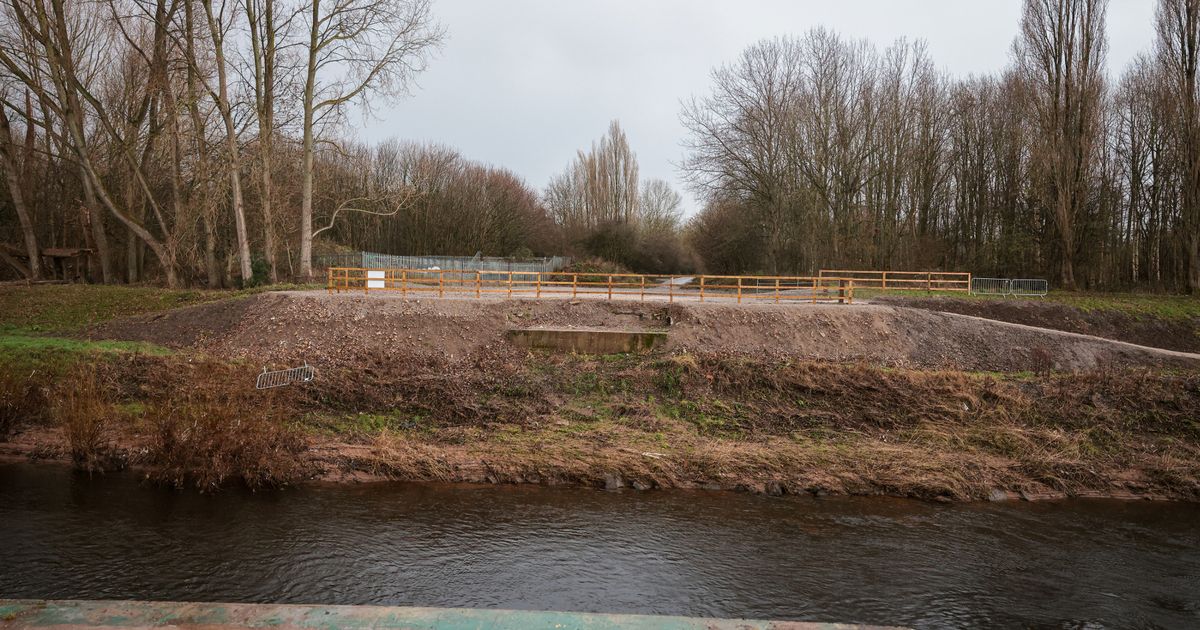
It means a two-mile round trip to get to and from Chorlton Water Park from the ‘wrong’ side of the River Mersey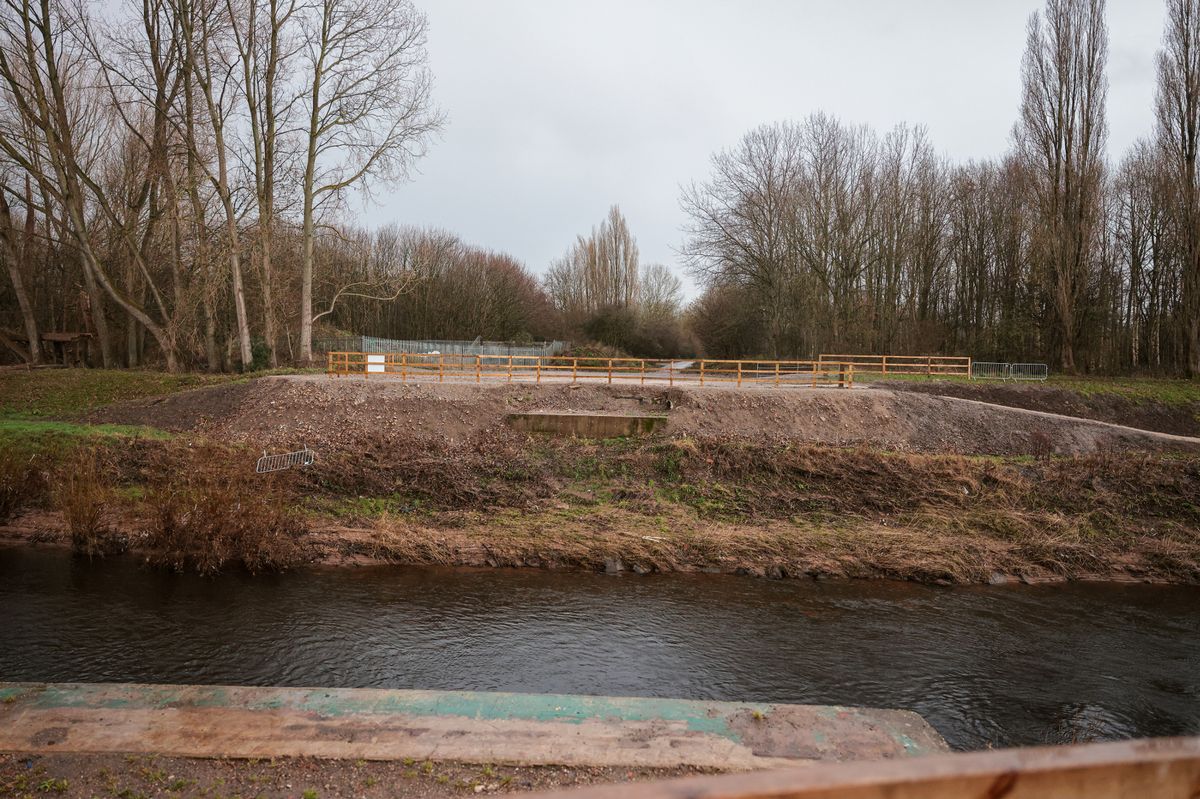 The former Bailey Bridge site, which crossed the River Mersey, in Chorlton(Image: Kenny Brown | Manchester Evening News)
A key bridge which provides access to Chorlton Water Park which was closed to the public amid safety concerns earlier this year has now been completely removed.
The Bailey Bridge which runs over the River Mersey in Chorlton was closed by Manchester Council in February, with officials citing safety reasons. It has now been totally removed, with a replacement not expected to be in place until July.
The absence of a functioning bridge has entailed a two-mile round trip for anyone visiting the water park or Kenworthy Woods from the other side of the River Mersey. Elderly and disabled people were left unable to make the journey at all, according to campaigners.
The latest update from Manchester City Council confirmed the bridge has now been entirely removed ‘due to safety concerns’.
It’s replacement is scheduled to be in place by July if planning permission is awarded and taking into account off-site construction of the bridge and then its installation and associated groundworks, according to the council.
The statement continued: “We know this is a popular route. So, we’re working to design and install the new crossing point as soon as possible. However, the steps described above will each take several months to complete. We will have a clearer timeline for the replacement when the planning permission and Environment Agency Permits are received.
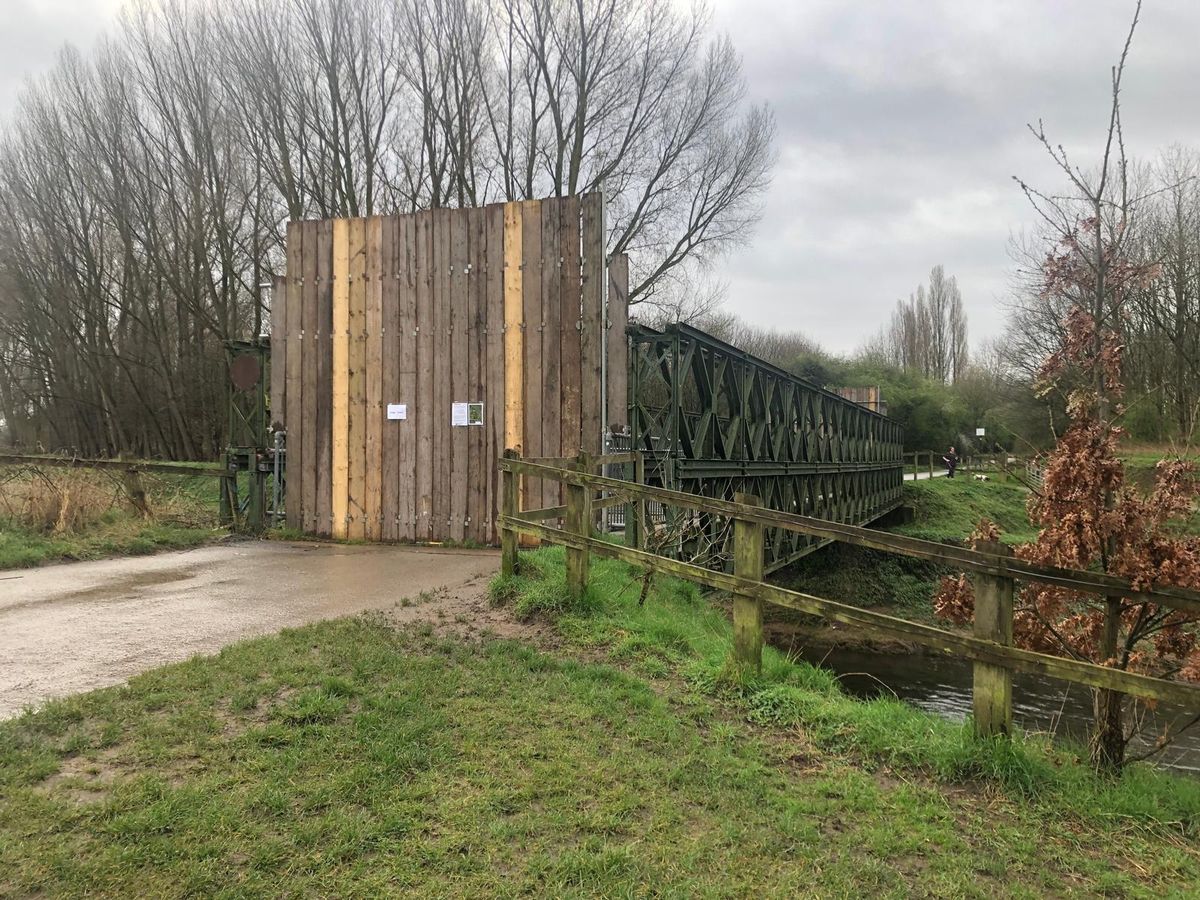 The bidge which runs over the River Mersey in Chorlton has been taken down(Image: Elizabeth Bain)
“We’re reviewing the diversion route to ensure it’s easy to use, easy to find and more accessible. We’re working with key stakeholders to ensure the best possible diversion. We want it to feel good for everyone – whether you’re walking or wheeling. If you have suggestions, please contact us.
“We understand how disruptive and disappointing this is. The safety of our residents and visitors is our primary concern.”
Bailey bridges are portable, pre-fabricated bridges developed in the early 1940s for military use during World War Two. The main advantage of the bridges is they require no special tools or heavy equipment to assemble, making them vital in the field.
The bridges which were originally intended to allow transport use for heavy military vehicles, such as tanks, are also used in civil engineering to provide temporary crossings for pedestrians and vehicles.
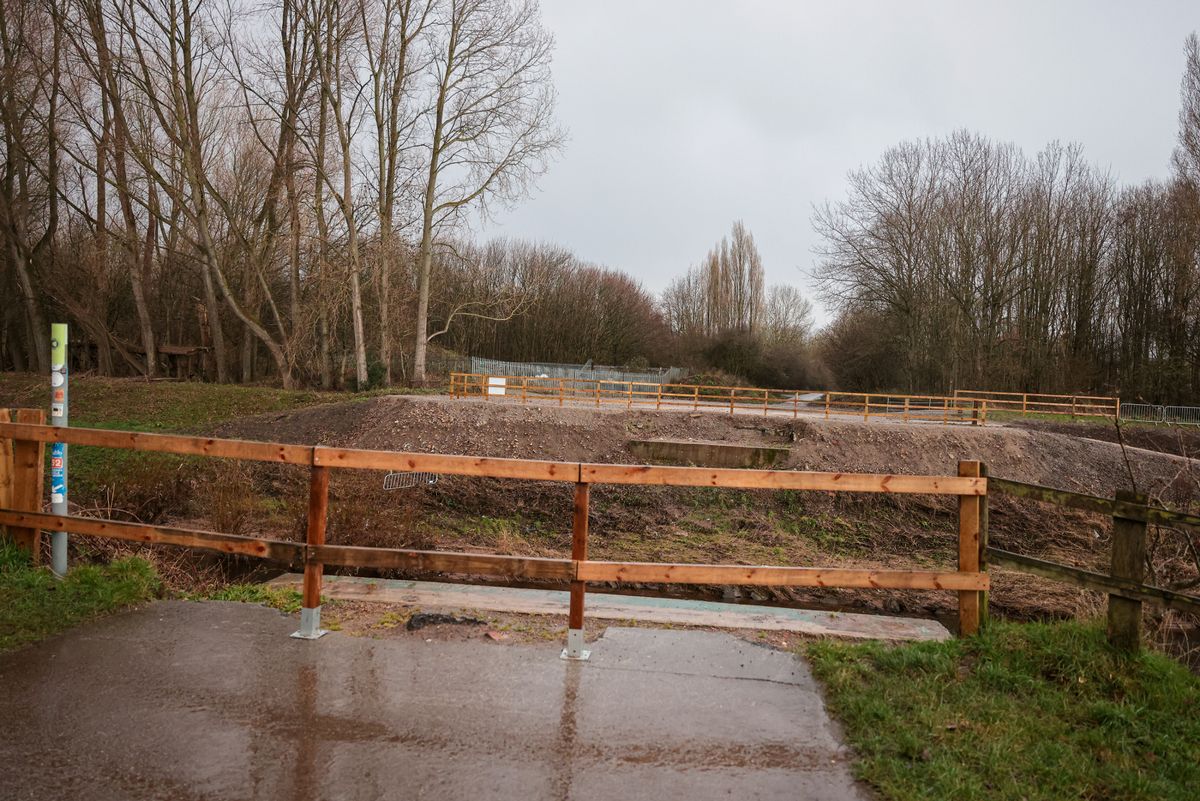 The former Bailey Bridge site, which crossed the River Mersey, Chorlton(Image: Kenny Brown | Manchester Evening News)
Elizabeth Bain, who started a petition for the bridge to be reopened, told the Manchester Evening News in May that the Baily Bridge was a vital link for the community, especially the elderly and mobility chair users. Elizabeth claimed councillors had told her that the bridge was suffering from ‘metal fatigue’.
“A lot of disabled users use it. And because the walks are flat around the river and the park, it’s very attractive for elderly residents,” Elizabeth said. “I used to walk regularly in early mornings with an 89-year-old man, and now, we don’t see each other anymore. Some of my friends in their late 70s, I don’t see them anymore.”
Elizabeth claims councillors had told her that the bridge was now suffering from ‘metal fatigue’. However, there still hasn’t been an update as to how and when access across the Mersey at this location will be reinstated.
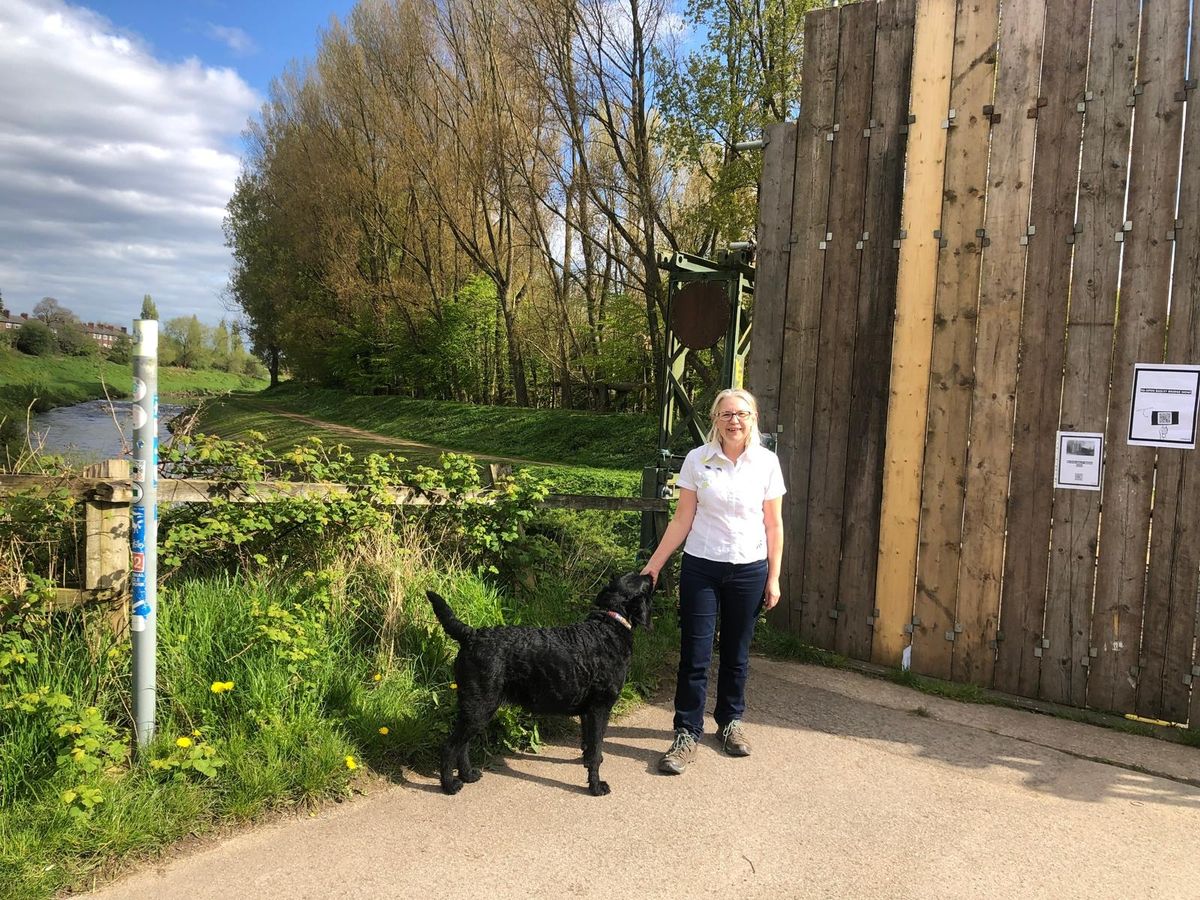 Elizabeth Bain who campaigned to have the bridge reopened.(Image: Elizabeth Bain)
She started a change.org petition to have the bridge reopened which has gathered more than 2,400 signatures.
Jackie Steer posted: “The bridge gives people a choice where to go without a very long walk/ride, and in some cases people with mobility issues can’t access the river banks to get to the next bridge.”
Jenny Quigley wrote: “This bridge closure has really affected me and my children going for walks in the orchard and Mersey Valley. It’s also had a massive detrimental effect on my husband getting to work on his bike, and was the only pram friendly way for me to take my baby for walks across the river.”