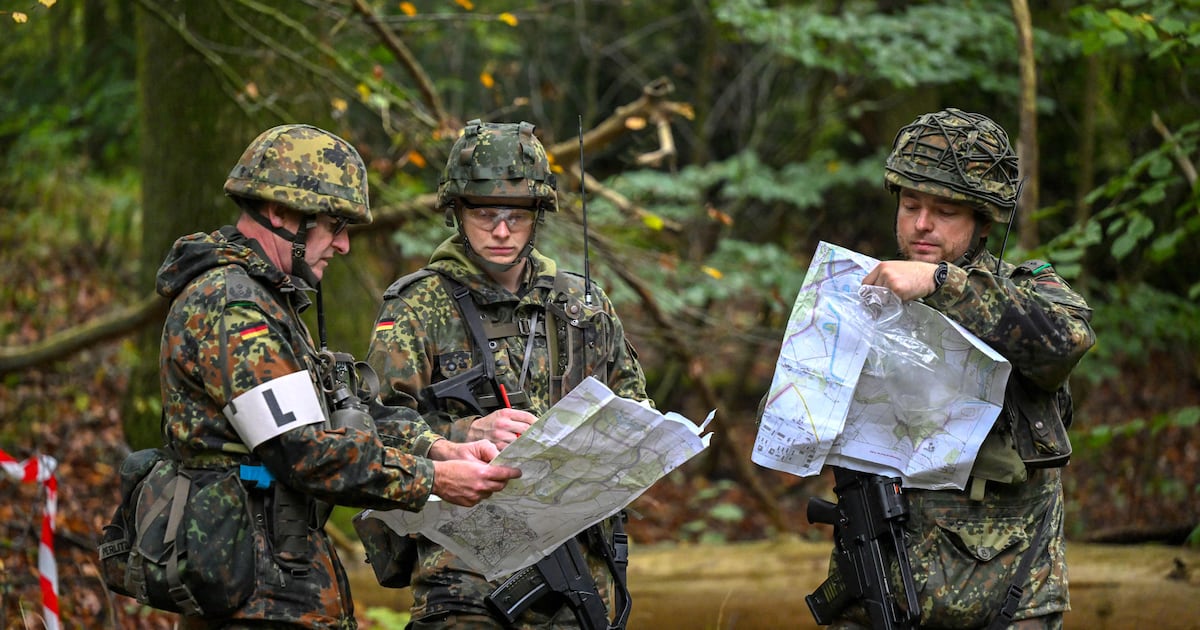
Germany’s defence ministry has begun posting letters to 18-year-olds as a first step towards reactivating military service.
Defence minister Boris Pistorius said on Friday that 700,000 young men and women born in 2008 will receive the letter in the coming days and weeks.
He described the controversial step as “a central building block for future-proofing our armed forces and for the security of the country”.
“Already in the following months, the first volunteers will start their service,” he said.
Each letter has a QR code leading to an online form of 14 questions. A response is compulsory for all 18-year-old men, with fines of up to €1,000 for failing to appear for subsequent physical examinations. For young women it is voluntary.
The survey asks about education level, driving licence and language skills as well as body size, weight and estimated fitness level. In addition the form asks respondents to rate, on a scale of 0 to 10, their interest in serving as a voluntary soldier, as well as the preferred term duration – with a six-month minimum.
Germany paused – but never abolished – compulsory military service in 2011. Faced with growing security threats from Russia, Germany is following European countries that have either reactivated or ramped up military service.
Berlin hopes to rebuild its armed forces from 183,000 serving soldiers at present to 270,000 in total.
It remains to be seen whether a voluntary approach will be sufficient, however, given that support for military service appears highest among those too old to serve.
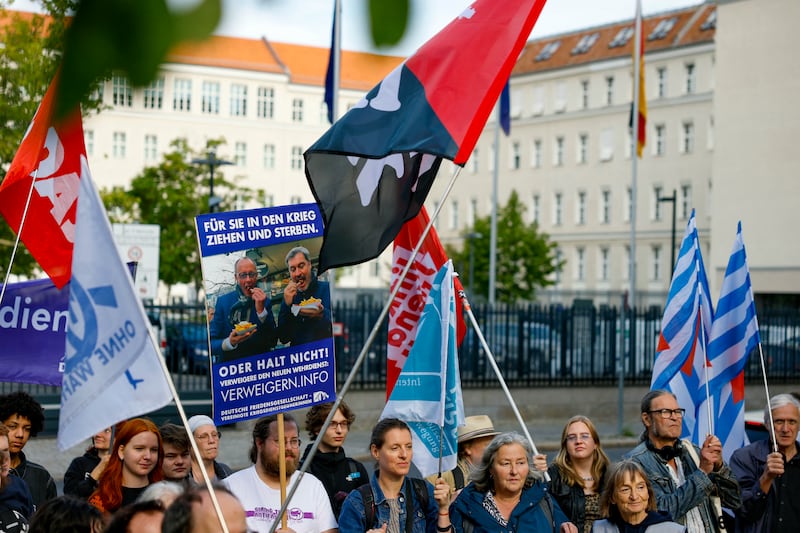 Protesters demonstrate against compulsory military service in front of the Defence Ministry in Berlin in August 2025. Photograph: Odd Andersen/AFP via Getty Images
In a representational survey last year, 58 per cent supported the reintroduction of military service generally, averaged out across all age groups. Support dropped to just 30 per cent among the 18- to 28-year-olds who would be required to serve.
The survey showed a big male-female gap, with 36 per cent of all men ready to serve and just nine per cent of women. When respondents were asked if they would serve personally, readiness among 18- to 28-year-olds fell to just 14 per cent.
The new recruitment law sparked protests around the country in December among a new generation of conscientious objectors.
The Students Against Conscription group attributed the huge resistance to how the conscription decisions were “being made over our heads”.
“If so little is done for us it is no wonder so many people say they don’t want to fight for this country,” said Peter Banbath, group head in the southwestern city of Freiburg.
Germany’s conscientious objector associations reported fielding as many queries in December as in the previous 11 months combined – including questions from worried parents.
Klaus Pfisterer, head of one group in the southwestern state of Baden-Württemberg, said: “Parents of 12- to 14-year-old children want to know how they can refuse.”