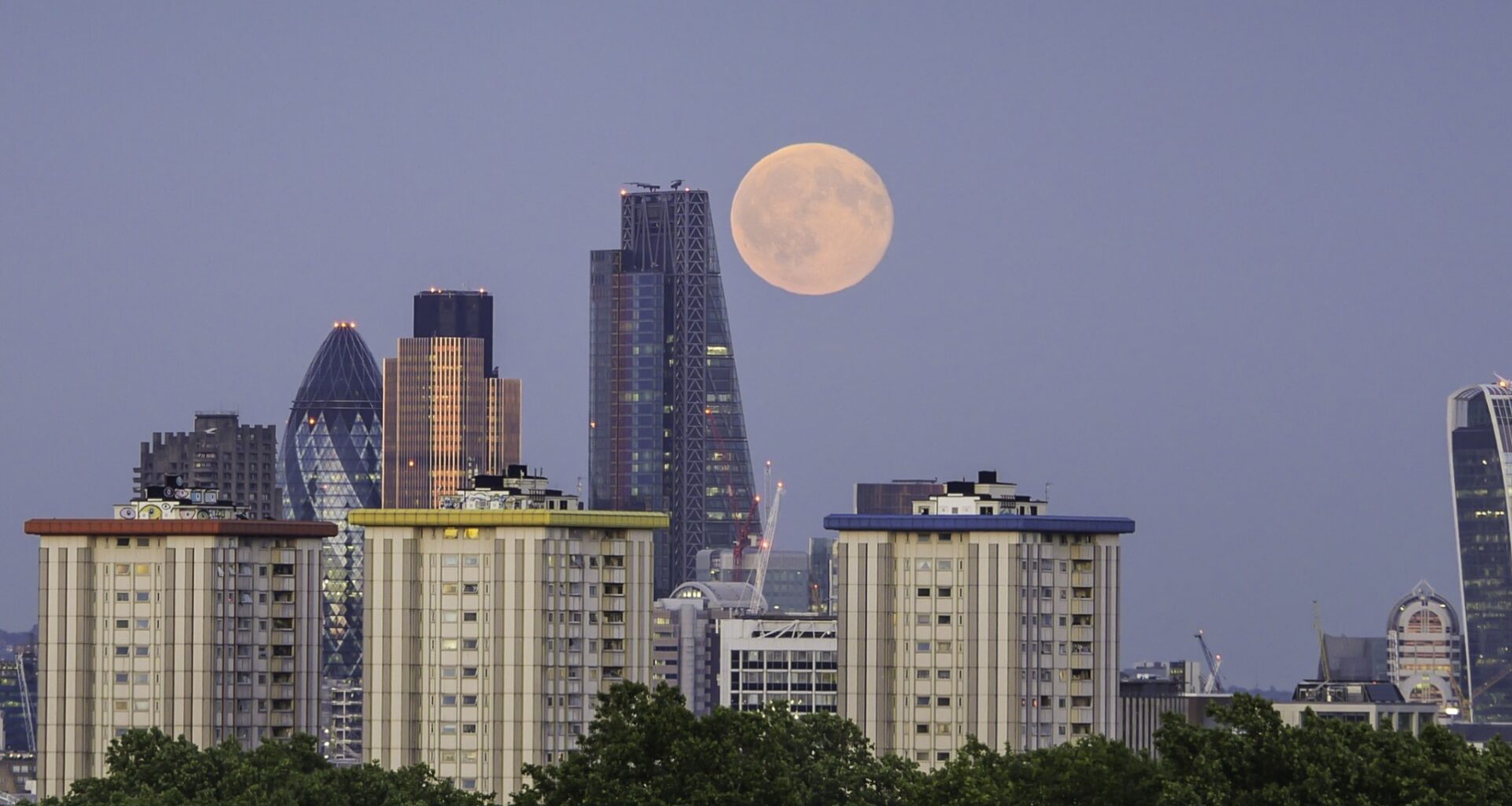
If you didn’t have a proper reset on January 1, don’t worry. You’ll have another chance to start afresh tomorrow, with the first full moon of the year.
In astrology, the full moon is a time for reflecting on the past month and setting goals for the next; like a mini New Year. On top of that, after it we’ll have been treated to four of the lunar phenomenon in a row and it will be the last ‘supermoon’ until November 2026. So this really is the end of one era and the beginning of the next.
Weather conditions are looking promising, so there’s a high likelihood that most Brits will get a good look at a big moon this weekend. Here’s what you need to know so you don’t miss out.
What is a supermoon?
Generally, we think of the moon as circling the Earth, but it actually orbits the planet in more of an elliptical, or oval, shape. That means that there are points throughout the year when it is closer or further away from us, which results in it looking bigger or smaller in the sky.
A supermoon is just what we call it when the moon is the closest point to Earth during its orbit, named as such because it appears roughly 14 percent bigger and 30 percent brighter than usual. For some, it also carries spiritual significance, as the opportunity to create change or begin a new chapter in your life that comes with the full moon is amplified and strengthened.
What is the ‘wolf moon’?
Each full moon has a name, based on the month of the year that it appears. This helped people keep track of the passing months before modern calendars were widely used.
Back in October we had a ‘harvest’ moon, followed by the ‘beaver’ in November, and then the ‘cold’ moon in December.
The wolf is the first full moon of the year, thus falling in January. It was named after the wolves that traditionally became active this time of year, and is thought to have Celtic or Old English origins.
When exactly is the wolf supermoon visible?
The full moon will be at its largest around 10pm on Saturday January 3. However, you’ll be able to see it from sunset until sunrise, so don’t worry about missing anything if you’ve got an early bedtime.
If you’re lucky, you may also get a look at the Quandrantids meteor shower, which is due to peak this weekend. Although be aware that they might be a little bit trickier to see because of the brightness of the moon.
What’s the weather forecast?
You need a clear sky to be able to see the moon. Luckily, most of the UK should have either ideal viewing conditions, with a very small amount of cloud coverage or fog in some places. However, for those in the north of Scotland or far-east of England there could be slightly less visibility as thick snow clouds move in.
If you’re going outside to have a look, make sure to wrap up because freezing temperatures are expected across the board. Check your local forecast for the most relevant information and advice.
When will the next supermoon be?
We’ve been spoiled by having several supermoons one after the other but this streak is sadly coming to an end. Once this one has set, the next won’t be until November 2026.
Here is how to maximise your annual leave in 2026
Plus: All the countries on the UK’s ‘do not travel’ list for 2026
Stay in the loop: sign up to our free Time Out UK newsletter for the latest UK news and the best stuff happening across the country