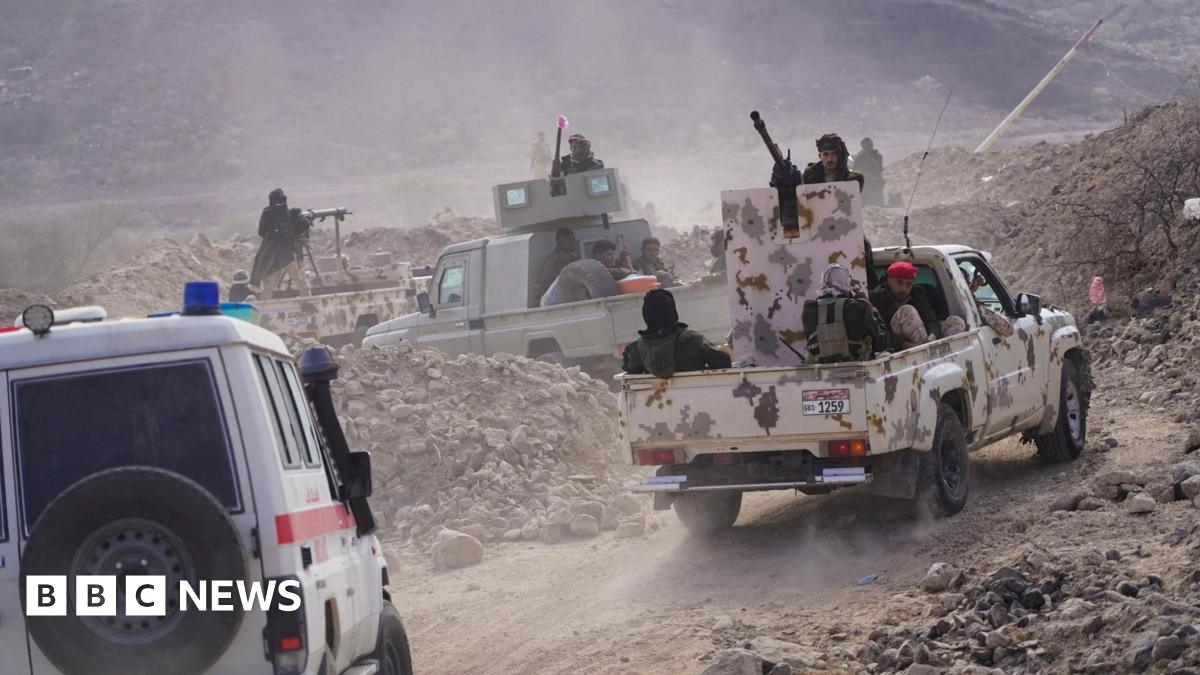
In the newly contested areas like Hadramawt, the prospect of a wider conflagration of fighting is alarming families.
“Some people are thinking of going to villages or staying with relatives if things get worse. But most people don’t really have the option to leave the city,” says Mohamed from Mukalla.
“Most people are going out less [and] have stored some goods like flour and rice. Everyone is following the news closely, moment by moment.”
Years of devastating conflict have ravaged Yemen’s economy. The country’s roughly 40 million people have endured what aid agencies say is the world’s third worst hunger crisis – one that has repeatedly threatened to reach famine levels. In 2021, the UN estimated that 377,000 people had died as a result of the conflict and its impact on hunger and healthcare, of which 259,000 were said to be children under the age of five.
While the current conflict is being framed from the outside as an emerging proxy war between two Gulf powers, close watchers of Yemeni politics have seen the recent escalations by the STC as a long time coming.
The STC’s ambitions have risen after its recent expansion of control over nearly all of the south of the country, Yemeni affairs journalist Anwar al-Ansi told BBC Arabic.
“[STC chief Aidarous] Al-Zubaidi has been the most consistent person inside Yemen, consistently demanding independence for southern Yemen. So, no, I don’t think he will give up,” says Mr Muslimi.