 Russell Savory

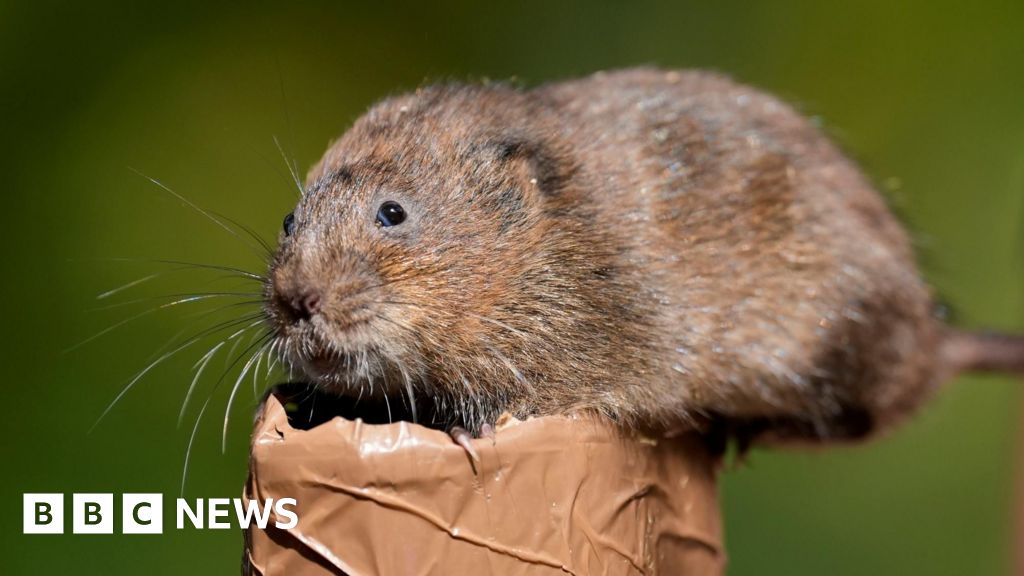
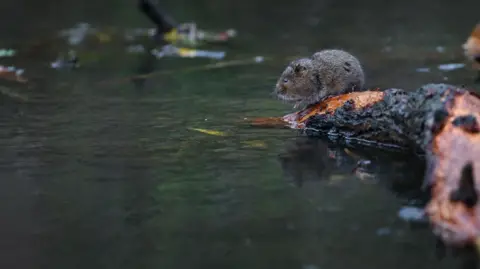
Water vole numbers have been boosted in the River Colne in Essex thanks to years of efforts
A project to protect river animals by eradicating mink has seen the East of England become the only place in Britain where water vole populations are increasing, according to a wildlife trust.
Until recently, the River Colne in Essex had struggled with water vole numbers because of mink, an invasive non-native species introduced to the UK in the 1960s.
But a programme to boost numbers by partners including Essex Wildlife Trust (EWT) and Waterlife Recovery Trust has seen an “absolute explosion of wildlife and particularly the water voles”, said the EWT’s Darren Tansley.
“For us, it’s the culmination of 25 years of efforts,” he added.
Water voles were a common sight at the start of the 20th Century and inspired the character Ratty in The Wind in the Willows, but their numbers have plummeted in more recent decades and they are now listed as endangered on both the Great Britain and the England Red List for Mammals.
Environmental groups said there had been a 97% decline in the number of water voles since 1950 because of mink.
In Essex, regular surveys from the early 1990s onwards found that sites with signs of water voles had dropped by 83% by 2006.
 Getty Images
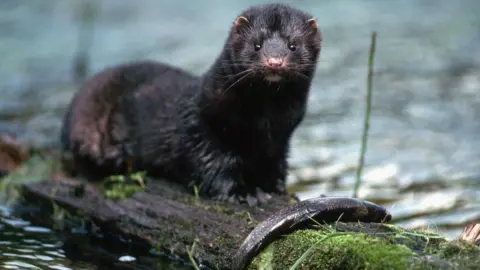
A programme has been under way across the East of England to eradicate mink, which have badly damaged native wildlife
Mr Tansley said the decision to eliminate the mink population across Essex and the rest of the region had not been an easy one, but they had carefully weighed up the impact the predators were having on local wildlife.
“It’s really difficult, and it’s particularly upsetting for us as officers to have to do that sort of work, because we join a wildlife trust to protect animals,” he told the BBC.
“But the important thing was to decide, do we want a future where we have mink and very few other species on the river? Or do we remove the mink and allow natural wildlife to rebound and come back in force?
“We’ve shown that, yes, it can be done at this sort of scale.”
Mink are trapped for culling using floating platforms, or “smart traps”, which are fitted with a special excluder to prevent water voles and birds getting in.
 Darren Tansley
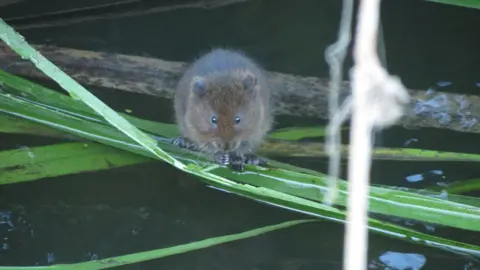
Water voles have begun breeding in the River Colne in Essex as well as other places around the East of England
The Waterlife Recovery Trust said its aim was to develop an effective model to promote mink control and eradication, and to share best practice for this with other groups around Britain.
Since the pandemic, when the project was set back by restrictions, renewed efforts to eliminate mink and boost water voles have been successful in Norfolk, Suffolk, Cambridgeshire and Hertfordshire as well as Essex.
Mr Tansley said water voles were like “little mini beavers” who “create all of these little micro habitats that other animals can get into”.
“Water voles are an important part of that ecosystem,” he added.