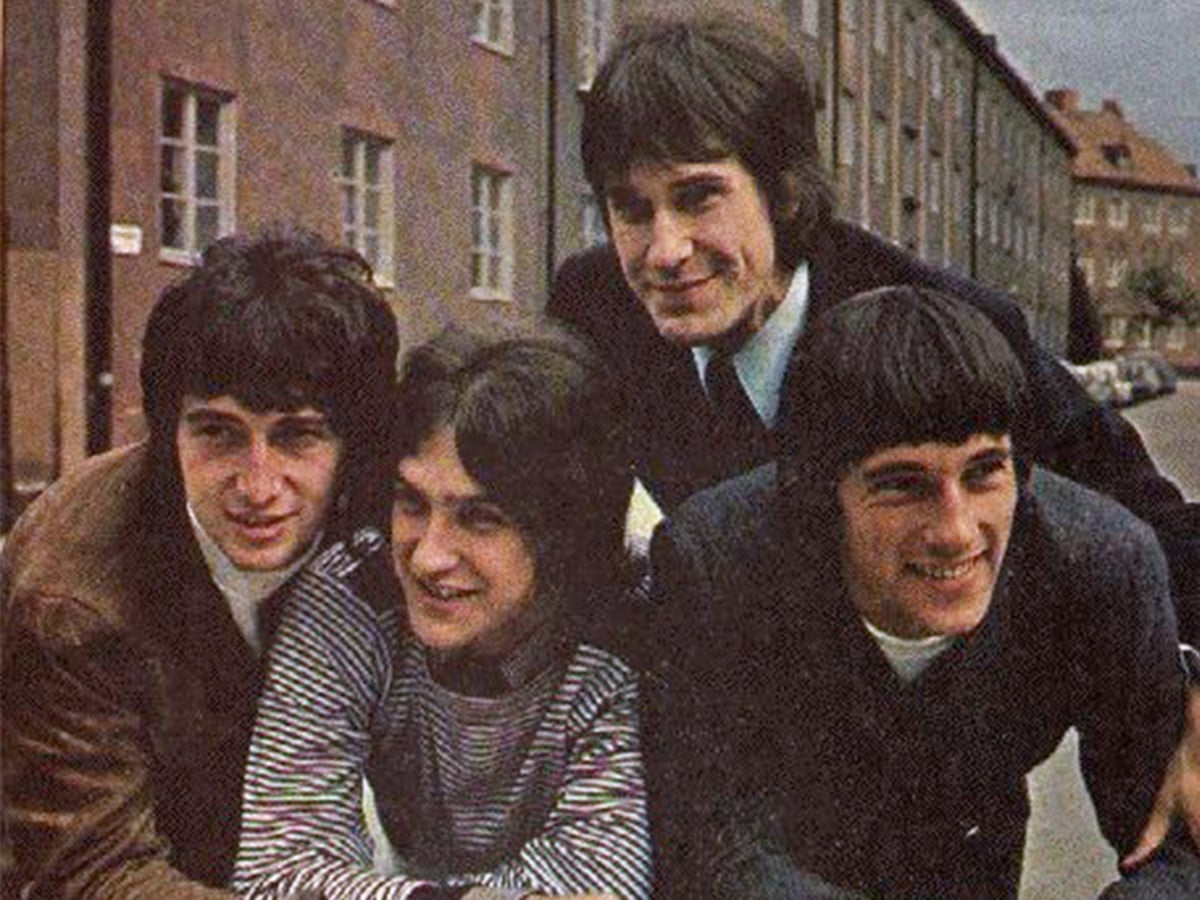
(Credits: Far Out / Public Domain)
Sat 3 January 2026 9:56, UK
Bob Dylan’s fingertips are spread intricately over all of our record collections. Everyone from The Beatles through to Post Malone has kneeled at Dylan’s holy altar. Likewise, Frank Sinatra has always been a key figure in the world of pop songwriting; his magnetic performances have a habit of creeping into the collective consciousness. The Kinks have them both to thank for one of their most cherished songs.
There’s a solid case to be made for Ray Davies being the British version of Dylan. His divine way with words shares parallels with his American contemporary, as does the impact they’ve had in their native countries. Remarkably, Davies is often omitted from the conversation when people discuss the pantheon of songwriting credits, but his lyrical expertise puts him in the same bracket as the all-time greats.
Amongst a congested field of beat bands during 1964, The Kinks endured and proved they were mounted differently from the rest. They weren’t trying to imitate The Beatles and Davies’ witty lyrics that reflectively held a mirror up to society’s airs and graces, as nobody had done before.
Trying to connect Davies with Sinatra is a little more difficult to pull off. ‘Ol Blue Eyes’ was a one of a kind performer who brought the old school into the 196s kicking and screaming. He was a figure of the booming 1950s and represented a cherished part of American pizazz, so aligining him with Davies is a difficult thing to do. But what Sinatra did give Davies was something to aim at in terms of ease and comfort.
Sinatra didn’t write any songs, but what he did was inhabit the feeling of them. Simply and smartly pulled onto the stage, Sinatra could make the simplest words feel big and powerful. It was an inroad for Davies to pen some of his best lyrics.
 Ray Davies, suited and booted. (Credits: Far Out / Ray Davies)
The lyrics created by the Kinks singer were so unique compared to the releases of the time, and more often than not, Davies never had to look anywhere else apart from his mercurial head full of ideas for a shot of inspiration. However, musically it was a different story, and Dylan’s Bringing It All Back Home album helped form the initial soundscape for The Kinks’ ‘Sunny Afternoon’.
“I’d bought a white upright piano. I hadn’t written for a time,” Davies once explained about his strange situation when he wrote the song and how his life had dramatically changed around that period. “I’d been ill. I was living in a very 1960s-decorated house. It had orange walls and green furniture. My one-year-old daughter was crawling on the floor, and I wrote the opening riff. I remember it vividly. I was wearing a polo-neck sweater,” he added.
“At the time I wrote ‘Sunny Afternoon’, I couldn’t listen to anything,” Davies agonisingly continued. “I was only playing The Greatest Hits of Frank Sinatra and Dylan’s ‘Maggie’s Farm’—I just liked its whole presence, I was playing the Bringing It All Back Home LP along with my Frank Sinatra and Glenn Miller and Bach—it was a strange time. I thought they all helped one another, they went into the chromatic part that’s in the back of the song.”
The sonic influence of Bringing It All Back Home is hard to distinguish on ‘Sunny Afternoon’, and Dylan’s touch had all but evaporated by the time the band had filtered the track through the production process. In fact, Dylan’s impact on ‘Sunny Afternoon’ is about as microscopically audible as Frank Sinatra’s. However, without the pair, we wouldn’t be blessed with this delectable gem that shows off the very best of British pop.
But really, all that does is speak to the nature of inspiration and influence. You don’t necessarily need to hear the sounds of Dylan and Sinatra in Davies’ work to know that he found solace i their work and, through that solace, was able to pen arguably one of the greatest songs The Kinks ever wrote.
Bringing It All Back Home allowed Davies to escape from his head, and hearing these otherworldly twangs from across the pond infiltrated his mind. Everything else flew out of him from there, and a timeless classic was born.
Related Topics
The Far Out Bob Dylan Newsletter
All the latest stories about Bob Dylan from the independent voice of culture.
Straight to your inbox.