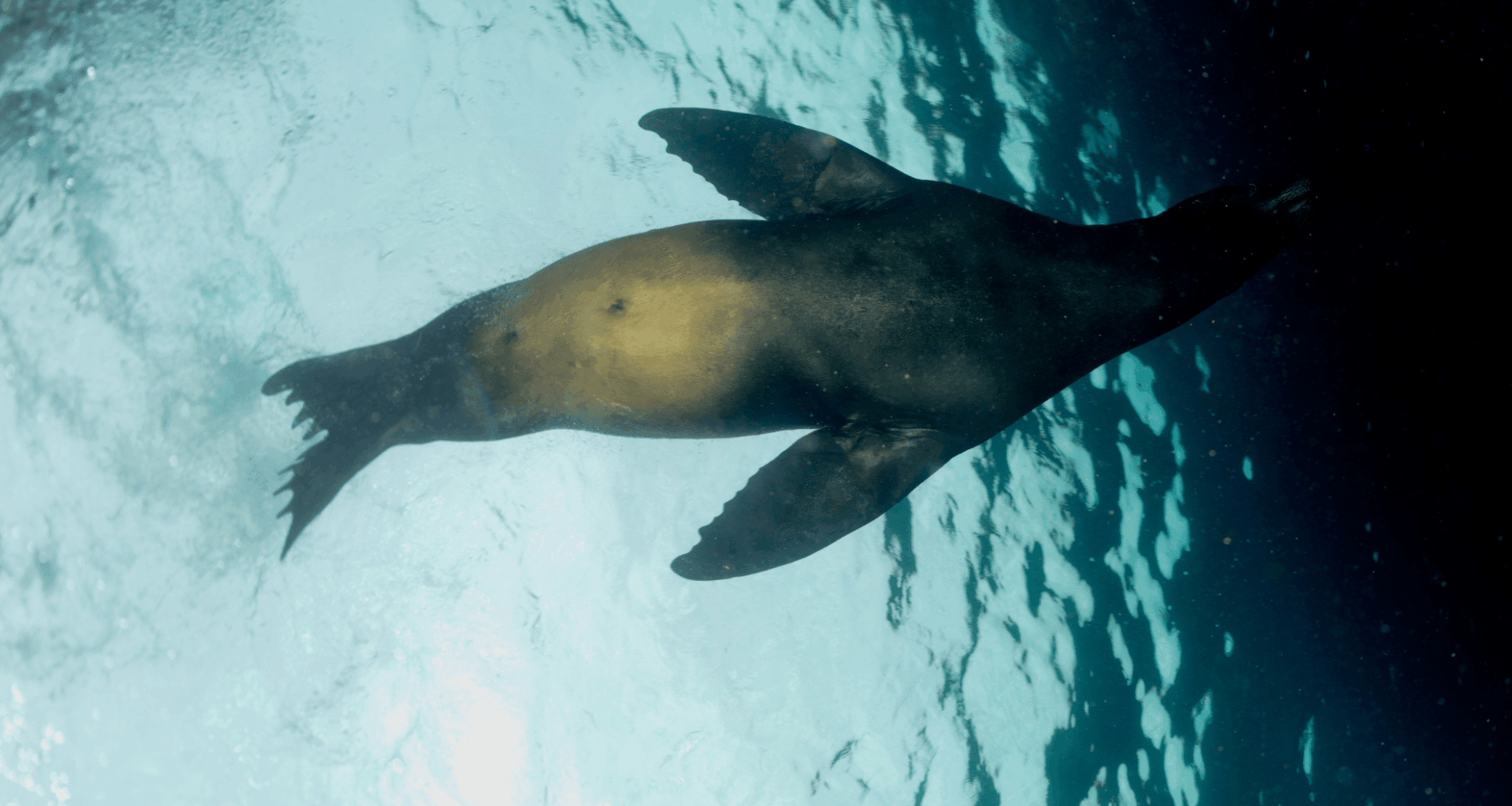
A rarely seen species of Antarctic wildlife has made a surprise appearance in one of the most inaccessible environments on Earth. The Ross seal, one of the least studied marine mammals in the world, has likely been photographed underwater for the very first time. The images were taken by Justin Hofman, an undersea specialist working with National Geographic-Lindblad Expeditions, during a recent voyage to the icy southern continent.
A First Glimpse Beneath The Ice
During a routine expedition beneath the frigid waters of the Antarctic pack ice, Justin Hofman managed to capture something few scientists have even seen in person, a living Ross seal gliding through its natural underwater habitat. These seals are notoriously difficult to locate and study because they live deep within the pack ice, a region that’s almost completely inaccessible without icebreakers or advanced equipment. Hofman explained that in his 15 years of working in Antarctica, he has only seen two Ross seals. The seal he photographed on this mission was only the second encounter of his entire career.
Hofman believes these might be the first underwater photographs of the species ever taken. He emphasized how little is known about Ross seals due to their remote location and elusive nature. Scientists have long known they exist, but most sightings occur when the seals haul out onto the ice during brief summer periods. Capturing them underwater, where they spend most of their lives, is exceptionally rare. Hofman’s discovery now offers a rare window into the behavior and anatomy of a species that has, until now, lived largely in scientific obscurity.
The Life And Traits Of The Ross Seal
Ross seals are the smallest of the Antarctic true seals, a group that also includes Weddell, crabeater, and leopard seals. Adults can grow up to 2.3 meters in length, with females typically being slightly larger than males. One of their most striking features is their enormous eyes, which can measure nearly 7 centimeters across. These oversized eyes are likely an evolutionary adaptation for hunting in the pitch-black depths of the Southern Ocean. Their faces are small, wide, and unmistakable when seen up close.
Despite their distinct appearance, Ross seals are incredibly rare. According to estimates from the IUCN, their population hovers around 40,000 mature individuals. That number might sound large, but it represents just 1 percent of all seals living on the Antarctic sea ice. Their limited range and preference for thick, shifting ice floes make them incredibly difficult to study. Most of what scientists know about Ross seals has been pieced together from occasional surface sightings, strandings, and limited data from tagged individuals. Hofman’s photographs now add a vital piece to that puzzle, revealing a moment of fluid motion in a realm that is almost completely hidden from human eyes.
Diving Behavior And Foraging In The Deep
Ross seals are highly specialized divers. They are known to dive over 100 times per day, regularly reaching depths of 100 to 300 meters as they forage for food in the open ocean. Their diet is believed to consist primarily of squid, with smaller amounts of krill and fish. However, these assumptions are based on very limited research due to the difficulty of tracking the animals beneath the ice. With most of their lives spent far below the surface, their foraging behavior remains one of the great unknowns of Antarctic ecology.
Hofman’s photographs are especially valuable because they show the seal in its natural element, not stranded, injured, or sedated, but actively moving through the water. This type of real-time observation is almost unheard of for Ross seals. It gives researchers an opportunity to study their posture, movement, and physical condition in a way that static surface photos simply cannot provide. The visual documentation also serves as a potential catalyst for renewed interest in studying the species more closely, perhaps through remotely operated vehicles or new tagging technologies that can withstand the harsh polar environment.