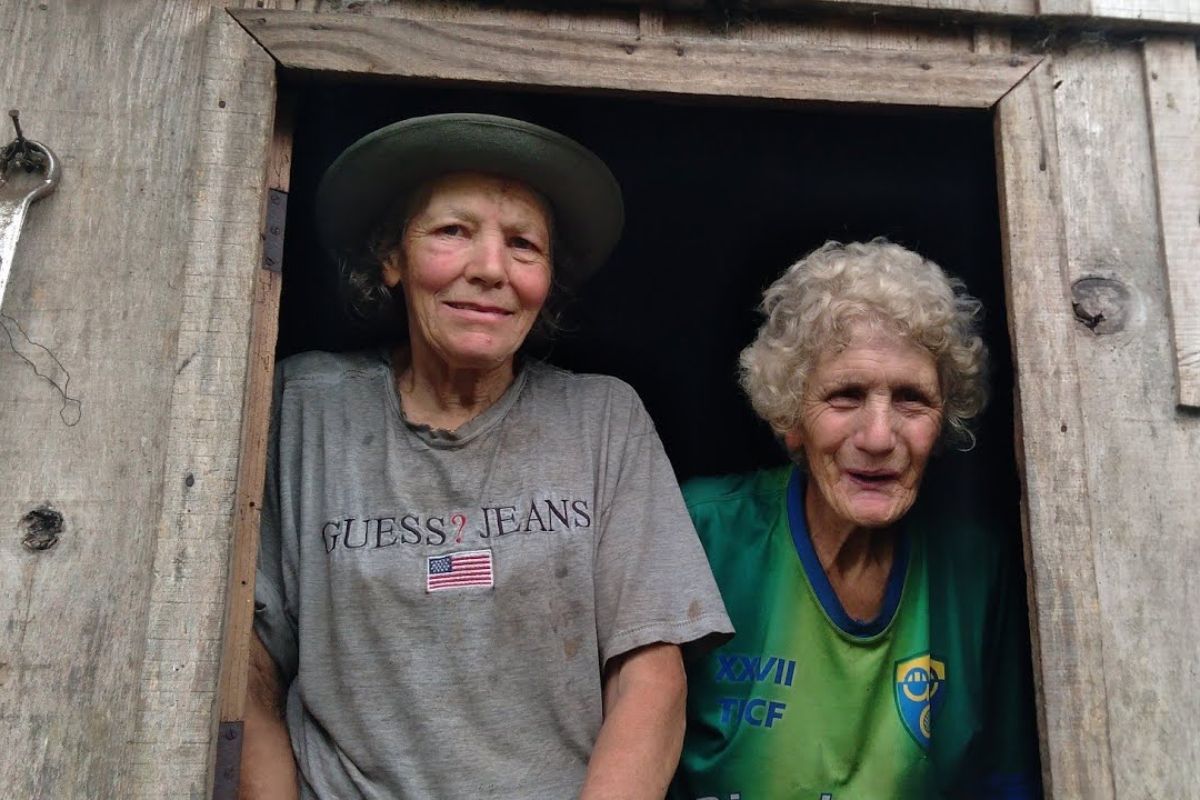
In the Serra Catarinense region, sisters aged 72 and 73 live alone on a productive farm, sustained by an organic vegetable garden of over 1 hectare, eggs, cheese, and milk taken to the weekly market. They reject industrial medicines, trust in medicinal plants, and report fearing isolation and abandonment every day there.
The sisters, aged 72 and 73, live alone in a rural work routine that combines food production and a fixed sales schedule, with a market once a week. The footage was taken in the town of Tencílio Costa, in the Serra Catarinense region, where the vegetable garden spreads around the house.
In addition to production, they describe self-care based on medicinal plants and state that they do not take “medicine outside of their usual methods.” maintaining a daily green juiceThe story also recounts one of their careers as a teacher for 28 years before her permanent return to the farm.
What sustains the 72- and 73-year-old sisters who live alone in the countryside?
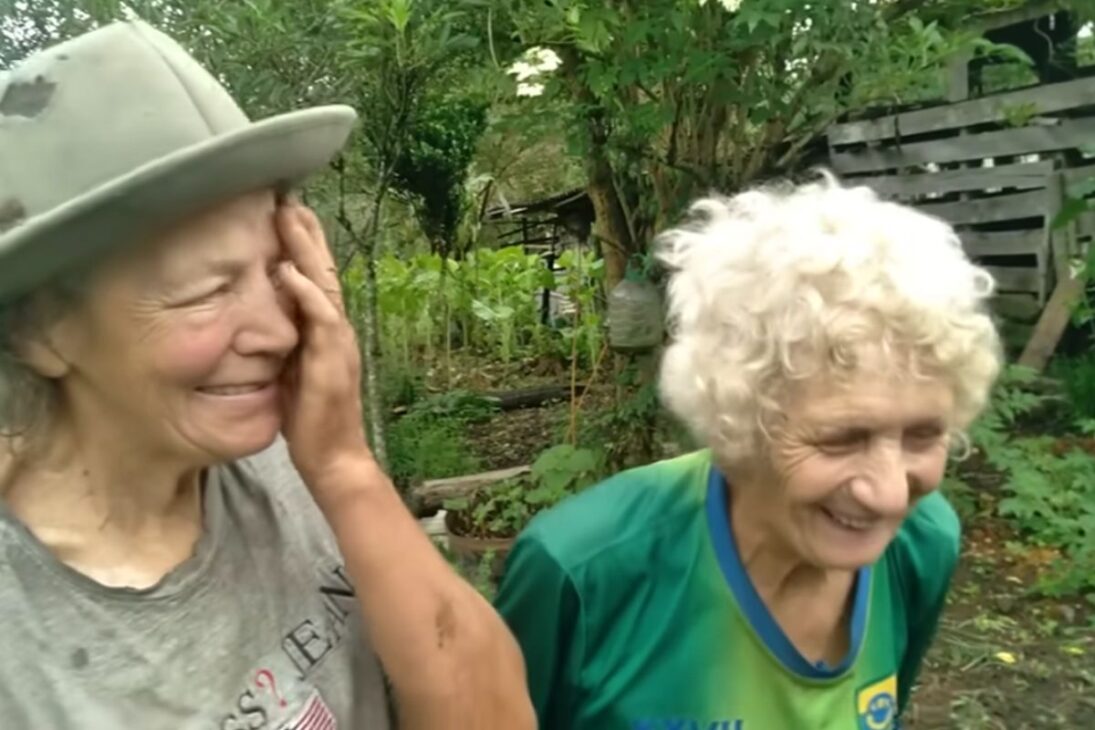
The sustainability described in the account appears as a daily practice: drawing sustenance from the land, reducing purchases, and maintaining food and income with what comes from the garden and the fields.
— ARTICLE CONTINUES BELOW —
See also other features
-
Bees have “proven” in practice an efficiency problem that humans have debated for centuries, building hexagonal honeycombs with almost exact angles and minimal wax, a secret confirmed by mathematics in 1999 and copied by engineering.

-
At 68 years old, this woman lives alone in the middle of the woods, without electricity, raises animals, grows beans, overcame a serious illness, and says that working in the fields truly saved her life.
-
Carved into a solid rock mountain, this was one of the largest underground air bases in the world, with approximately 3,5 kilometers of tunnels, fighter hangars, and runways integrated into the terrain.
-
Rana sylvatica, the frog that freezes completely and comes back to life: an amphibian capable of stopping its heart for weeks, freezing up to 65% of its body water, and using glucose as a natural antifreeze.


The vegetable garden functions as a living stockpile., with continuous harvesting and varied supply.
Among the items mentioned for the market are kale, beetroot, green beans, figs, and sweet corn, with variations depending on the week.
Milk plays a central role in this domestic economy: they milk the cows and take them to the market, mentioning the preparation of cheese and curd cakes as ways to make use of the production.
Weekly market: a fixed commitment and the pressure of the rural calendar.
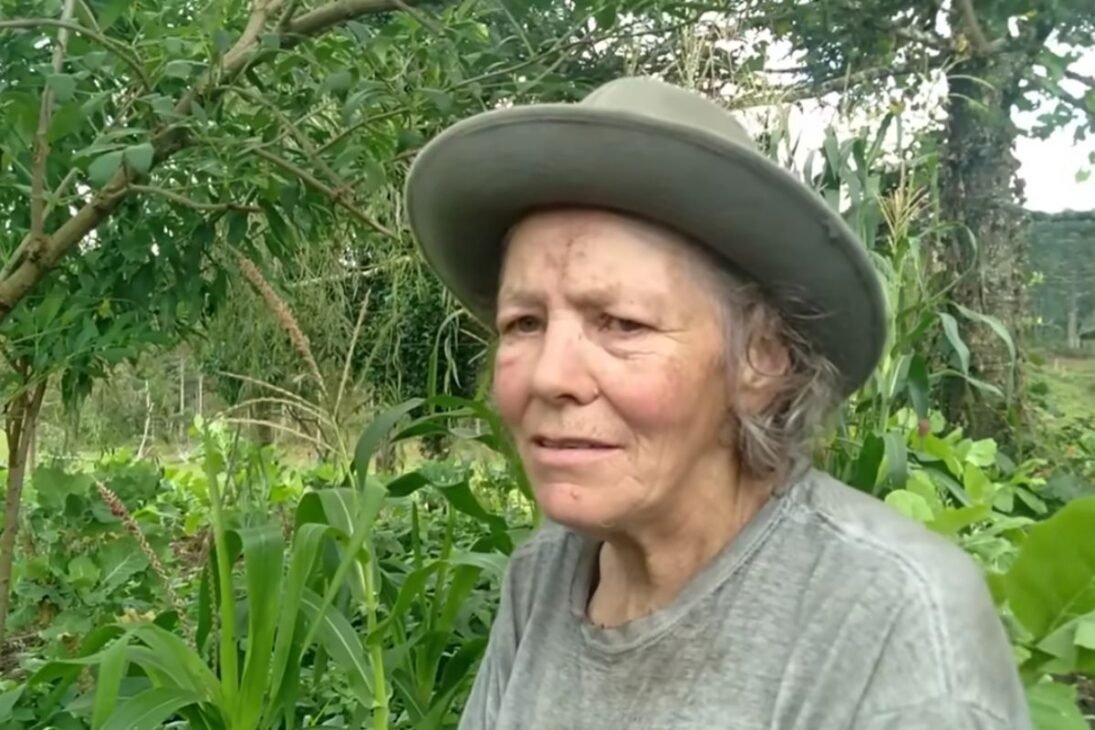
The fair appears as a rigid routine.
When asked about frequency, the sisters say they go to the market once a week and that there’s always something to buy.
This regularity forces the garden to deliver in short cycles.
Production becomes the agenda.Because what is ready determines what goes to the market and what remains for consumption and reuse.
The logic also works as a way to control losses: what doesn’t sell at the market can go back to the kitchen or be transformed, as is the case with recipes and dairy products mentioned on the website.
Medicinal plants and the choice not to use industrial medicines.
The most striking point of the account is its relation to health.
The sisters claim that they make their own medicine and do not take “out-of-pocket medicine,” describing homemade preparation and a daily routine of green juice in the morning.
In the example cited, the use of elderberry combined with other ingredients in the juice appears, associated with everyday care, including mention of diabetes.
For them, medicinal plants are not a supplement, they are a method. The statement connects food and treatment by asserting that the land provides both food and “medicine”.
Vegetable garden management: composting, waste disposal, and the rule of not burning.
The management described includes reusing waste for compost and the explicit decision not to use fire, thus avoiding burning organic material on the site.
There is also direct criticism of the poison.
The interviewee states that she avoids pesticides in her garden and tries to keep at least 80% of her food more natural.
The cost of this path is evident in the physical effort: the account mentions difficult weeding and the need for a sharp tool to hold the grass firmly underneath, describing the work as continuous.
What is planted and what is raised on the farm
Diversity is not limited to vegetables.
The report mentions items such as sweet potato, pumpkin, and marcela, reinforcing the variety of harvests and uses.
The scene depicts four cows giving milk and birds for egg production, as well as references to pigs and calves as part of the farm’s daily routine.
Biography: Teacher for 28 years and return to the countryside.
The interviewee introduces herself as a primary school teacher and reports having taught for 28 years, often in rural areas, with experience in school gardens to support school meals.
She states that she was born there, left to work in nearby towns, and returned to live with her sister, emphasizing that her sister “never left here.”
This background helps explain why the 72- and 73-year-old sisters live alone and keep the farm’s operation centralized on the two of them, even with occasional support from relatives who live elsewhere.
The point of tension: fear of isolation and a need for recognition.
Even with productive autonomy, the account exposes vulnerability.
The interviewee states that she is afraid of being alone and asks that people value their work and not leave the two of them isolated.
The request comes alongside environmental concerns: she mentions soybean plantations in the surrounding area and says she fears the pollution associated with the pesticide, pointing to risks to her garden and to her health.
History shows that the autonomy of the 72- and 73-year-old sisters, who live alone, rests on four pillars: vegetable garden, market, milk, and medicinal plants.
It works, but it requires daily effort. And it doesn’t eliminate the risk of isolation when the surrounding social network weakens.
If you live near elderly farmers, a realistic approach is to buy from them at the farmers’ market, offer logistical help, and support their garden as a source of income. as food.
Do you know of any stories where the vegetable garden, the market, milk, and medicinal plants sustain elderly people in the countryside?