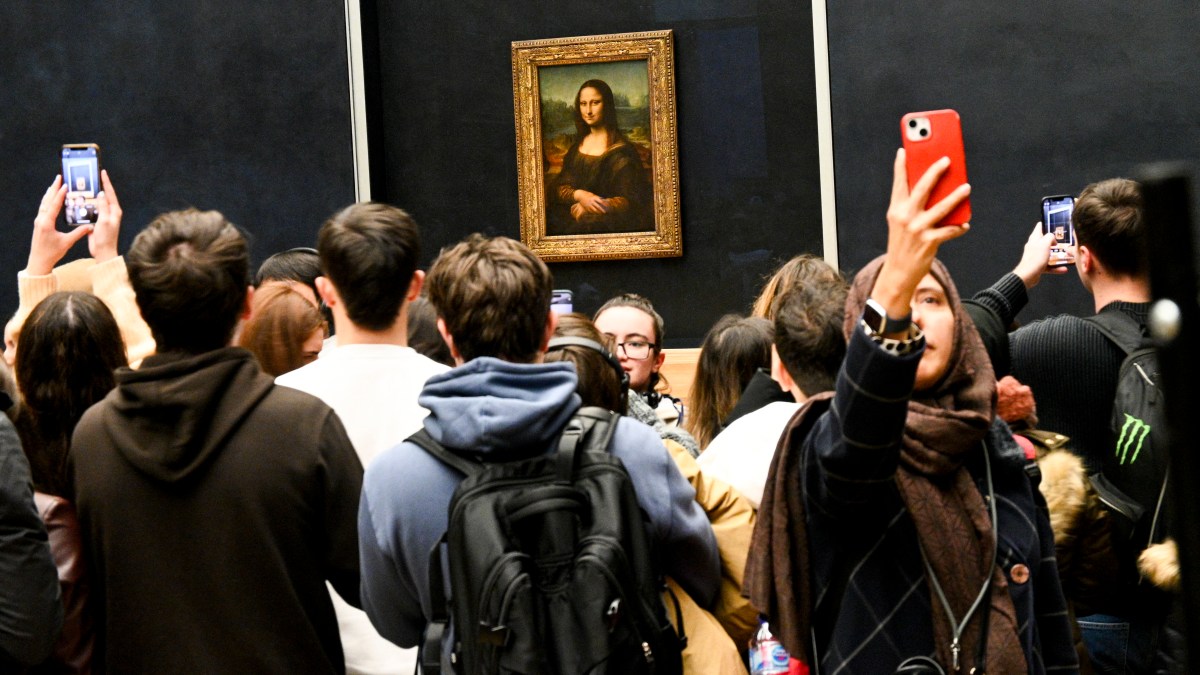
What good are the arts? To point merely to the enjoyment they give rise to strikes many as frivolous. To mention beauty risks something worse — it’s close to a confession of preciousness on the part of the speaker. To argue that art, like other disciplines, promotes knowledge has always been challenging because so much artistic creation is fictional, like novels, or largely non-representational, such as classical music.
Some have argued optimistically that the arts may have an ennobling effect on their audience, but pursue that argument and, according to Godwin’s law, it won’t be long before someone mentions one particularly well-known 20th-century Austrian water-colourist and you will be back at square one.
Daisy Fancourt, an epidemiologist at University College London, says the arts will make you better. Not a better person, mind you. Rather, bringing the utilitarian justification of the arts up to date with the hypochondria and health-consciousness of the modern age, Fancourt argues that the arts will make you feel better.
Art Cure is “a journey through the astonishing scientific evidence for how arts can … stave off illness and disease and help you live a longer and fuller life”, she says. Do you have enough art “ingredients” in your cultural “meal plan”?
In defending her view, Fancourt’s strategy seems to be to overwhelm the reader with evidence. After a while the effect is quite unrelenting. “There is no physiological system that art does not affect,” she says ominously, and there are “hundreds of mechanisms” that have been identified linking art to health outcomes. Notice, though, how Fancourt helps herself to the World Health Organisation’s maximally inclusive definition of health: “a state of complete physical, mental and social wellbeing”.
Probably sensibly she does not try to resolve the contentious question of what counts as art, or what counts as engaging with it. That means, for the various and shifting purposes of her book, everything counts: singing, origami, doodling, going to hip-hop gigs, graffitiing, listening to ambient music, even, she seems frighteningly to suggest at one point, watching the American TV series Gilmore Girls.
• The artists transforming mental health wards into healing spaces
Those parameters may seem benignly inclusive, but they risk trivialising Fancourt’s thesis, making it no more interesting than the claim that engaging in any passably intelligent activity can be shown to be good for you in some way. Well, duh.
Still, a lot of the evidence Fancourt presents is notable and relevant. “Engaging” with “art” has been shown to lower levels of cortisol (a stress hormone), decrease rates of dementia and mental illness, boost the immune system and lower the body’s inflammatory markers. Some effects are fairly immediate. “If adults over 60 without previous musical training are given music lessons … within a few months they show improvements in their cognitive flexibility and processing speed,” she says.
Other effects are gradual and cumulative. Professional musicians have “a larger volume of grey matter in several areas of the brain, including motor, auditory and visuo-spatial regions”. Fancourt argues that “adults over the age of 50 who regularly go to museums, live music events, galleries, exhibitions, the theatre or the cinema are physiologically around four years younger than those who never engage”.
• NHS to offer art classes instead of prescription drugs
Other data slots in more randomly. Did you know that pre-teens who read for pleasure are more likely to consume fruit at the onset of adolescence? Or that Transport for London found that assaults on staff decreased by 25 per cent when classical music was piped into stations?
Fancourt plays down the obvious possibility that other factors may explain the effects. Still, by now even the slowest of readers has got the gist: whenever an artistic intervention is studied and reported on the results will prove pleasantly astonishing and positive. Why, then, aren’t the arts funded as an urgent matter of public health? The decline in dementia rates alone, Fancourt suggests, would be worth £1.5 billion a year to the NHS. And what about kids? Getting them to adopt Fancourt’s artistic “meal plan” could have positive “spillovers”, “helping them to avoid being underoccupied, which is often the first step towards unhealthy behaviour like underage drinking, smoking or becoming part of a gang”. Ah yes, artists — those famously non-smoking, non-drinking, rule-abiding figures.
But such a narrow argument has an unsettling effect. Fancourt’s one-eyed view of the terrain risks flattening the subject matter. Are the arts valuable because they can be used as an effective instrument of public health management? Even if it is true that they can be, to lay so much emphasis on this seems curiously to miss the point; like making a utilitarian case for the advantages of loving your children.
• Prescribing art and gardening for patients may be a waste of money
What kind of person, one finds oneself wondering, would be motivated to develop an interest in art after reading Fancourt’s book? A reluctant graffiti artist worried about his cortisol levels? A post-operative convalescent who, having finished off the last of the painkillers, desperately turns to the sedative labelled “Gilmore Girls”? Any number of such strange creatures spring to mind.
Fancourt’s homespun and often shockingly insipid reflections do little to assuage the reader’s concerns. We are warned not to “feel pressure to try anything too ‘highbrow’”. When choosing your “daily dose” of art, we are advised blandly to “find an activity that resonates with you and your sense of self”. If you want “immediate relaxation”, opt for “calm tempos, low volumes”. If you suffer from stress, why not keep “a little ball of Plasticine in your desk drawer so you can try to mould your stress into a figure”? Art that addresses challenging themes like death or suicide must “walk a careful tightrope” because it can be “harmful”. Why not hang “a calming picture next to your desk that you can take 60 seconds to gaze at”?
In keeping with the convention of much popular non-fiction, Fancourt’s book is peppered with random gobbets and unmemorable character-led anecdotes, all of which breathlessly illustrate the barely credible degree to which amateur art engagement can transform lives. Of a lawyer who becomes a part-time songwriter, we learn “she felt a profound, euphoric happiness — all her stresses washed away and replaced by a spine-tingling feeling of wonder”. Hooray for her.
• Read more book reviews and interviews — and see what’s top of the Sunday Times Bestsellers List
Some people may find Art Cure inspiring, its message important and its praises worth singing. It is certainly relentlessly well-meaning. In its uniform banality and colourlessness it, ironically, fails to embody any of the qualities of surprise or subtlety characteristic of good art. For my part, I often wanted to scream at the unfairness of being made to read it. Not, when you think about it, a healthy outcome.
Art Cure: The Science of How the Arts Transform Our Health by Daisy Fancourt (Cornerstone £22 pp352). To order a copy go to timesbookshop.co.uk. Free UK standard P&P on orders over £25. Special discount available for Times+ members