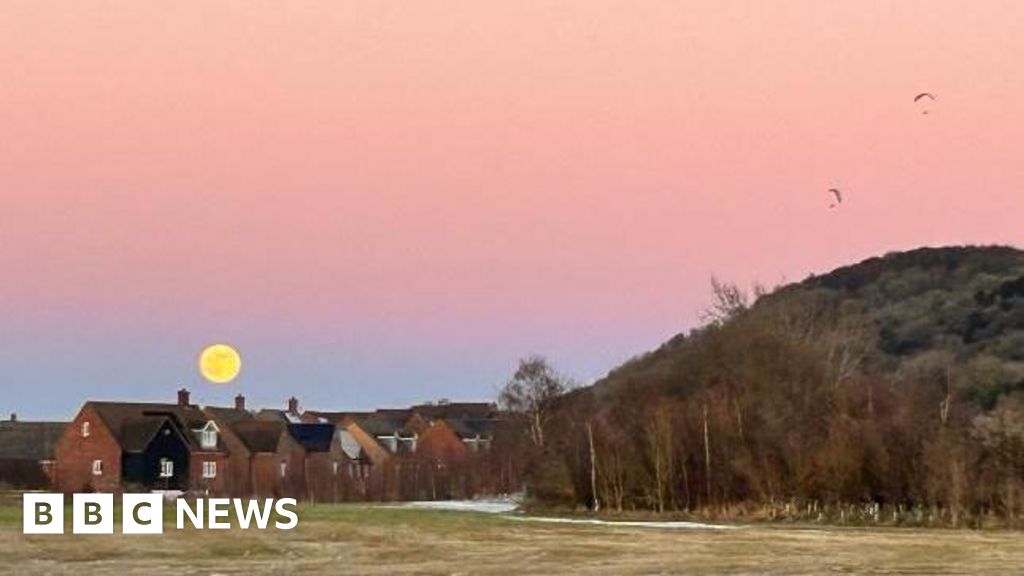
The first full moon of 2026 has lit up skies across the south of England.
It was the fourth supermoon in a row, following October’s Harvest Moon, November’s Beaver Moon and the Cold Moon in December.
The January moon is known in the Northern Hemisphere as the Wolf Moon, coming at a time of the year when it was believed wolves howled more due to there being less food around.
BBC Weather Watchers have been capturing images of the Wolf Moon as it reached its peak.
It is also sometimes called the Old Moon or Ice Moon and is referred to as a supermoon because it looks larger. This caused by its elliptical orbit bringing it closer to the Earth.
There will not be another chance to see a moon so large and bright until November.