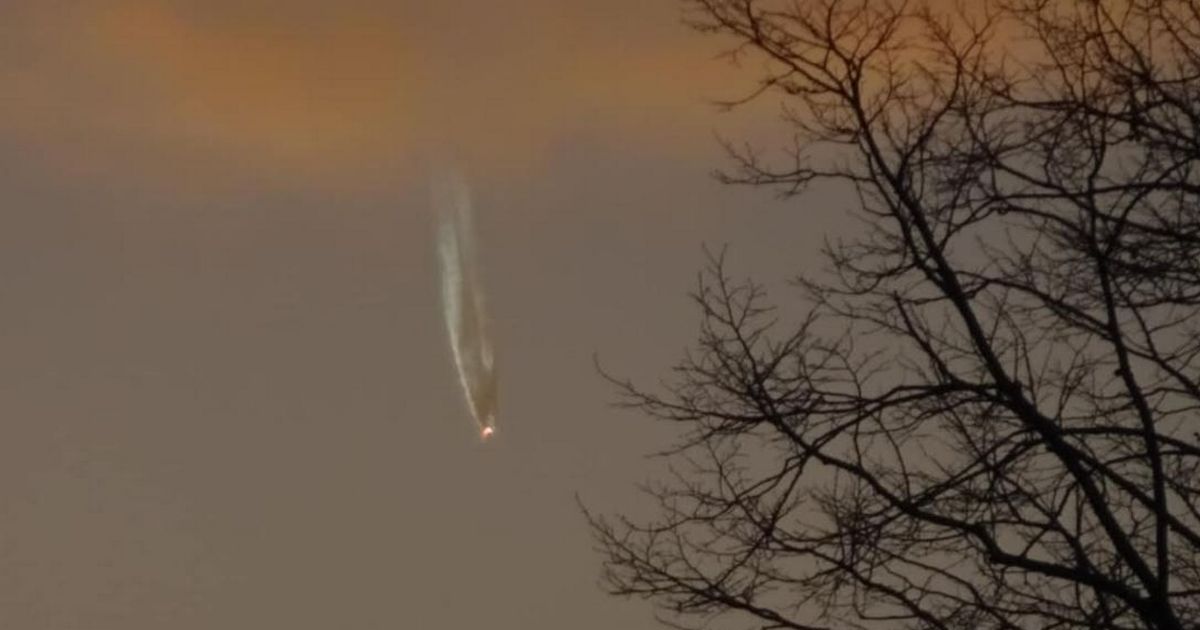
The rare phenomenon was spotted from a residential home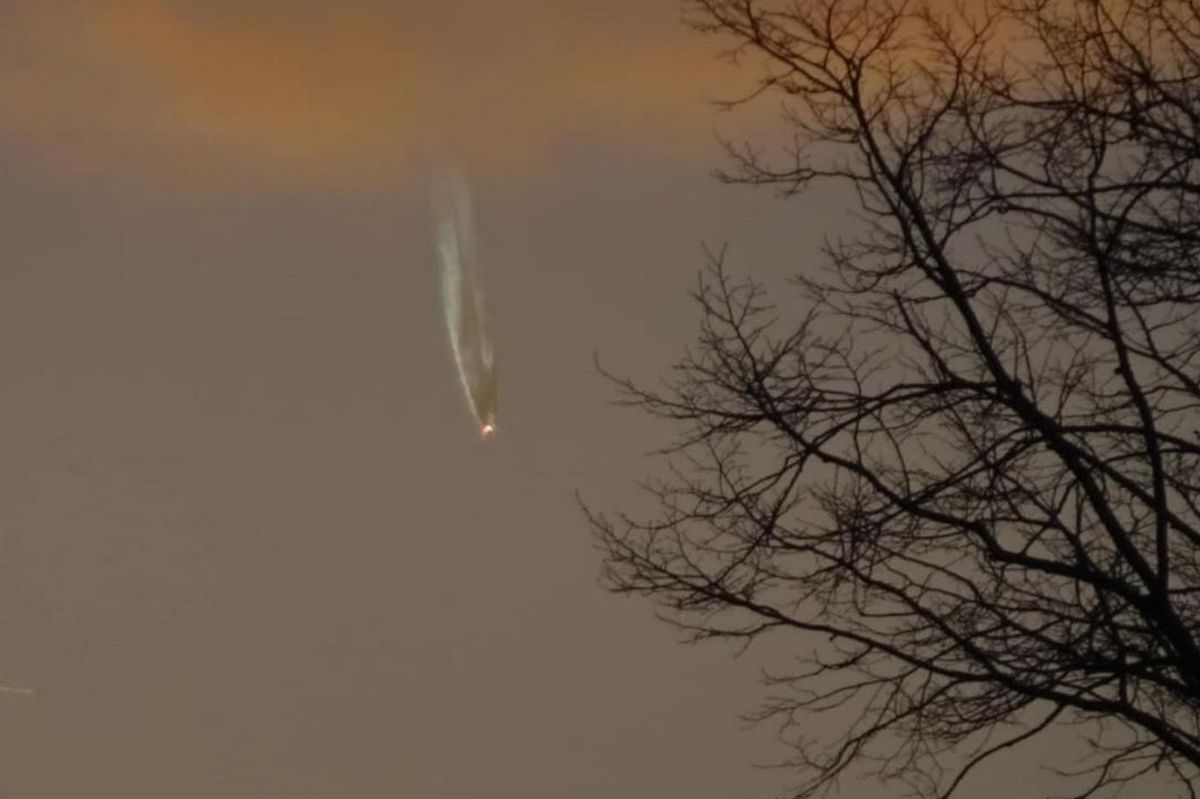 Ed Williams spotted the burning meteor passing through the atmosphere from his home in Wrexham(Image: Ed Williams)
An amateur astronomer was left astonished after witnessing a rare fireball blaze across the morning sky outside his home in North Wales. Ed Williams, 52, spotted the flaming meteor cutting through Earth’s atmosphere while looking out of his landing window in Wrexham yesterday morning (Sunday, January 4).
At first, the property maintenance worker mistook the bright streak for an aircraft, before realising he was witnessing something far more extraordinary.
“I’m a bit of a stargazer and knew that it was going to be a busy sky at the weekend,” he told What’s The Jam. “Because of the Wolf Moon and the Quadrantid meteor shower.”
Despite spending time watching the sky on Saturday night, Ed had seen nothing out of the ordinary. “The moon was stunning on Saturday night too. I stood out for ages trying to see a meteor but never did,” he said.
In a surprising twist, the real spectacle came the following morning. “When I got up for my morning coffee on Sunday and looked out of my landing window, I noticed a bright streak in the sky,” he explained. “Not a usual plane streak – it looked like it was on fire.”
The experienced stargazer quickly identified the phenomenon. “I thought straight away this is a fireball meteor – not a shooting star. It was definitely entering the Earth’s atmosphere, flaming, and it was definitely burning up as it got lower.”
 Ed admitted that the sighting was completely unexpected (Image: Ed Williams)
Ed said the sighting occurred at around 8.15am and described the moment as unforgettable. “I was blessed to see it. I’ve seen lots of shooting stars and satellites but not one of these. It was a privilege.”
Reflecting on the timing, he added: “I wasn’t fortunate enough to see anything on Saturday night. Then I saw a fireball right outside my landing window. I was very lucky.” For the biggest stories in Wales first, sign up to our daily newsletter here
Fireballs are significantly rarer than ordinary shooting stars. They are exceptionally bright meteors caused by larger pieces of space rock entering Earth’s atmosphere at high speed.
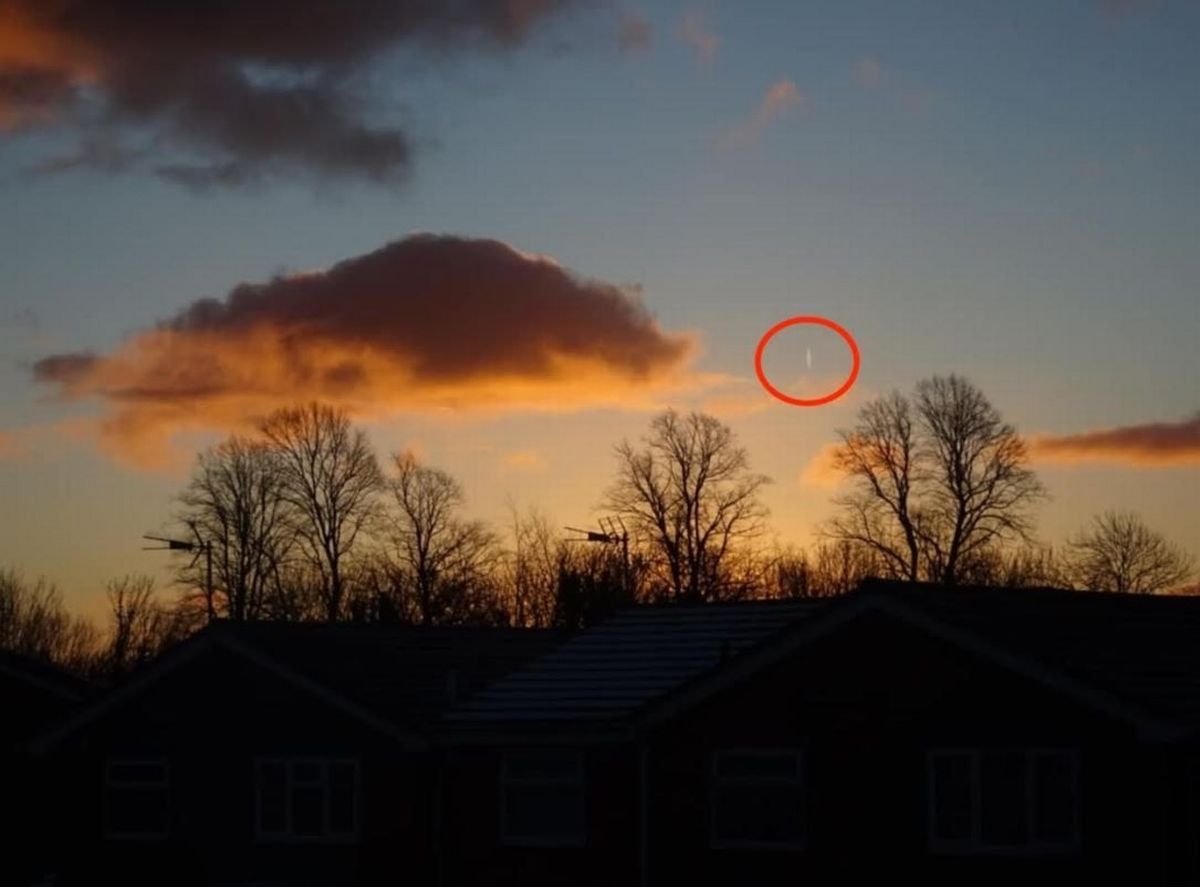 The burning meteors are significantly rarer than ordinary shooting stars(Image: Ed Williams)
As they burn up, they create brilliant streaks of light and can sometimes produce explosions or shockwaves. In rare cases, fragments survive the descent and land on the ground as meteorites.
For astronomy fanatics, the celestial displays are far from over as the start of the year is set for more stargazing highlights. According to Royal Museums Greenwich, from January 1 to 12, the Quadrantid meteor shower will put on a celestial display. For the best chance of seeing the shower, observers are advised to find a dark location, dress warmly, and look towards the constellation Boötes.
Just days later, on January 10, Jupiter reaches opposition, meaning it will shine at its brightest and remain visible throughout the night. The gas giant can be easily seen even in light-polluted areas, making it an ideal target for binoculars or telescopes.