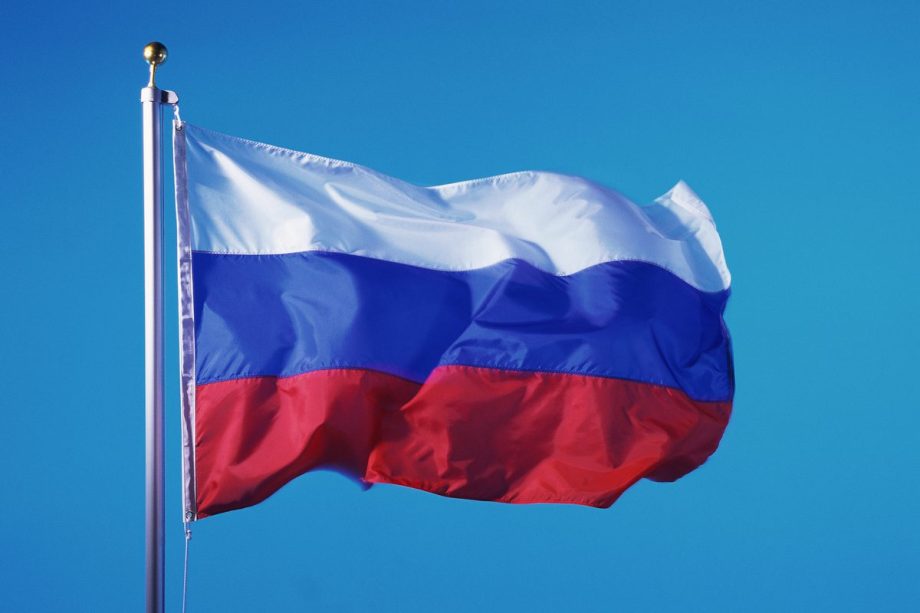
Who will trust Russia when the moment of truth arrives? Who will bet on Moscow when necessity collides with calculation? Traditional allies already know the answer. Moscow does not protect. Moscow tests. It professes loyalty in words, but fails to demonstrate it in action. When the moment of truth arrives, all you find is silence, inflated rhetoric or a cold calculus that leaves you exposed.
Venezuela is the latest proof of this. A petroleum-rich nation. An ideological ally. Nicolás Maduro and Vladimir Putin have a long-standing personal relationship. Yet when U.S. pressure peaked, Russia’s response barely went beyond verbal condemnation.
Moscow described the situation in Caracas as “intellectual hostility overpowering diplomacy”. Elegant phrasing. But toothless in reality. It was as if the unfolding struggle were a philosophical debate rather than a contest of power in a world that measures results, not words.
Fyodor Lukyanov, a foreign policy advisor close to the Kremlin, was blunt: ‘For Russia, the situation is extremely uncomfortable. Venezuela is a close partner and ideological ally, but providing any real assistance to a country operating in an entirely different geopolitical reality is simply impossible for technical and logistical reasons”.
Lukyanov’s remark is not just about Venezuela. Rather, it encapsulates an unwritten Russian doctrine: that alliances are temporary and flexible, recalculated at every turn. As historian Stephen Kotkin wrote in The New York Times: ‘Putin does not build alliances. He builds networks of influence, which expire when the cost of defending them rises”.
Russia fights for itself, not its allies. It does so decisively within its immediate sphere: Ukraine and the Caucasus, areas that Moscow deems existential. Beyond that, power becomes symbolic: limited bases, mercenaries, grand rhetoric and a shadow of a state presence.
READ: Putin confirms Russian-Ukrainian ‘secret talks’ in Abu Dhabi
The Washington Post described this paradox perfectly: ‘Russia is a regional power speaking a global language.’ This explains why distant allies feel alone, no matter how forceful their statements may be. Then there is Washington’s cold calculus. Of Trump.
To the Kremlin, the US is not a permanent adversary — it is a negotiating partner. The mere prospect of Trump’s return reshuffles priorities. As The Wall Street Journal noted: ‘Putin prefers a major deal with Washington over a series of marginal commitments to weak allies.’
In this logic, Maduro is a burden, not a bargaining chip — a side story in a bigger game called Ukraine.
Russia does not openly betray. It abandons quietly. And that is the most dangerous thing of all. Iraq, Syria, Armenia and Serbia have learned that the Russian umbrella provides media protection but no practical support when calculations change.
The Guardian once wrote that Moscow ‘mastered the image of power better than the exercise of power itself beyond its immediate neighbourhood’. The question is no longer why Russia failed Venezuela.
The question now is: why do some allies still trust Russia? Is it because options are scarce? Because political memory is short? Or because promises delivered in an imperial tone still deceive?
Russia will abandon its other allies. Not because it is weak, but because it is consistent — brutally consistent. Its alliances are neither ethical nor ideological. They are temporary, conditional and disposable at the first crossroads of interest.
And who still trusts Russia? This is a question that does not require an answer. But it requires the courage to face the truth.
OPINION: Sick Europe
The views expressed in this article belong to the author and do not necessarily reflect the editorial policy of Middle East Monitor.