
I didn’t get a smartphone until I was 30. I spent most of my twenties with one of those old-school Nokia bricks. My only experience of social media was a MySpace page for my band (a drum n bass/funk/metal fusion band that, for some reason, never took off) until, at 28, my then-girlfriend finally coerced me into joining Facebook.
I have to keep my nostalgia for the 90s and early 2000s in check. My twenties were far from plain sailing: I shuffled between jobs and periods of unemployment, frequently sofa surfing at friends’ houses and struggling with poor mental health.
Conversely, some things were easier then. I had a support network, I travelled frequently and picking up work, while tricky, was not quite the thankless, soul-shredding task it has since become.
There have definitely been improvements since I was younger. Conversations around mental health are more nuanced, consent and sexual violence are better understood, queer identities more accepted, and gender equality discussed more widely.
I wanted to mirror the positive mentorship I’d had and create that same space for others
Darren Alexander
But the cultural and social environment we’re now living in feels like another universe.
Our economy has failed young people. Precarity is the norm and the once established path of: “Go to school, get good grades, go to uni, get a good job” – is now redundant. Living costs are outrageous, well-paying secure jobs are scarce, and those who decide to go to university are saddled with enormous debt.
Social media has infiltrated every aspect of our lives. Cultivating an online persona is second nature for young people who grew up as digital natives. And while research spelling out the harmful effects of social media on self-esteem, mental health and body image is overwhelming, there’s no escape from the constant bombardment of content telling you your life is not as good as it should be.
How does this all show up on a local level? What’s it like for young people growing up in Bristol, and how are they navigating this jarring reality we find ourselves in?
Visiting ACE
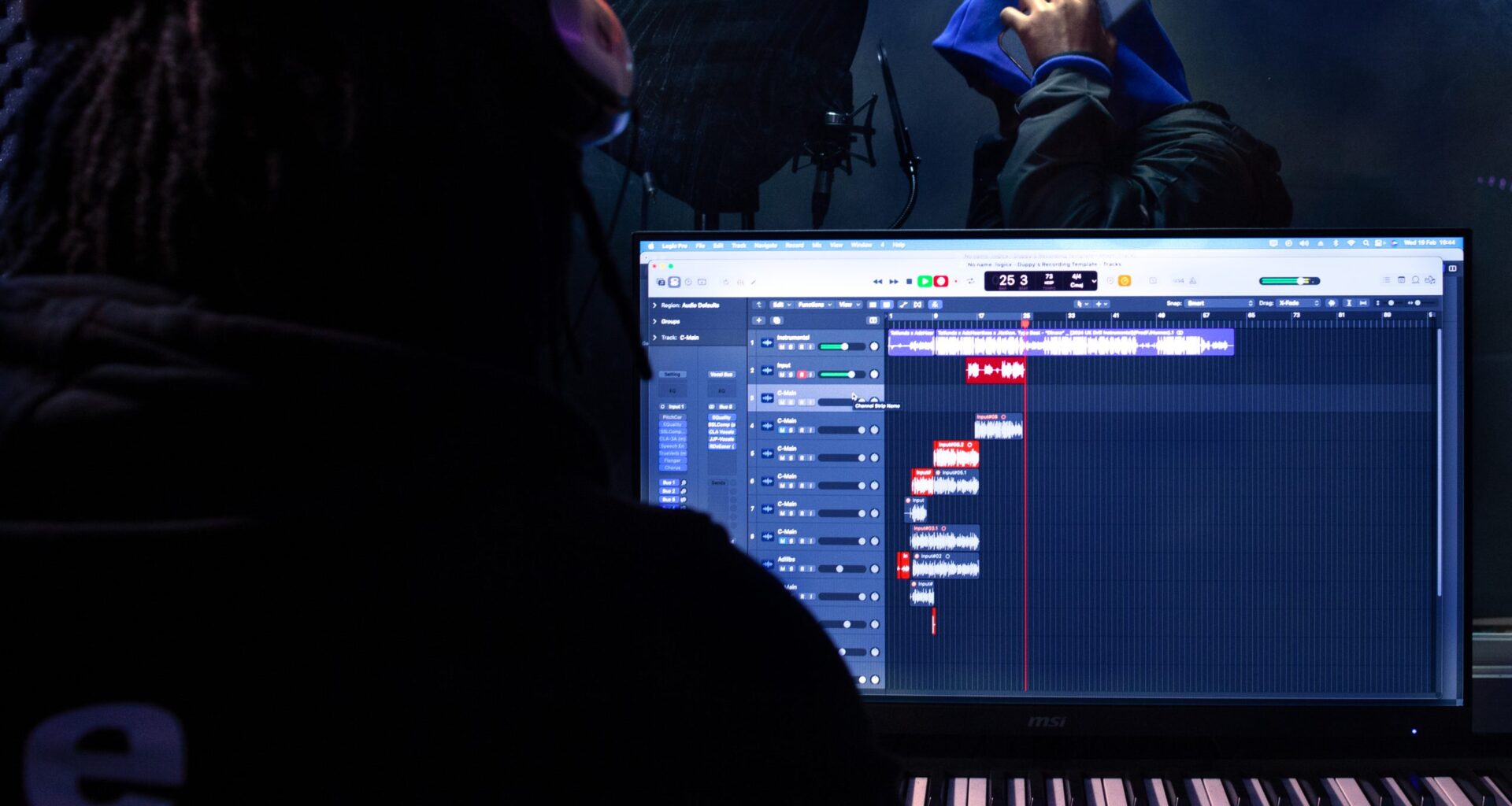
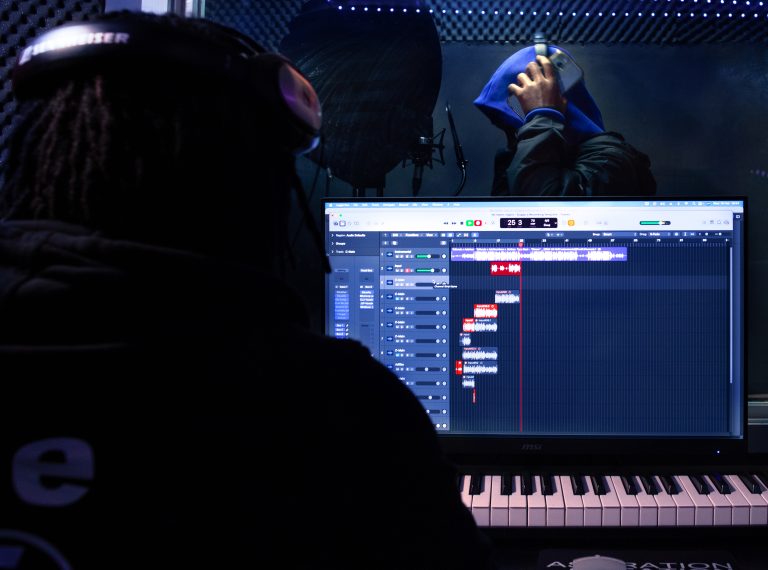
It’s a chilly evening in late October when I step through the doors of Docklands youth centre in St Pauls. In the music studio, dimly lit with red light, the cold gives way to a sense of warmth and quiet concentration.
A handful of young people are working: some analyse their compositions on computer screens, others record vocals in the booth. Around them, three youth workers offer guidance.
ACE is a longstanding youth engagement programme designed to support and mentor young people facing social, economic and racial barriers. Over the past decade it has inspired whole generations of Bristol’s youth.
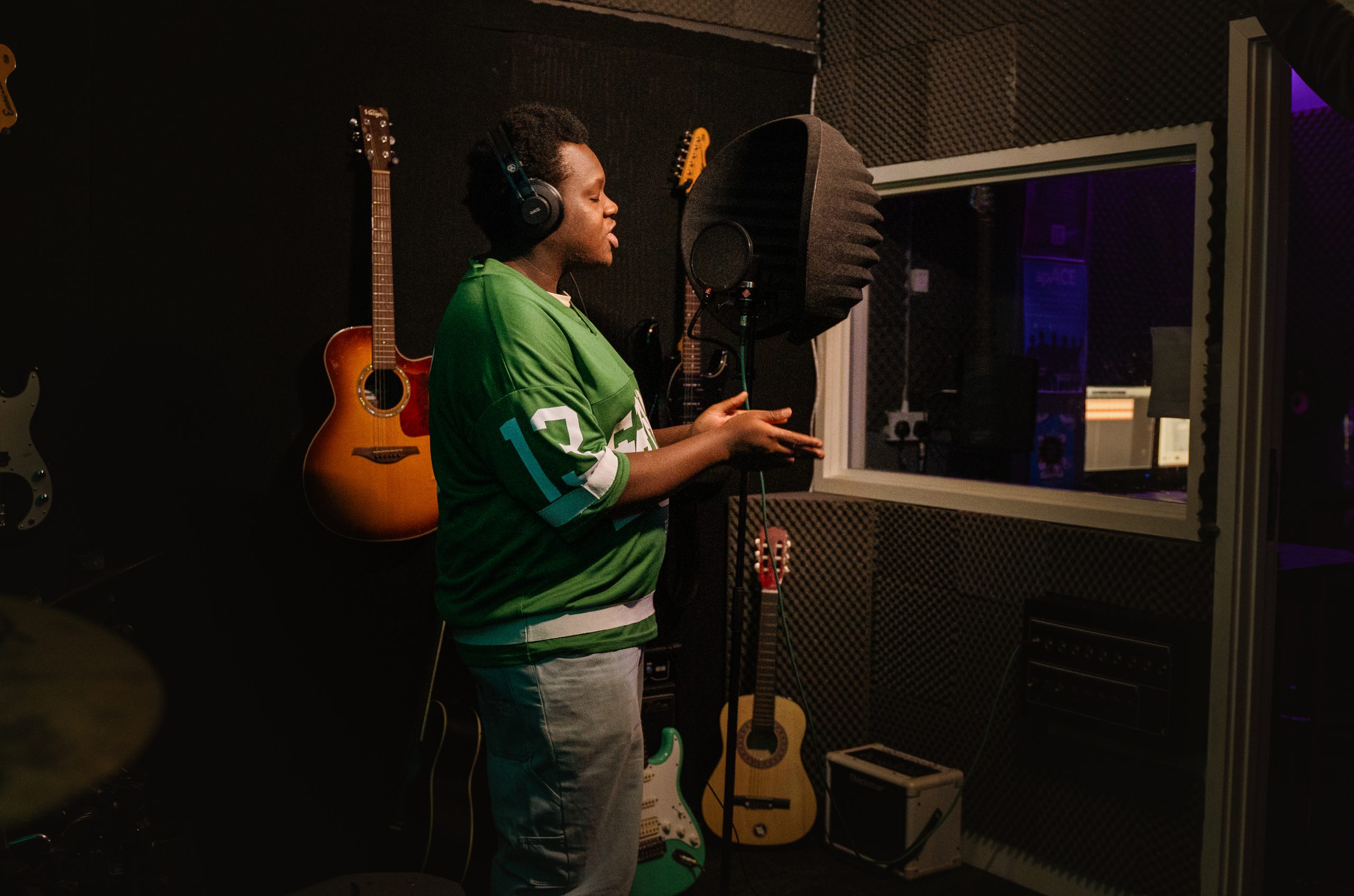 Warren, 24, is a regular attendee at ACE. Credit: Keycreationz.
But with rising insecurity, low self-esteem and a social media–dominated culture, the work feels more urgent — and more difficult — than ever.
Upstairs, I meet Darren Alexander, ACE’s founder. Wearing an ACE hoodie and a wide-brimmed baseball cap, he tells me about growing up in Barton Hill — an area of widespread deprivation that offered few opportunities for young people.
He was inspired to start ACE in 2013 by his own experiences of youth work. “I found a lot of benefit from that,” he says, fondly recalling how to use music technology at a mentoring scheme he joined as a teenager. “Through that project, I built my skills as a musician and as a young professional, to then start to lead projects myself.”
After years of freelance youth work across the city, from Lockleaze to Barton Hill to St Pauls, Darren decided to create the kind of environment that had once supported him. “There was definitely this sense of —if you look a certain way, this is how you should behave,” he says, reflecting on the pressures young Black men faced growing up. “I wanted to mirror the positive mentorship I’d had and create that same space for others.”
More than a decade later, ACE has 15 staff and runs creative workshops, nature outings, one-to-one mentorships and school sessions, working with children from age eight up to young adults in their early twenties.
‘What I’m most proud of is just keeping at it’
Warren, 24, a regular attendee at ACE
I come to ACE music studio quite often, mainly because I’ve always wanted to be a rapper and make music, but I never had the resources or guidance on how to do it. The first few sessions I came here, I didn’t really do anything. After some time, I actually got into the booth and started rapping and getting my confidence up.
People are friendly and encouraging — that’s what makes this place different. I’ve made new friends and collaborators. Everyone just gets on.
I make boom bap hip hop. So nineties rap sort of stuff. My favourite from that era? I think I would have to say Nas, not gonna lie. That song “The World is Yours.”
Everyone these days is online. They’re stuck glued to their phones, no one really goes outside that much. What this place provides is a third space, a place for people to actually come together and communicate with each other.
I was very isolated for a very long time. It was hard to come out of that shell. But what I’m most proud of is just keeping at it. There were times where I didn’t really want to go, but I was like, nah, this would make my day better, so I would just force myself to go. And I’m proud that I kept doing it because now I have a community of people to talk to, to make music with and it’s really good to be in that space.
I definitely do wanna drop an album. I’m thinking of calling it “Smith Pack.” I’m a bit of a perfectionist, so I thought – hey, why don’t we just make a bunch of mixtapes? We don’t try polish it. It’s just a pack of different songs. You wanna listen, go and listen. Here it is.
Isolation and self-esteem
Despite ACE’s success, Darren says the challenges facing young people today are immense. “A lot of young people feel like they’re a little bit lost,” he tells me, describing the lingering impact of Covid lockdowns on education and confidence. “When it comes to thinking about their future, their self-worth and where they’re positioned in the world, there’s a bit of a disconnect.”
The online space, Darren adds, “can be very dangerous. Young people are exposed to things that aren’t healthy for them and don’t contribute to their lives in positive ways.”
He and his team have noticed a rise in extreme beliefs, particularly among young men. “A lot of boys and young men get fed a narrative of what men should be and what women should be. And a lot of the time those positionings are based on the man oppressing the woman.”
Much-needed conversations about masculinity have, in many ways, been hijacked by the ‘manosphere’ — an online space full of notorious grifters and abusers —where regressive ideas about women and cartoonish versions of ‘alpha’ manhood spread with alarming ease.
For vulnerable young men, those images and messages can feel like guidance, even when they’re deeply damaging. This all has an obvious knock-on effect on young women.
“What I’ve observed through my experience is that girls and women have it really tough. Unjustly difficult,” Darren says. “There’s a real fear [among young women] to be seen, because if you are seen, then you can be taken advantage of.”
Conversations like this frequently come up in one of ACE’s school programmes called spACE, where young people can explore their emotions and question assumptions in a non-judgemental environment. “We might start with something like: ‘It’s not okay for your dad to cry, but it’s okay for your mum to cry’. Why is that? What happens when your dad can’t express his emotions?” says Darren.
These conversations are simple but powerful — small acts of unlearning that build empathy and awareness.
Despite the scale of the challenges, Darren remains proud. “We are a small organisation, but I always feel like we punch above our weight,” he says. “We make a lot of what we have, and young people that we work with find a sense of belonging.”
As I leave the centre, I reflect on the conversations I’ve had. The moment we’re living in often feels overwhelming. Young people are facing tides of misinformation and an economy not geared towards their needs. A largely indifferent political class offers few tangible solutions, while an even more distant tech elite makes vast profits by keeping us distracted and tugging at our insecurities.
While the national and global picture often feels bleak, perhaps the solutions are local. I’m reminded that, amid a world of online noise and insecurity, places like ACE — rooted in the community and committed to nurturing young people — are keeping vital spaces for in-person conversation and connection alive.
Independent. Investigative. Indispensable.
Investigative journalism strengthens democracy – it’s a necessity, not a luxury.
The Cable is Bristol’s independent, investigative newsroom. Owned and steered by more than 2,600 members, we produce award-winning journalism that digs deep into what’s happening in Bristol.
We are on a mission to become sustainable, and to do that we need more members. Will you help us get there?