After the removal of Nicolás Maduro from power, the United States began to prioritize political stability and economic interests in Venezuela, relegating an immediate democratic transition in the Latin American country to the background.
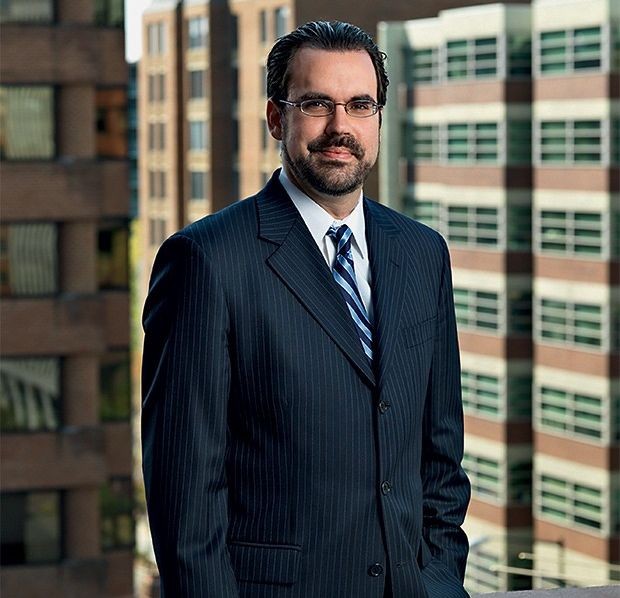
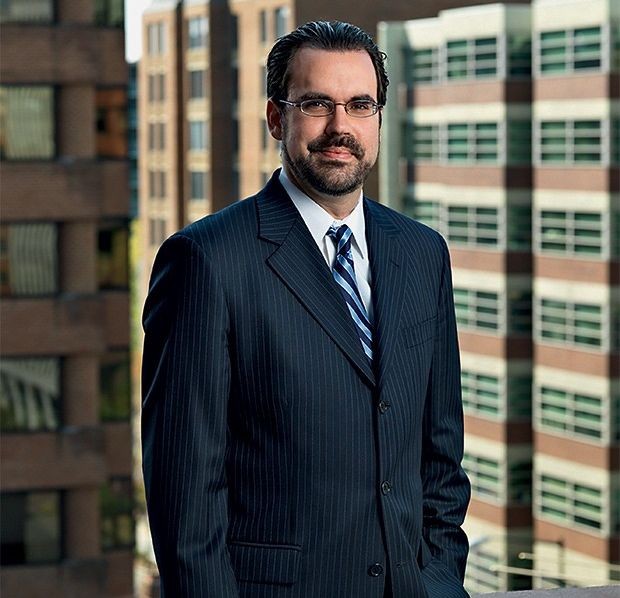
In an interview with BNamericas, Christopher Garman, executive director for the Americas at the political risk consultancy Eurasia Group, analyzes how this strategy extends to the region, currently reducing the likelihood of military interventions in countries such as Mexico and Colombia – recent targets of criticism from United States President Donald Trump over an alleged intensification of international drug trafficking.
BNamericas: What do you see taking shape regarding the transition process in Venezuela? Do the US tend to maintain support for Delcy Rodríguez, the interim president, or is there a plan B involving other figures of the regime?
Garman: I think it is important to recognize, first, that perhaps the White House’s main objective has already been achieved. The apprehension of Nicolás Maduro was, from the U.S. point of view, a success. It is a public demonstration to the U.S. electorate of a commitment to fighting drug trafficking in the region. Regardless of the actual volume of cocaine that passes through Venezuela, this reinforces the image of law and order in the United States, within a broader strategy that includes immigration, deportations, and homeland security.
In this sense, the White House has been much more focused on removing Maduro from power than on thinking deeply about the day after in Venezuela. For Washington, that has already been a success.
Now, within this context, the main concern becomes ensuring a minimum of political stability in Venezuela, also focusing on business opportunities. President Trump was very clear in stating that the oil sector is a core interest.
Thus, the US is clearly prioritizing political stability over an immediate democratic transition.
Delcy Rodríguez is seen as an effective intermediary, someone who comes from within the regime and can guarantee this minimum level of stability. The White House’s bet is on an interim government or an internal reconfiguration of the regime that is more open to the interests of American companies, especially in the oil sector. There is a vague notion that elections might take place further down the line, but this is not a priority for the United States in the short term.
At Eurasia, we believe that Maduro’s fall, with the rise of a government more friendly to the US, could start a process that, over a one- to two-year horizon, will lead to elections and a democratic regime.
However, this transition tends to be slow and possibly turbulent, with internal disputes within the regime and potential pressure from the streets. Even so, the military success and the low resistance observed reduce the risk of more serious social instability in the short term.
BNamericas: In this transition process until a possible election, which influential figures do you see emerging besides Delcy Rodríguez?
Garman: The main internal opposition to Delcy Rodríguez comes from Diosdado Cabello [Venezuela’s minister of the interior], a more radical figure within the regime.
After the operation [that arrested Maduro], she initially adopted a tougher stance, probably to shore herself up internally, but later began to signal a more conciliatory posture toward the United States.
Delcy Rodríguez needs to demonstrate firmness to maintain her space within the regime, but at the same time, other actors understand that she is the most effective interlocutor for dealing with Washington.
The American military threat, including mentions of a possible second wave of actions, ends up partially strengthening her position domestically. Even so, this is a corrupt regime, with factions that do not get along, which calls for caution in the analysis.
BNamericas: Maria Corina Machado, opposition leader who led an election campaign against Maduro in 2024, is she completely out of this game at the moment?
Garman: Yes. The White House has no interest in a rapid transition. The bet is to work with the current regime to ensure stability in the short term.
In addition, there were frictions between Maria Corina Machado and the White House, including the assessment that she did not have an accurate understanding of the regime’s internal dynamics.
The fact that she was, to some extent, discarded was a blow to the Venezuelan opposition. This is a strategic decision by the White House to prioritize stability over an immediate democratic transition.
That said, there is one factor that Washington does not control: pressure from the streets. If there is popular mobilization and the regime reacts with repression, this can create political discomfort for the US. Although the secretary of state, Marco Rubio, advocates elections in Venezuela, this is not a priority for President Trump.
BNamericas: What does this US operation in Venezuela mean for the region? Is there any role for countries such as Brazil and Colombia in this stabilization process in Venezuela?
Garman: I don’t see a significant role for other countries in the region at this time. The White House has a direct line to the current regime in Venezuela and is negotiating these short-term conditions directly. There is no need for mediation by Brazil, Colombia, or other countries.
An eventual democratic transition in the future could create room for greater regional involvement, but I do not see any appetite from President Trump for a multilateral approach. This goes against the instincts of the current U.S. foreign policy. Moreover, the situation on the ground in Venezuela does not require such mediation if the goal is to negotiate directly with the regime.
BNamericas: What signal does this action send to the other countries in the region? Is there a risk of military interventions in other countries?
Garman: This action needs to be analyzed in light of what President Trump himself has now started calling the Donroe Doctrine. After the operation, there was a series of rhetorical threats involving countries such as Cuba, Mexico, Colombia, and even Iran.
That said, we consider a military action in other Latin American countries unlikely. The operation in Venezuela took months of planning and involved an isolated regime, without popular or regional support. Replicating these conditions in other countries is very difficult.
In Mexico’s case, there is cooperation on security and deep economic interests. A military action without the consent of the Mexican government would seriously damage the bilateral relationship.
Regarding Cuba, we see more room for a tightening of the economic embargo, especially in the oil sector, weakening the regime over time, but without a direct military intervention.
BNamericas: And in Colombia?
Garman: We may even see more threats from Trump against Gustavo Petro, president of Colombia, but we have to remember that there will be presidential elections in May, in which the victory of a conservative candidate is more likely. Therefore, the United States’ assessment tends to be not to carry out an intervention in Colombia under a government that is already nearing its end.
BNamericas: In the long term, is the main concern of the United States in the region China’s influence, as some analysts say?
Garman: Yes. China is the central focus. Russia and Iran have a very limited presence in the region today. The main American concern is Chinese economic influence.
The question is to what extent the White House will use instruments such as access to the American market, tariffs, and other tools to condition or restrict Chinese investments in the region.
This capacity for pressure is much greater in Mexico and Central America than in South America.
In South America, I think it is very difficult to eliminate the Chinese presence. China is the region’s largest trading partner, it has significant direct investments, and these countries also want to maintain those Chinese investments. I do not see the United States adopting a heavy-handed approach, such as imposing tariffs on countries that do not restrict these relations.
Thus, I see South America – with the exception of Colombia – as a more balanced space, in which the countries seek to engage in dialogue with both sides. We are seeing this clearly in the case of Brazil, which is seeking to sign an agreement with the European Union, maintains very strong cooperation with China and, at the same time, is trying to negotiate with the United States.
That’s why I would say that South America behaves more like a set of swing states, to use that term, while the United States’ actual backyard is much more Central America and Mexico.
It is clear that we are moving toward a world with less multilateralism and with a logic closer to the law of the geopolitical jungle.
But in this context, I see, for example, Brazil as well positioned due to its strategic assets – critical minerals, agricultural strength, energy capacity, and environmental relevance. These assets allow the country to maintain relations with multiple partners. Thus, Brazil clearly falls into the category of a geopolitical swing state rather than aligning exclusively with a single bloc.
BNamericas: To what extent can these geopolitical issues in the region influence the Brazilian presidential election scheduled for October 2026?
Garman: Very little. Brazil is a continental country, and the election will be dominated by domestic issues such as cost of living, inflation, food prices, and security. The Venezuelan issue may have some resonance in the opposition’s discourse, and surveys show significant support for American intervention in Latin America.
This may help the opposition tactically in the short term, but it should not structurally change the electoral scenario. Today, we are working with a probability of around 60% for the reelection of President Lula [Luiz Inácio Lula da Silva], who remains the favorite.
(The original version of this content was written in Portuguese)