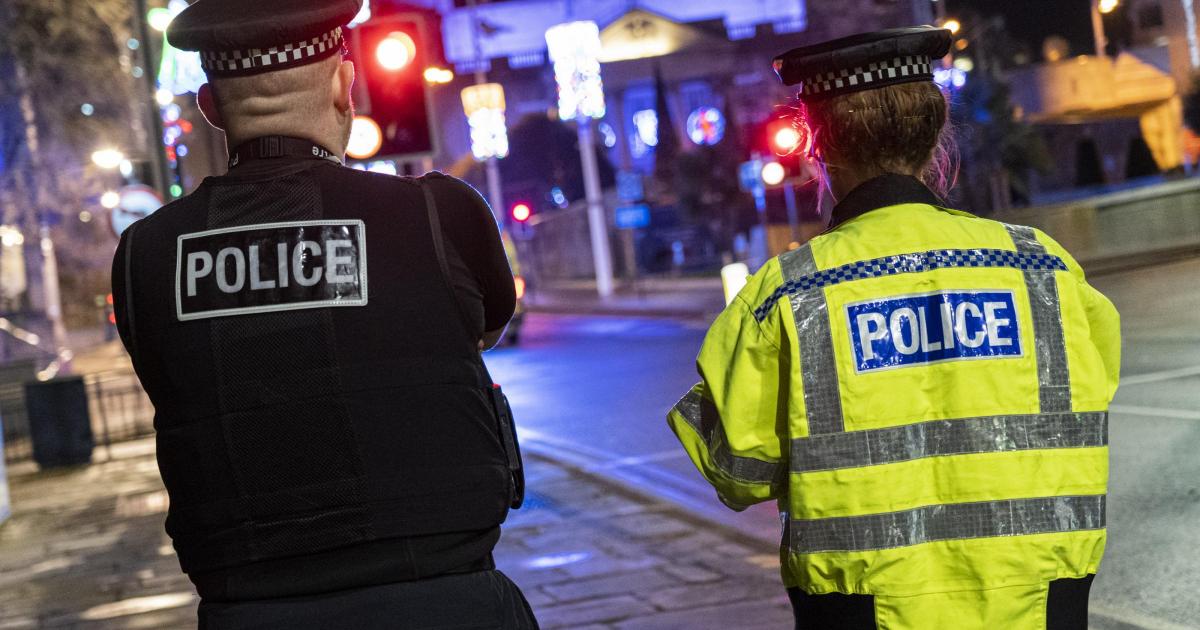
The force’s Operation Jemlock team made 256 arrests during December.
The arrests followed police activity in 180 knife and violent crime hotspots.
A total of 28 weapons were seized during the month (Image: West Yorkshire Police)
180 knife and violent crime hotspots
Chief Inspector John Paul Berriff, who leads the Jemlock team, said: “Officers from the Jemlock violent crime reduction team worked closely with colleagues this December as part of our Winter of Action to make towns and cities safer.
“My officers deployed on a large number of additional patrols in our 180 knife and violent crime hotspots, making a significant number of arrests and recovering dangerous weapons which have no place on our streets.
“Jemlock was formed specifically to reduce violent crime, and violent crime involving weapons in particular, so it has been welcome that our Spotlight patrols have resulted in a number of weapon-related arrests and seizures over the last four weeks.”
One of the knives found (Image: West Yorkshire Police)
28 weapons seized
A total of 28 weapons were seized during the month, including knives, machetes, and a baseball bat.
Spotlight patrols, involving both plain-clothed and uniformed officers, continued throughout December in city and town centres.
These patrols focus on nightlife hotspots, with plain-clothed officers on the lookout for potential criminal activity and uniformed officers engaging with persons flagged to them.
Arrests made
Among those detained was a 17-year-old boy in Leeds who was subject to a Community Protection Notice barring him from the city centre.
He fled from police, discarding a machete in the process, but was arrested and later jailed for ten months for offences including possession of an offensive weapon.
Three other men were arrested on suspicion of possession with intent to supply Class A drugs, with officers recovering suspected drugs and a knife.
Some of the weapons seized (Image: West Yorkshire Police)
New technology used
Operation Jemlock officers also worked alongside police teams using West Yorkshire Police’s new Live Facial Recognition (LFR) technology for the first time in December.
LFR is now deployed in carefully selected authorised locations to identify wanted individuals, missing persons, and those posing a risk to the public.
The system uses two clearly marked police vans to scan faces in real time and compare them to an authorised watchlist of individuals of legitimate interest to the police.
Alison Lowe, West Yorkshire’s Deputy Mayor for Policing and Crime, OBE, said: “This proactive action from West Yorkshire Police is crucial to our collective efforts in reducing serious violence.
“It’s also great to see the use of new technology in supporting our local communities and keeping people safe.”