Schools, hospitals and care homes are among the tens of thousands of properties which were affected in south-west Berlin.
In Berlin’s Steglitz-Zehlendorf district, on Mexikoplatz, a police van drove around announcing the imminent return of power over a tannoy.
Residents regularly approached a group of emergency service workers for the latest information.
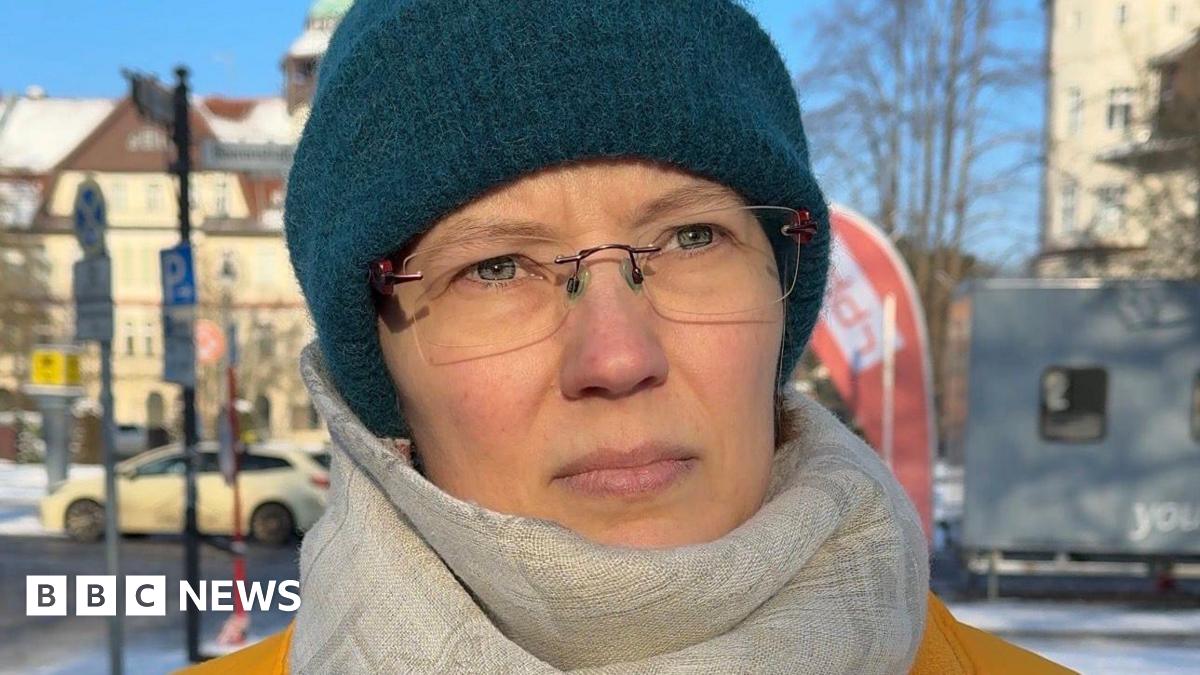
Lena said her family had felt “lost” – relying on a battery-powered radio for updates.
They have been cooking on a camping stove at home while trying to make sure their water pipes don’t freeze.
Reinhold, 79, was still without power on Wednesday morning and going to his daughter’s house to get warm.
“But I always came back to sleep here even in the cold weather with a bobble hat on and sweater and a woollen blanket.”
The retired architect said that he was used to hardship having been born in post-war Germany.
“I was born in 1947. When my mother and I came from the hospital… it was -20C in our shack.”
“My parents took turns every hour to see whether my hands were tucked in under the cover so my fingers wouldn’t freeze off.”
Restoring electricity is happening on a “step-by-step basis,” said fire service spokesman Adrian Wentzel.
Resources have been pulled in from across Germany, he told me, with an estimated 100,000 people affected.
Hospitals have had to rely on emergency generators while some schools have had to close.