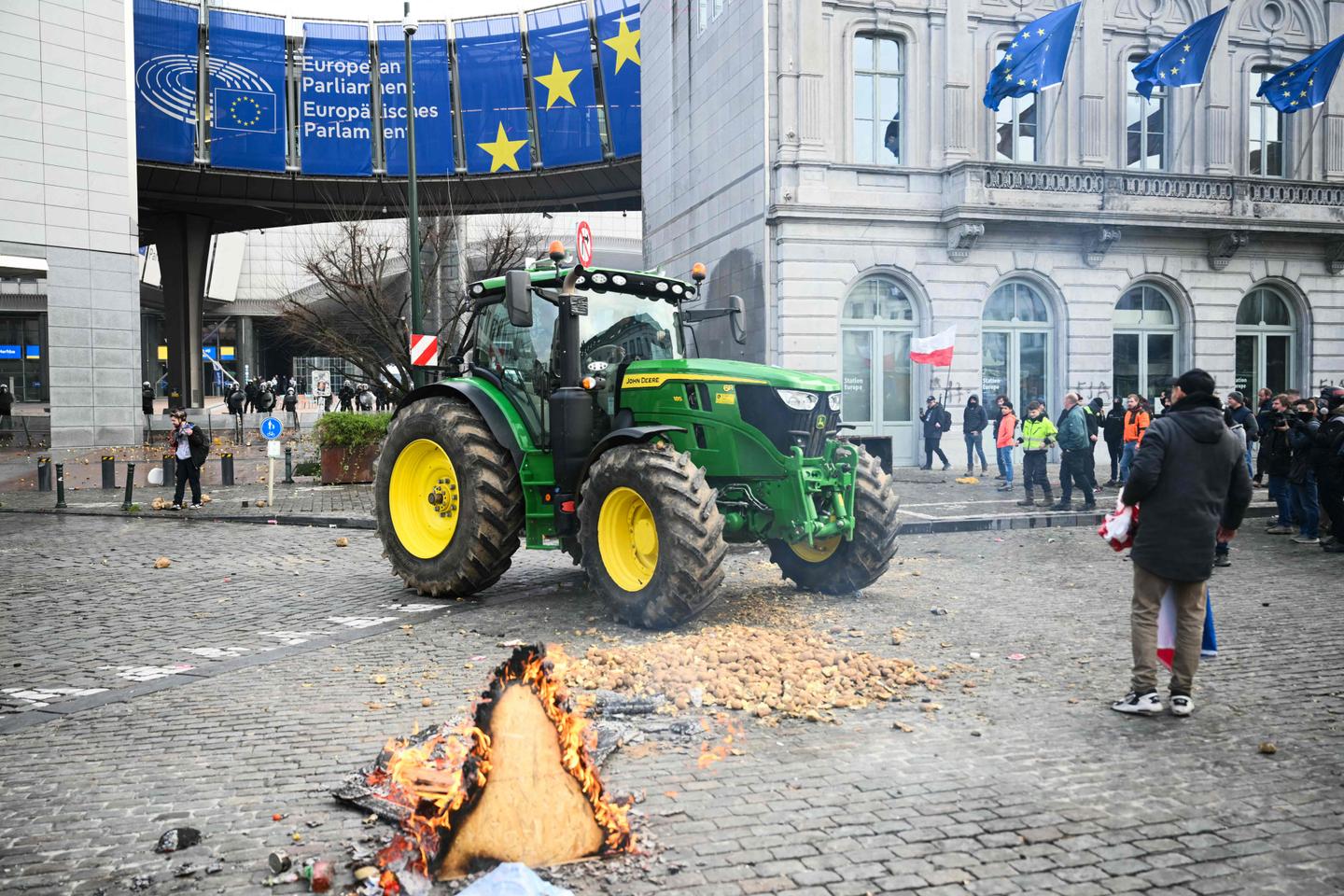
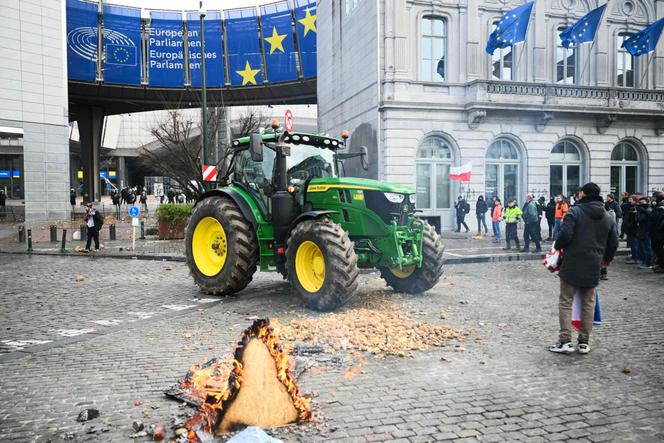
 Farmers stand next to potatoes and a tractor parked in front of the European Parliament, during a farmers’ protest to denounce agricultural reforms and trade agreements such as the Mercosur, in Brussels, on December 18, 2025. NICOLAS TUCAT / AFP
France officialized a ban on food imports containing traces of five pesticides currently banned in the European Union (EU) on Wednesday, January 7, a move aimed at easing farmers’ opposition to the Mercosur trade deal with four South American nations. France’s influential farming lobbies are pushing the government to block the Mercosur accord, which is being discussed by the bloc’s agriculture ministers in Brussels at an extraordinary meeting on Wednesday.
Read more EU-Mercosur deal: France’s diplomatic gamble falls short
The five substances targeted include the fungicides mancozebe, thiophanate-methyl, carbendazim and benomyl, used on produce ranging from avocados and mangos to wheat and soybeans. The fifth substance, glufosinate, is an herbicide widely used on potatoes. They are all banned in the EU for health risks, but current rules allow trace levels of them on food imports to the bloc, which France now deems too high.
The French measure still needs the green light from the EU Commission, which will examine it on January 20, the ministry said in a statement. Commission officials have already said they are ready to renegotiate the rules on trace elements of banned pesticides, which affect only a tiny fraction of produce sales in the bloc.
More than 25 years in the making, the Mercosur deal would create the world’s biggest free-trade area, boosting commerce between the 27-nation EU and the bloc comprising Brazil, Paraguay, Argentina and Uruguay. But it has alarmed many European farmers who fear they will be undercut by a flow of cheaper goods.
Read more Subscribers only EU-Mercosur deal divides France’s agricultural sectors