More shadow fleet tankers attempting to flee Venezuela are flying Russian flags in an apparent bid to gain Russian protection against seizure by American forces.
At least 17 shadow fleet tankers have switched their flag to Russia in the past month, analysis by shipping newspaper Lloyds List has found, including other vessels under blockade in Venezuela.
Before it fled across the Atlantic, the Marinera was known as the Bella 1. It had tried to evade American intervention by switching its flag from a falsified Guyanese flag to a Russian flag and painting a crude Russian flag on its side as well as changing its name.
In total, the ship has had six names since 2020, and sailed under five different country flags. Most of these are classified as “flags of convenience” — countries which allow ships to register with minimal oversight.
• Russia sends Navy ships to escort tanker fleeing US oil blockade
In the days and weeks leading up to the boarding of the Marinera and the M Sophia, other shadow tankers registered under “flags of convenience” have registered as Russian ships, potentially in a bid to protect themselves from US pursuit.
Analysis by Lloyd’s List suggested it could be a “permanent evolution of the shadow fleet with direct oversight and protection from Russia”. However, the tactic failed to protect either Marinera or M Sophia from seizure by President Trump.
The Hyperion, Aquila III, Premier, and Veronica III are among the shadow fleet vessels serving Venezuela that have reflagged to Russia and could also now get Russian military protection.
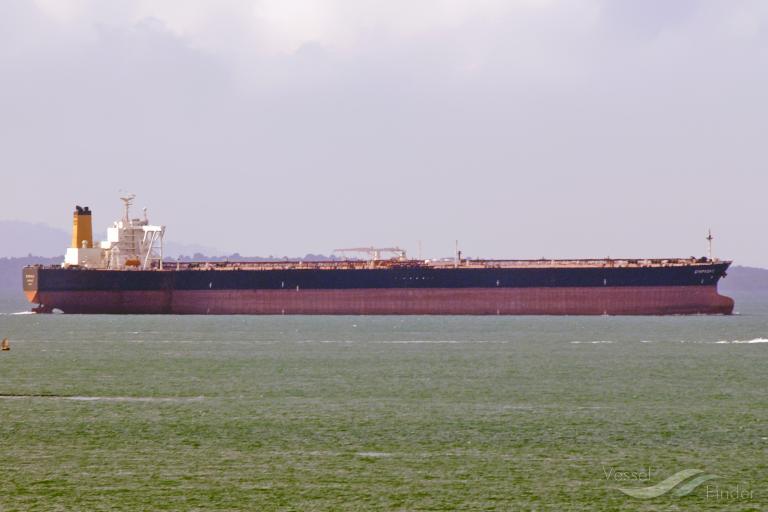
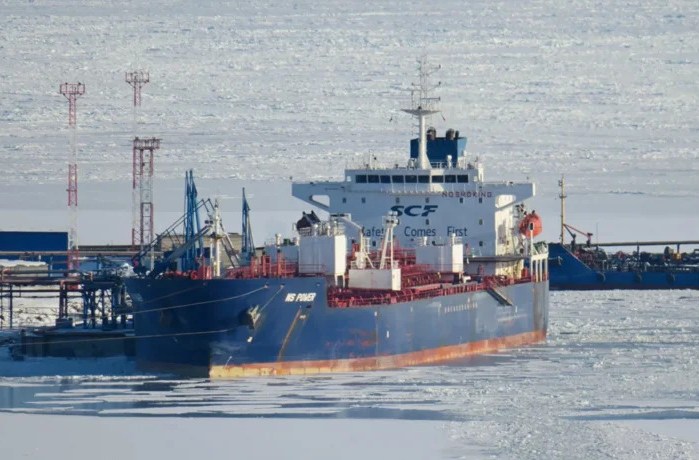
The Hyperion changed its flag five times in 2025 alone, including falsely using both Comoros and Gambian flags, before joining the Russian ship registry. It has long been linked to Russia and was previously managed by the Russian shipping giant Sovcomflot.
• Venezuela will turn over 50m barrels of oil to US, Trump claims
It arrived in Venezuela to deliver Russian naphtha to the country, and is now halfway across the Atlantic on a course that last night suggested it could transit the English Channel next week.
The Veronica III, which has been broadcasting fake locations such as Finland and Nigeria via its Automatic Identification System (AIS), is also attempting to leave Venezuelan waters. The ship routinely travels without its positioning systems switched on, and has been carrying both Iranian and Venezuelan fuel in recent years.
Not all tankers have been able to escape the blockade, even when using Russian flags. The tanker Premier also reflagged to Russia and has previously been managed by the same firm as Hyperion, but it remains outside Jose Terminal in Venezuela.
Chasing shadows
The terms “shadow fleet” or “dark fleet” refer to vessels carrying goods and oil in violation of sanctions and price caps.
While these vessels have long been used to transport oil out of sanction-hit nations such as Venezuela and Iran, the fleet expanded rapidly after Russia’s invasion of Ukraine. The UK alone has sanctions against 520 vessels in relation to the Russian shadow fleet’s shipping of oil.
Vessels operating in the shadow fleet, as well as being under sanction, are marked by deceptive and dangerous practices. Many are owned through complex networks of shell companies, and analysts Windward estimate that as many as 60 per cent of shadow fleet vessels have unknown owners.
The average vessel is about 20 years old, compared with 13 years for legitimate oil tankers, and they are considered high-risk for oil spills and accidents.
US forces seize Russian tanker
The industry group Tanker Trackers has counted dozens of oil slicks, visible on satellite imagery, caused by dark fleet ships carrying out ship-to-ship transfers, where oil products are moved from one vessel to another in open seas to obscure the oil’s origin and destination.
Dark fleet vessels also often also operate without their AIS switched on, making it hard to track the ship, or send out falsified signals through a process known as spoofing. One of the vessels captured by the US yesterday, the M Sophia, had been spoofing its location. It also sent out “zombie signals”, identifying itself on AIS as a defunct tanker to confuse authorities.
But despite the sanctions and pressure from governments, efforts to curb the shadow fleet have focused on regulation, rather than direct intervention. In 2024, Britain announced new measures to force shadow fleet vessels to carry stronger insurance if they wished to transit the English Channel — yet dozens of Russian dark tankers still use the Strait of Dover each month. The industry will now be waiting to find out: will America’s new, more aggressive stance towards the dark fleet will curb its activity?