Sheffield Wednesday continue to stand out when Carlos Carvalhal reflects on his time in English football.
In an interview with Portuguese outlet Sábado, the manager spoke at length about his spell at Hillsborough and explained why the Championship remains one of the most demanding stages of his career.
Life inside the Championship grind
Carvalhal, who has repeatedly shared his love for Sheffield Wednesday, described the Championship as relentless from the first day. “It is a competition with 22 teams and a huge number of matches,” he said. “When I went to Sheffield Wednesday, I did the pre-season and started playing at the beginning of August. That month alone, we played eight matches. We were always playing.”
According to the coach, there is no margin for comfort in the division. “All the opponents are extremely competitive,” he explained. “The team at the bottom can beat the one at the top very easily.” As a result, every match demands full focus and constant preparation.
That environment forced him to grow as a manager. “It is a job of permanent competition, and that is where I learned even more about how to finish games,” Carvalhal said.
Recovery time is minimal. “Normally, I am extremely tired after matches, and I go straight from one game to already being on the iPad or computer analysing the next one.”
From rangers to super-heroes
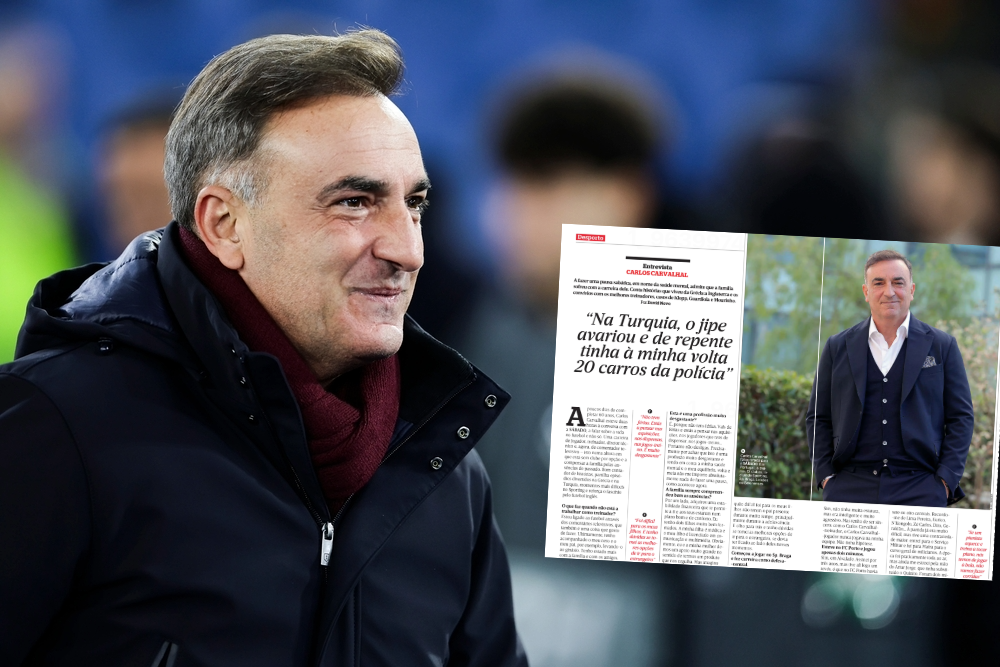 Sheffield Wednesday spell brought up by Carlos Carvalhal during Sabado interview
Asked whether the Championship is “for rangers” and the Premier League “for super-heroes”, Carvalhal reframed the idea. “It is for great coaches,” he said. “There we played matches against Jürgen Klopp, Pep Guardiola, José Mourinho, Arsène Wenger and Rafa Benítez. We won several games against those coaches. That makes us feel we belong to the elite.”
However, Carvalhal made clear that context matters. He said he works best in clubs with clear structures. “I work much better when I have sporting directors,” he explained. “I have a lot of difficulty dealing with presidents who run the football side.”
He was direct about his personality. “I do not have a political side,” Carvalhal said. “I do not accept interference, and I do not know how to communicate when there is interference. When people try to impose things on me, my reaction is not political. It is even a bit rough.”
English football culture and lasting impact
Carvalhal also spoke about life after matches in England. “There is a well-known tradition of having a drink,” he said. “I had fantastic experiences with the vast majority of coaches.”
Some moments stayed with him. Guardiola, he recalled, had to catch a flight, so they could not meet. Mourinho, however, made a lasting gesture. “He gave me a bottle of Barca Velha,” Carvalhal explained. “He told me that one day I would celebrate a big trophy with that bottle.”
That promise lingered. “I had been to a League Cup final and did not open it before,” he said. “I had to drink it before. It was for luck, not for celebration.”
Beyond results, Carvalhal also recalled the post-match traditions and the closeness between managers and officials.
“There were situations at Sheffield Wednesday where I was with the opposing coach, the referee passed by and I said, ‘Come here and have a beer!’” he said. “The referee and assistants would be there, having a beer and talking about the game.”
The intensity of the Championship, the proximity to promotion and the cultural connection all combine to keep that period alive in the memory of supporters. As a result, it remains one of the defining chapters whenever Carvalhal’s career is discussed.