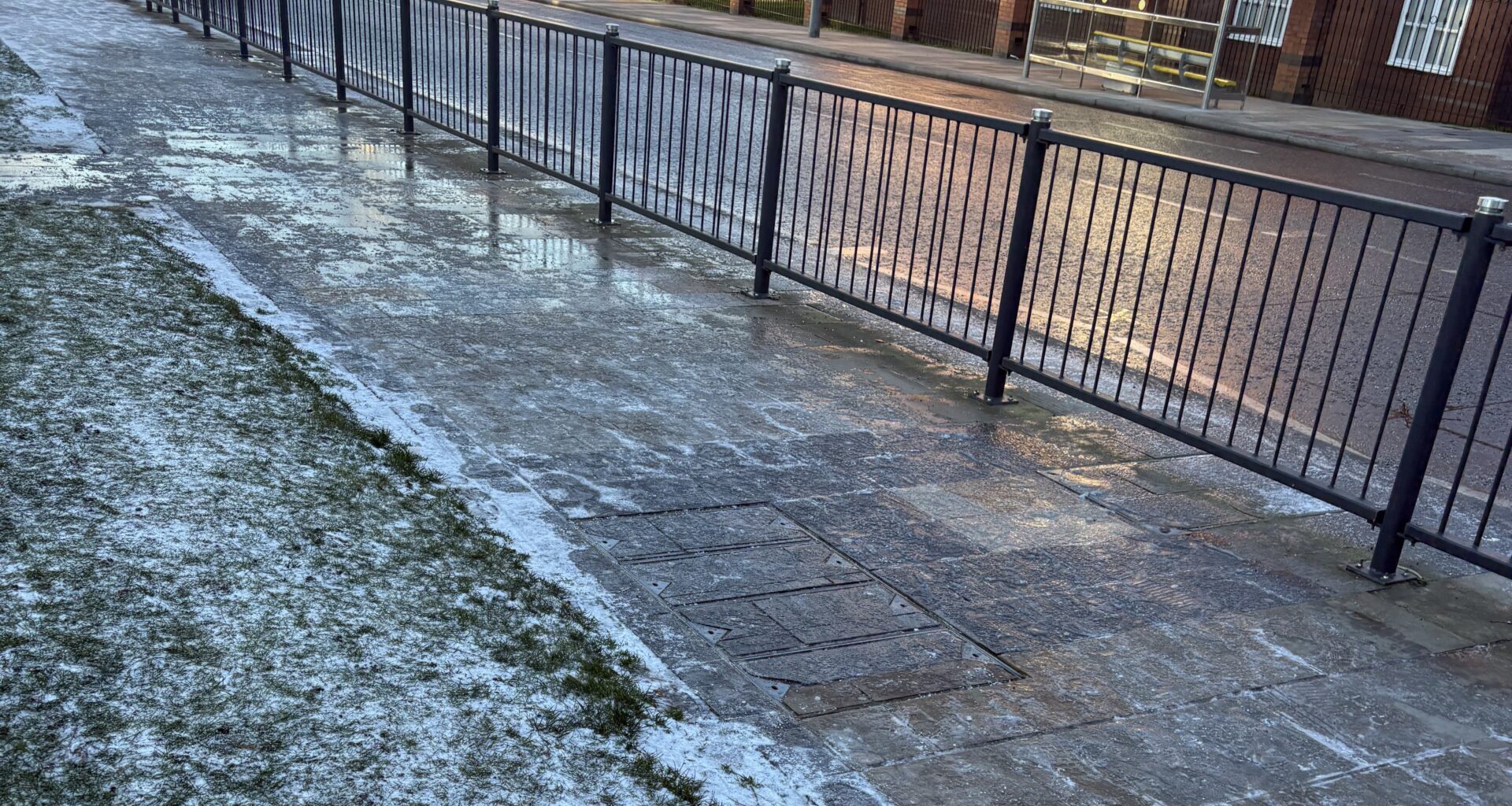
Liverpool residents has raised concerns about how roads are gritted during periods of ice and snow.
Temperatures have plummeted in the city in the past week, to between one and six degrees Celsius with spells of snow, creating ice across the paths and roads.
To help combat the hazard, Liverpool City Council’s gritters have been deployed, with a single vehicle capable of spreading salt across 600km in just one run.
According to them, the vehicles even sometimes do two runs with the second as early in the morning as 4am.
However, some residents think more needs to be done to avoid the dangers posed by the ice, especially for vulnerable people.
Luke Crompton, a resident of Kensington and student at Liverpool John Moores, said: “As a person who walks to university every day, I felt unsafe leaving the house this week as the paths were really icy.
“I had to walk on the roads and grass to get to my university building, so I didn’t hurt myself.”
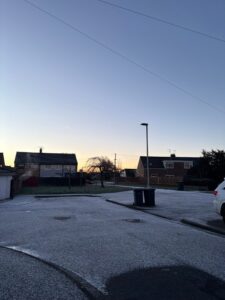 Formby icy and snowy paths. Photo (credits: Rebecca Thompson)
In answer to the criticism, Liverpool City Council released a Gritting Myth Buster article.
One of the myths mentioned is people believing that no matter what temperature, salt will melt ice.
However, according to the council, the concentration that they use means that salt does not melt ice below -8°C and is less effective at temperatures below -5°C.
Another myth is that many believe that gritting the roads immediately gets rid of all ice, but this is not the case.
Spreading salt starts the de-icing process and the movement of traffic and people helps spread it.
Therefore, during the night with low traffic and pedestrians on the street levels, the salt is not spreading that much meaning parts remain icy.
The city centre of Liverpool sees less signs of ice due to continuous foot and road traffic, leading some to believe the gritters focus more on the centre than residential areas.
Ryan Golder, a local delivery driver, said: “Whilst I do not believe it is fair, life is not fair in some cases. It is simply an issue of a lack of resource and time.
“Whilst it may feel like certain areas and their residents may have been abandoned by the city, from a logical standpoint, it makes sense to prioritise the routes and roads that have more volume of people and traffic.”
Ice-covered paths are a concern as they can impact vulnerable people.
Emmelia Hampson is an ambulance driver, often transferring people between Southport and Liverpool hospitals.
She said that most of her patients live on estates which tend to be very icy and, therefore, is dangerous for the patients.
Miss Hampson said: “I think a lot of time, the council doesn’t realise what an effect ice can have on elderly and vulnerable people.
“Most of the time the paths and roads around their houses aren’t thought of to be gritted and so they’re left not being able to safely leave their houses.”
She added: “We as an ambulance service help transport people who struggle with their mobility on a day-to-day basis and ice increases their chance of falling or hurting themselves.”
Storm Goretti will reach the UK later today, bringing strong winds, snow and ice.
Merseyside is expected to be hit with sleet and snow, which could put a further strain on Liverpool’s resources.
Mr Golder said: “Whilst I appreciate the commitments made by Liverpool City Council, logistically it may be impossible to cover the entire surface of the city.
“I don’t believe there could be much more improvement made, unless they invent more efficient ways to grit the roads.”
Miss Hampson also said that the council should look at trying to ensure areas with care homes and areas with a higher population of vulnerable people need to be prioritised next time around.
She said: “This will help vulnerable people massively and ease the pressure on the ambulance service trying to get these patients in safely.”
A Liverpool Council spokesperson said: “The gritters have been out nine times since last Saturday. As with all councils, we concentrate our resources on key routes and district centres.”
For more information on how to stay safe, click here.
Featured image: Chloe McLoughlin