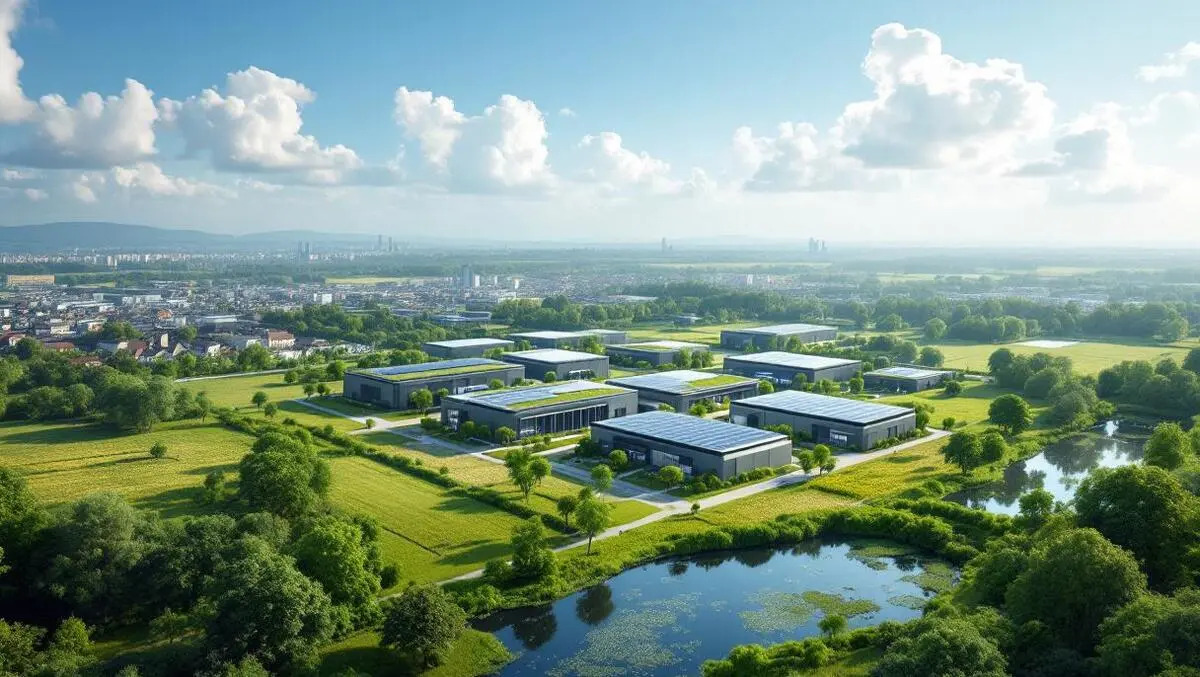
Microsoft ranks highest among major US technology groups for the way it integrates nature and land restoration into its European data centre operations, according to a new comparative report that highlights wide gaps across the sector.
The study from Arbonics, a European carbon-removal developer, assesses the nature strategies of Microsoft, Google, Meta and Apple at their European data centre sites. It examines land use, site design and ecosystem restoration, and estimates how much nature restoration would be required to balance each facility’s annual emissions.
Arbonics argues that data centre operators should restore enough nature each year to compensate for their operational emissions. It also sets out priorities and trends that it says will shape the sector in the coming years as artificial intelligence drives further demand for computing power.
Microsoft ahead
The report identifies Microsoft as the strongest performer overall on nature-related measures. It states that Microsoft has permanently protected 6,414 hectares of land. This exceeds the 4,816 hectares that Arbonics estimates are occupied by the company’s global data centre portfolio.
Microsoft has also planted more than 77,000 trees through community projects. The report highlights native planting at Middenmeer in the Netherlands, large-scale tree planting in West Dublin, and riverbank restoration projects in Spain as examples of its current initiatives.
The findings sit against a backdrop of rapid growth in data centre electricity use in Europe, driven in part by AI workloads. According to the report, electricity demand from the region’s data centres is projected to rise from 96 TWh in 2024 to 168 TWh by 2030 and 236 TWh by 2035. This would represent an increase of around 150% in just over a decade.
The International Energy Agency expects Europe to remain one of the largest global regions for data centre electricity consumption. Arbonics links this trend with rising pressure on land, water and local ecosystems around data centre sites.
Nature-first gaps
Despite the examples at leading operators, the report concludes that nature-first design is not standard practice across Europe’s growing data centre estate. It states that large hyperscale facilities often involve land conversion, material-intensive construction and significant changes to local ecosystems.
Arbonics bases its restoration benchmarks on forest projects. It notes that forests and trees can sequester carbon, rebuild soils, regulate water and support biodiversity in areas affected by development.
The report calculates the potential restoration needed to balance the emissions of some large sites. It estimates that one year of operations at Meta’s Luleå data centre in Sweden would require restoring 3,350 hectares of forest. This would equate to planting about 8.4 million trees.
For Google’s Hamina facility in Finland, Arbonics estimates that around 19.4 million trees would be necessary to compensate for a single year of emissions. It notes that this would represent an area of forest large enough to cover the city of Paris.
Lisett Luik, co-founder of Arbonics, said nature-based projects sit alongside the climate strategies of the largest operators.
“Data centre operators can help re-establish the ecosystem processes that support their infrastructure, creating long-term ecological value alongside their climate commitments,” said Lisett Luik, co-founder of Arbonics.
Historic context
The report sets current data centre expansion against a longer history of environmental change in Europe. It notes that forests once covered roughly 80% of the continent. That figure had fallen to less than half by the end of the seventeenth century as industrial and agricultural development expanded.
Arbonics states that the latest wave of growth, driven by AI and digital services, can follow a different path. It proposes that operators should treat land restoration as a core element of data centre development decisions.
Four priorities
The report outlines four main priorities for data centre operators that want to reduce ecological impacts. It calls on companies to increase land restoration associated with their sites. It urges them to favour brownfield locations over greenfield development when selecting new data centre sites.
Arbonics says operators should begin reporting biodiversity data at the level of individual sites. It also recommends wider adoption of nature-led design features. These include green roofs and similar interventions that bring natural elements into buildings and campuses.
Trends for 2026
The report points to several trends that it expects will shape the sector from 2026 onwards. It forecasts that sustained demand for AI and cloud services will intensify pressure on land, water resources and electricity grids around major hubs. It also expects water stewardship to move closer to the centre of data centre planning and operations.
According to Arbonics, measurement will increasingly move beyond carbon accounting. It expects operators and regulators to place more emphasis on ecological outcomes. These include habitat restoration, biodiversity indicators and local environmental quality.
The report suggests that community trust will become a more important factor in decisions about where new facilities can be built. It links local acceptance with visible commitments on land use, restoration and environmental reporting.
Luik said that the strategic choices of a few large technology companies will have significant implications for Europe’s environment as data centre build-out continues. “The conversation has been framed as a trade-off for too long: innovation versus conservation, progress versus protection. But that narrative no longer holds. Europe’s balance between digital progress and nature restoration will rest on the choices of a handful of major technology companies, and it’s crucial that they get it right,” said Luik.