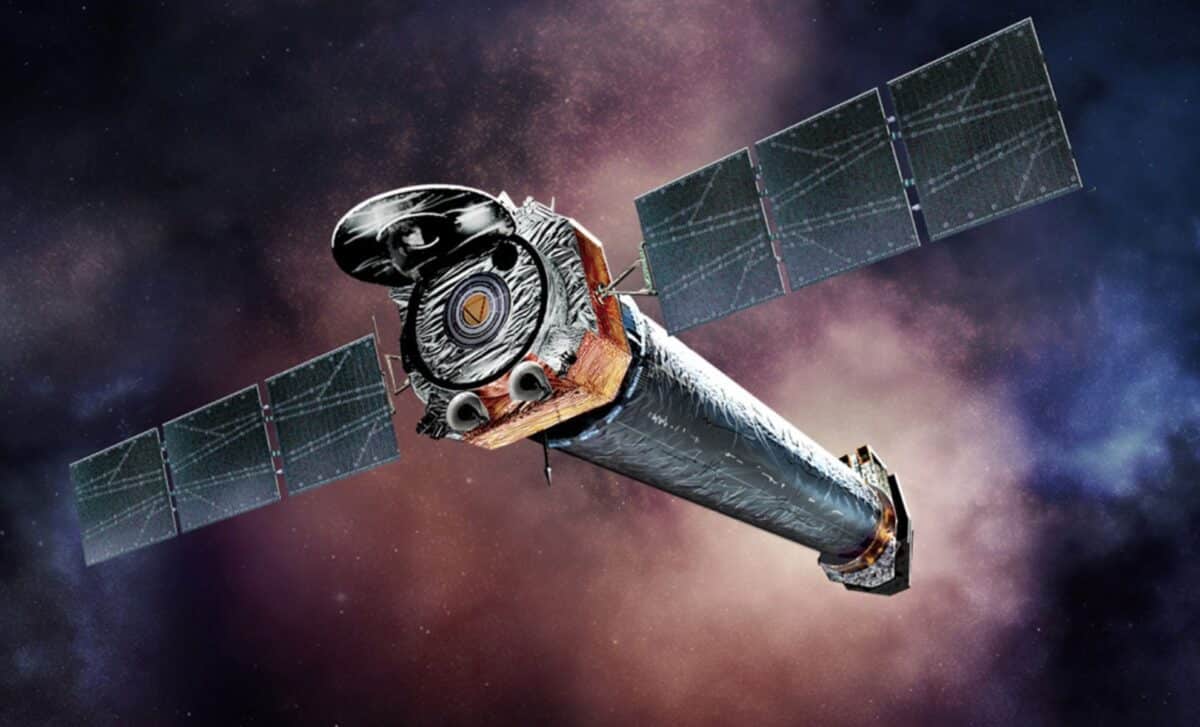
NASA has released an unprecedented time-lapse video showing the evolution of Kepler’s Supernova Remnant, a cosmic relic of a massive stellar explosion. Captured by the Chandra X-ray Observatory over more than 25 years, this video provides an in-depth look at how the remnant has expanded since its discovery in 1604. The time-lapse is the longest-duration video ever produced by Chandra, marking a milestone in the study of stellar remnants.
Kepler’s Supernova Remnant is the debris field left behind after the explosion of a white dwarf star, which exceeded a critical mass, leading to a Type Ia supernova. This particular explosion is significant in astronomical research, as Type Ia supernovae are used to measure the expansion of the universe. By observing the remnant over such a long period, scientists have gained valuable insights into the aftermath of these cosmic events and their role in the lifecycle of stars.
Chandra’s Decades-Long Data Collection
NASA’s Chandra X-ray Observatory has provided critical X-ray data of Kepler’s Supernova Remnant over more than two decades. This continuous data collection has allowed scientists to observe how the remnants of the exploded star have changed and expanded over time. According to Jessye Gassel, a graduate student at George Mason University and lead researcher on the project:
Ever wonder what happens in the aftermath of a supernova?
In this video, you’re watching the glowing remnants of a stellar explosion disperse over a period of 25 years, making this @chandraxray’s longest-spanning video ever released. https://t.co/suIQHKdWM0 pic.twitter.com/Q3q5aietA3
— NASA (@NASA) January 6, 2026
“The plot of Kepler’s story is just now beginning to unfold,” she said. “It’s remarkable that we can watch as these remains from this shattered star crash into material already thrown out into space.”
The time-lapse includes data from various years: 2000, 2004, 2006, 2014, and 2025, showing how the remnant has evolved at different intervals. The result is an impressive video that visualizes the expanding debris as it interacts with its surrounding environment.
How Fast Is the Remnant Expanding?
The new time-lapse video depicts how different parts of the remnant are expanding at varying speeds. According to NASA’s Brian Williams, the fastest portions of the remnant are traveling at 13.8 million miles per hour, roughly 2% of the speed of light, while the slowest parts are moving at about 4 million miles per hour, or 0.5% of the speed of light. This disparity in speed is directly tied to the density of the surrounding gas, which the remnant is plowing into as it expands.
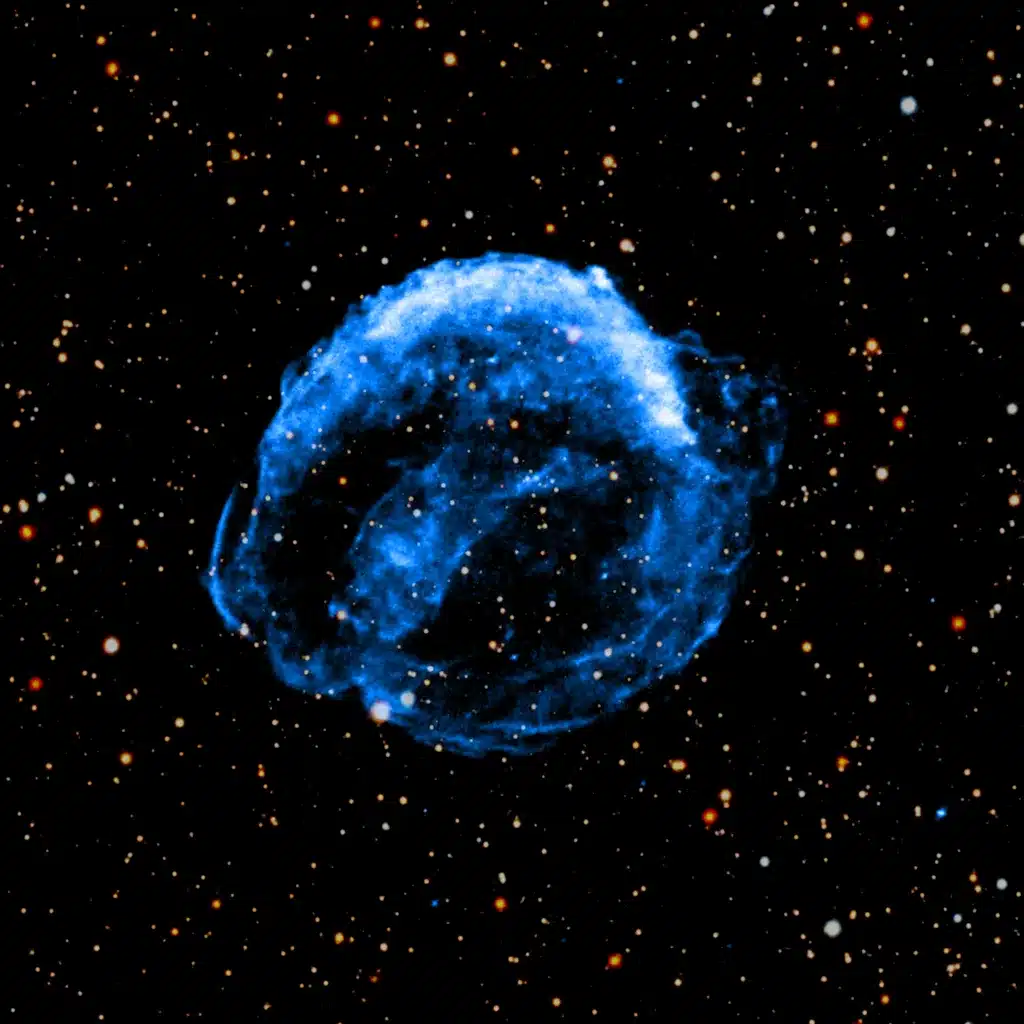 A stunning X-ray image of Kepler’s Supernova Remnant, captured by NASA’s Chandra Observatory. Credit: NASA
These varying speeds provide scientists with vital information about the environment into which the white dwarf exploded. Understanding these dynamics helps astronomers learn more about the interactions between supernova remnants and the interstellar medium.
How Supernova Remnants Are Rocking the Cosmic Evolution Party
Supernova remnants are crucial for understanding the broader cosmic cycle of star formation and death. According to the principal investigator of the new Chandra observations of Kepler, Brian Williams:
“Supernova explosions and the elements they hurl into space are the lifeblood of new stars and planets.” The elements ejected by the explosion of stars like Kepler’s are essential for the creation of new celestial bodies, as they provide the raw materials for the formation of future stars and planetary systems.
By studying the remnants left behind after a supernova, scientists gain insights into the long-term effects they have on their surrounding environments. The X-ray data gathered by Chandraover the past 25 years has allowed researchers to piece together the behavior of these remnants.