
Researchers are considering an unusual but promising ally for building the first human habitats on Mars: Earth’s toughest microbes. These microorganisms could transform Martian soil into a concrete-like material for constructing shelters while also helping to produce the oxygen needed to sustain life on the Red Planet. This groundbreaking research aims to reduce the high costs of shipping materials from Earth by using the planet’s local resources for building and life support.
Mars is often considered humanity’s next frontier, but settling on the planet presents several formidable challenges. With its thin atmosphere, extreme temperatures, and lack of breathable air, Mars is far from hospitable for humans. Building sustainable habitats that can withstand cosmic radiation, regulate temperature, and provide oxygen is essential.
Microbial Cement
One of the most exciting developments in the search for sustainable building materials on Mars is the process of biocementation. This method involves using microorganisms to bind local materials into a durable, cement-like substance.
According to recent research published in Frontiers in Microbiology, two bacteria, Sporosarcina pasteurii and Chroococcidiopsis, could be key to making this work. Sporosarcina pasteurii is known for producing calcium carbonate through ureolysis, a process that helps turn loose soil into a solid material.
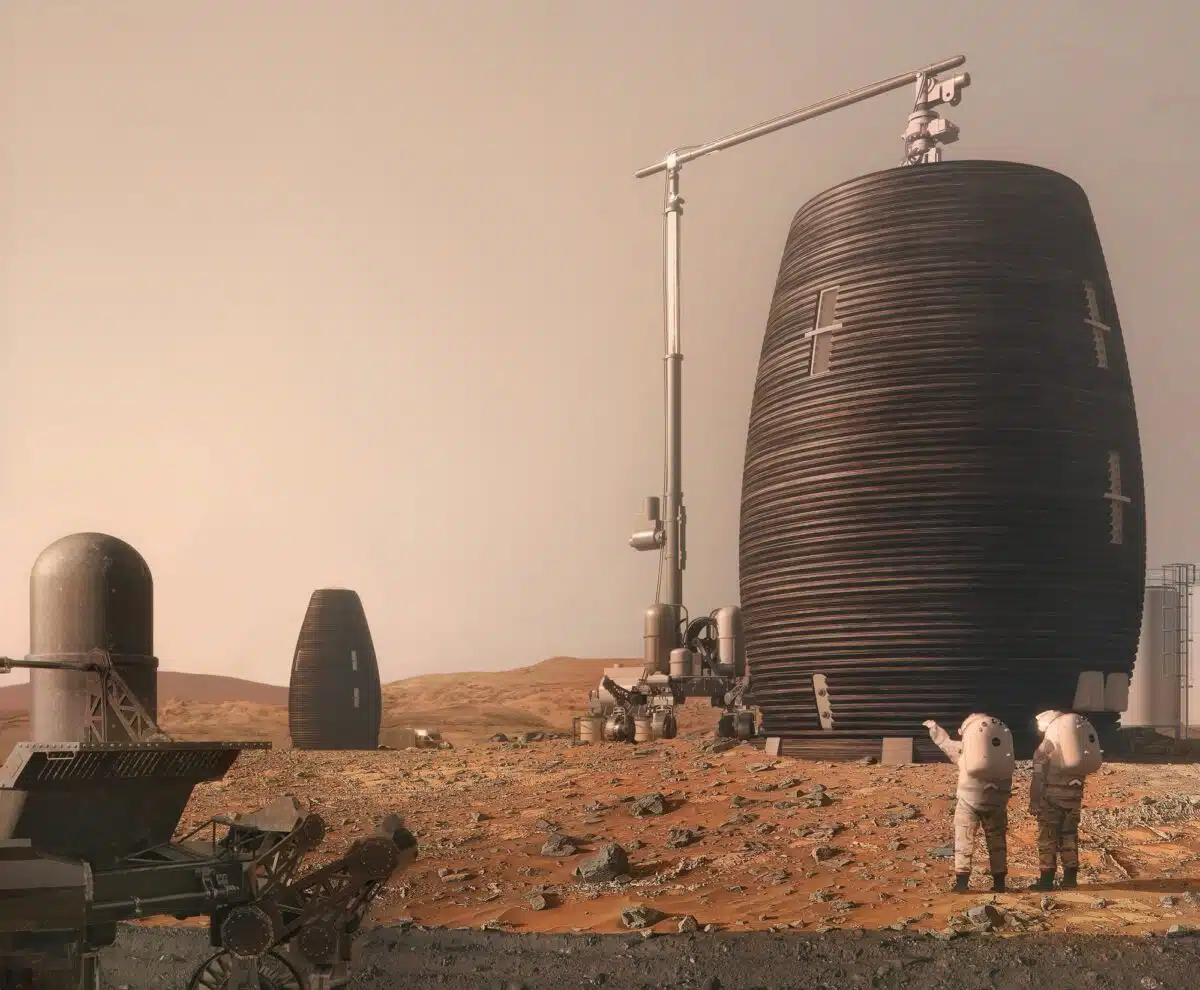 Using Martian resources to support long-term human survival beyond Earth. Credit: AI SpaceFactory
Meanwhile, Chroococcidiopsis, a cyanobacterium, thrives in extreme conditions, such as those found on Mars, andcan produce oxygen, which could help create a more hospitable environment inside Martian habitats.
These two microbes can work together to support each other’s survival and enhance their effectiveness. This biocementation process could help transform Martian regolith into a material suitable for constructing shelters, making it one of the most promising methods for building on the fourth planet.
3D Printing: A New Approach to Habitat Construction
Scientists are exploring the use of 3D printing technologies to construct habitats on the Red Planet. By combining Martian soil with the biocemented material produced by the microbes, scientists hope to feed this mixture into 3D printers to create structures directly on the Red Planet.
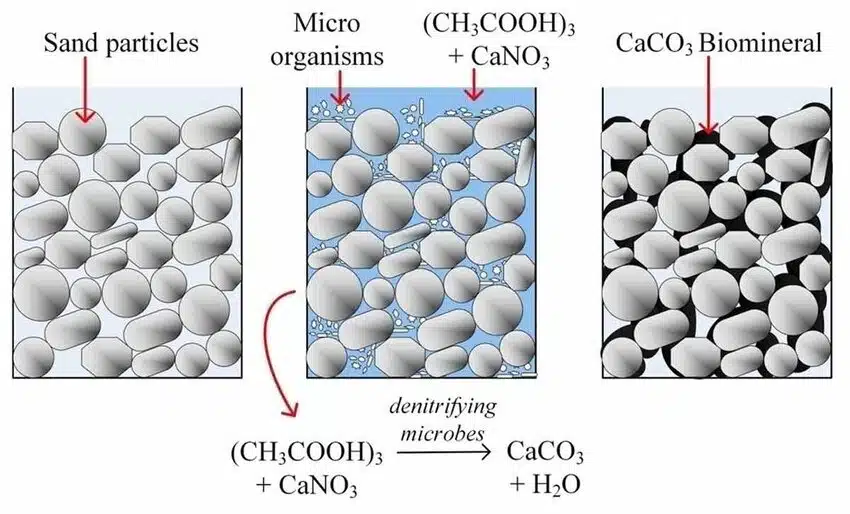 Schematic diagram of the biocementation process inside a soil matrix. Credit: Surabhi Jain/Bioengineered
This approach could help reduce the need for transporting construction materials from Earth, as the 3D printer would rely on Martian regolith and microbial processes to create the building materials. As NASA and other space agencies plan missions to send humans to Mars, using 3D printing to build habitats could drastically lower costs and make it easier to establish a long-term presence on the planet.
Microbes to the Rescue: Oxygen and Farming on Mars!
These microbes could be super important for helping humans live on the alien world. Chroococcidiopsis makes oxygen as it does its thing, which could be used to create breathable air inside Martian habitats.
On top of that, Sporosarcina pasteurii makes ammonia as a byproduct, which could help fertilize crops in closed-loop farming systems. This could mean growing food directly on Mars, cutting down the need for Earth supplies.
By using these microbes for life support and agriculture, we could create a self-sustaining colony on Mars, something essential for any future long-term settlement. While this tech is still being tested, it shows real promise for making life on the martian planet possible.