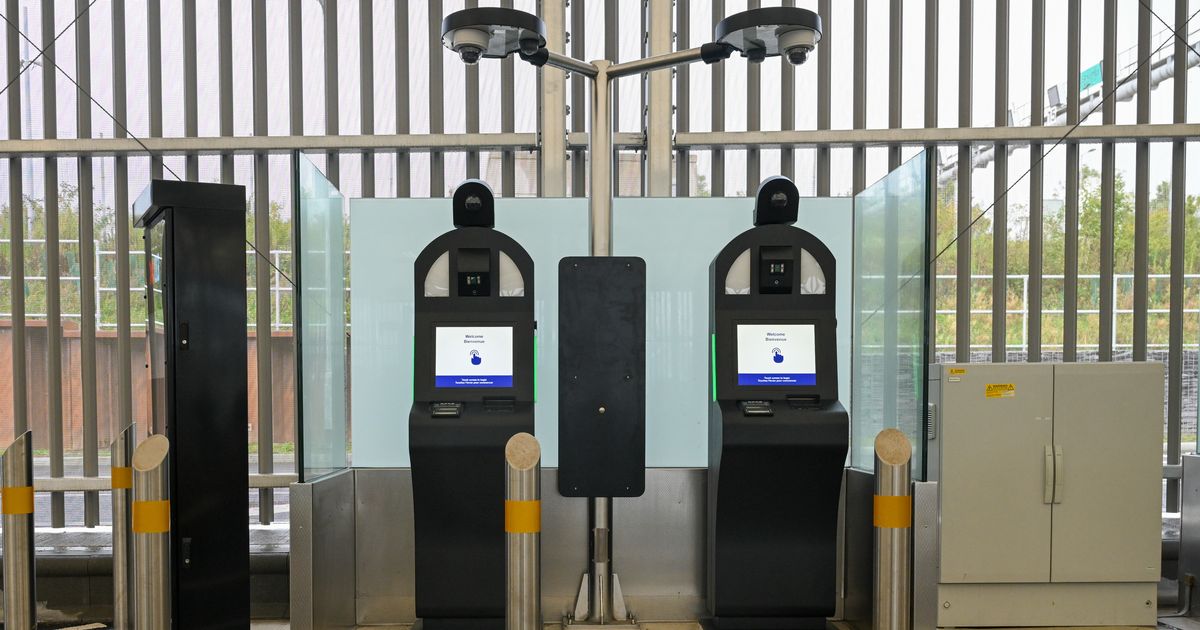
British travellers visiting Europe are being warned to prepare for the possibility of even longer queues as the EU’s Entry/Exit System expands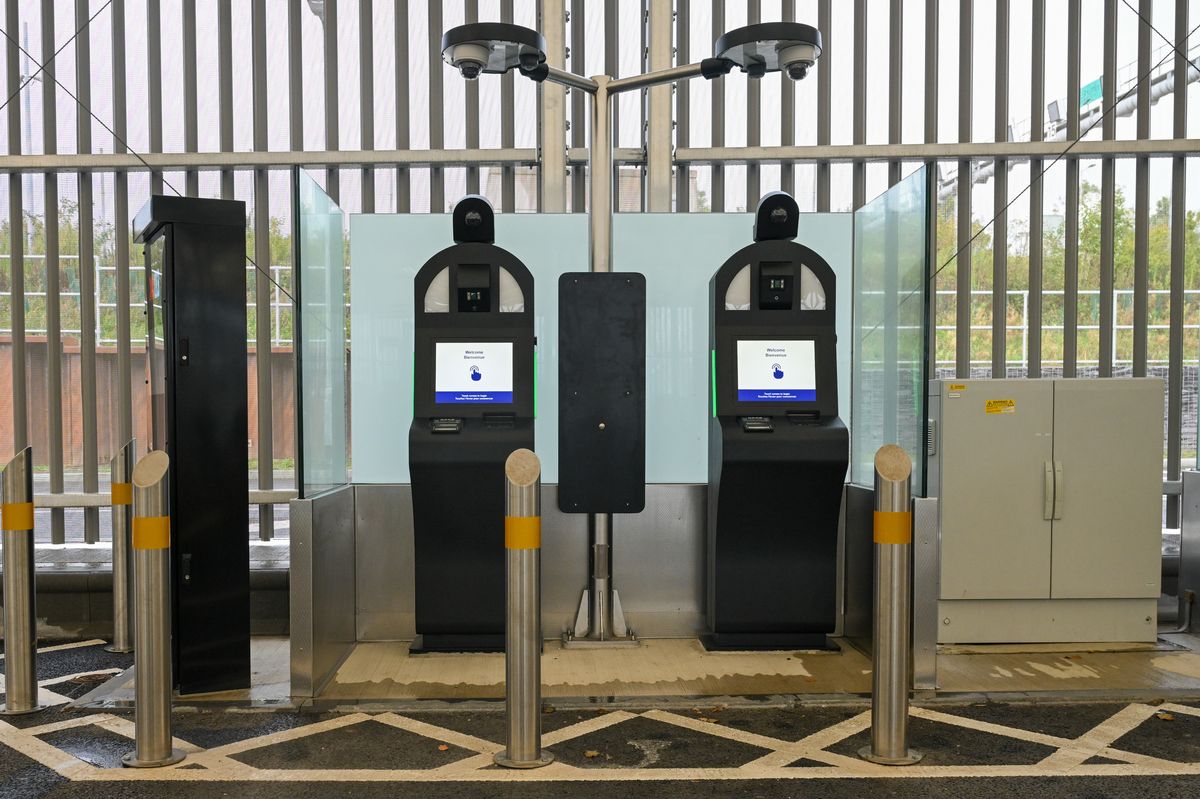
A person uses the Automated European Union Entry/Exit System (EES) kiosk. The system should now been in place at half the borders in the EU(Image: Getty)
British holidaymakers heading to Europe are being cautioned about potentially longer waiting times starting today. The introduction of the EU’s new border technology is designed to eventually streamline entry procedures, but its phased implementation this month could lead to increased delays, according to travel body ABTA.
The automated Entry/Exit System (EES) requires UK visitors to submit four fingerprints and a facial scan via a machine on their initial arrival, with one scan needed for each subsequent entry and exit. “As more places introduce the system, and more passengers are processed through it, there is a greater risk that people will face queues and delays,” ABTA warns.
“It’s important travellers are prepared for this as they prepare to go through passport control.” EU member states have been given a 10 January deadline to implement the EES at half of their border crossing points.
Traditional passport stamping will remain in place until 9 April, creating a dual-process situation. “We are also urging border authorities to do all they can to minimise delays. They have contingency measures at their disposal – such as standing down the system or limiting checks – and we want them to be utilised to help manage the flow of people,” ABTA says, reports the Mirror.
The Entry Exit System (EES) mandates non-EU citizens to register at the EU border by scanning their passport and providing fingerprints and a photograph. The system, which was introduced last October, requires British passport-holders to register on their initial visit to any country where EES checks are in place.
This registration remains valid for a rolling three-year period or until the passport expires.
The implementation of this new system will be gradual over six months, leading to potential variations in requirements at different ports until April 2026. By 10th January, half of all checkpoints should be operational.
For subsequent visits to a participating country, travellers will only need to scan their passport and provide either fingerprints or a photograph at the border upon exit.
EES will be obligatory when entering Schengen area countries, including Iceland, Liechtenstein, Norway, and Switzerland. However, it won’t be necessary when travelling to Ireland and Cyprus.
For those using the Port of Dover, Eurotunnel at Folkestone, or Eurostar at St Pancras International, the process will occur at the border before they depart from the UK.
The government has provided £10.5m in funding to juxtaposed ports (Eurostar at St Pancras, Eurotunnel at Folkestone, and the Port of Dover) to support border infrastructure, ensuring the transition is as seamless as possible for travellers. Although EES is an EU initiative, the government has collaborated extensively with the travel sector, ports and transport operators to enhance public awareness and comprehension of the forthcoming border modifications.
Minister for Border Security and Asylum, Alex Norris, said: “We recognise that EES checks will be a significant change for British travellers, which is why we have worked closely with our European partners to ensure the rollout goes as smoothly as possible.
“The UK and EU have a shared objective of securing our borders and these modernisation measures will help us protect our citizens and prevent illegal migration.”
Minister for Aviation, Maritime and Decarbonisation, Keir Mather, said: “We’ve backed our ports and operators with £10.5 million to help them get ready for the EU’s new Entry/Exit System, ensuring they have the infrastructure and systems in place to manage the changes.
“Our priority is to minimise disruption for travellers and hauliers, particularly at our busiest border crossings. We’ll continue working closely with European partners and local resilience forums to keep traffic flowing and journeys smooth.”
Travellers are not required to take any steps prior to their journey, and the process is free of charge. Registration will occur upon reaching the EU border, which may slightly extend the duration of border checks.
While these checks are expected to last only 1-2 minutes per person, they could result in longer queues at border control upon arrival in the Schengen area. At juxtaposed ports, where registration will be completed in the UK before departure, wait times may increase during peak periods.
However, Eurotunnel, Eurostar and the Port of Dover have strategies in place to minimise disruption as much as possible.
Children under the age of 12 will not be fingerprinted, but under the new EU regulations, all travellers, including infants, will be photographed and digital records will be created.
The UK Government has introduced its own Electronic Travel Authorisation (ETA) scheme. This is a digital permission for visitors who do not require a visa for short stays, or do not have another valid UK immigration status, to travel to the UK.