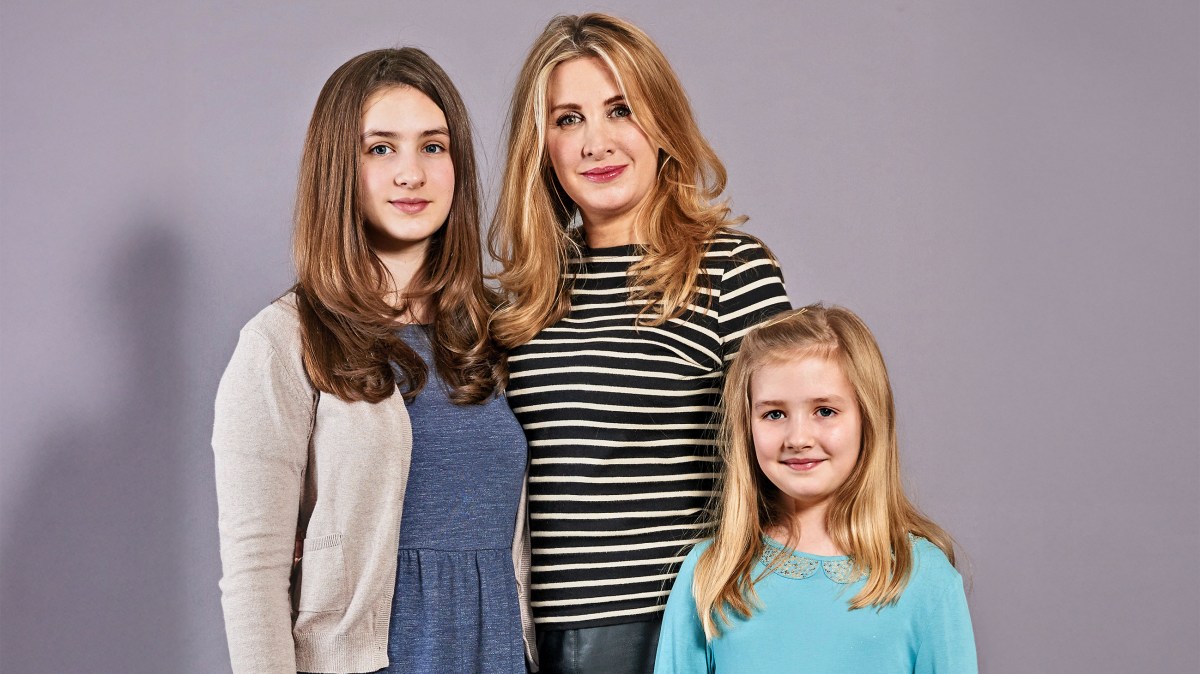
Even now I can remember the white-hot terror that would hit me every school morning at 7am, the moment I heard my 15-year-old daughter’s alarm go off.
Minute after minute would pass without any sound of her stirring in her bedroom. I would lie there, heart pounding, rehearsing what I would say if, once again, I walked in to find her still bundled up in her duvet, with no intention of getting out from under it.
As much as I tried to start off calm and compassionate, my frustration during this time, in early 2020, about why she would not go into school meant the conversation often escalated. I would try to reason, plead and then bargain, until I eventually snapped in frustration, which always made things much, much worse.
Thousands of families will be familiar with what we went through. “School refusal” is a growing problem — the latest figures from the Department for Education (DfE) show that almost 20 per cent of pupils in England were “persistently absent” from school — and anxiety is often the issue.
A few years earlier my older daughter had hit a similar block after starting at a large central London secondary school. Lost in a class of more than 30, overwhelmed by constant assessments, she quickly began to unravel. I moved quickly, switching her to a much smaller, more nurturing school where she thrived and never once tried to take a day off.
With my younger daughter, the Covid school closures could not have come at a better time. They gave her a break from stress and gave me a chance to slow down and understand what was really going on. In her case, it was undiagnosed ADHD, which she had managed to mask until then. But the workload of ten GCSEs meant she was no longer able to cope with the overwhelm she felt. After Covid, armed with a new understanding of how her brain worked, she returned to school and got all the grades she needed to do her A-levels and get the university place she wanted.
Looking back, I feel incredibly fortunate that for both of them this blip caused no long-term harm at all. By being allowed to follow their interests and focus on their natural abilities, both girls are now flourishing. My older daughter, 24, recently graduated from the Royal College of Music as a violinist, while my younger one, 20, is in her final year at Goldsmiths, studying music.
• Social anxiety has left my son trying to avoid going to school
At the time, though, they were trying to put the brakes on the relentless conveyor belt of the exam system in the only way they knew how, by stepping off it.
Data published by the DfE last year showed that in 2024 more than 170,000 children in England missed at least half their school lessons — a record high. This equates to 2.3 per cent of pupils who were “severely absent”, missing at least 50 per cent of possible classes in 2023-24, compared with 2 per cent in 2022-23.
New figures published by the market researchers Censuswide in December, found that half of all secondary school pupils in England have avoided school in the past year because of anxiety. Half of those put it down to exam and grade pressure and fear of falling behind. Girls said they avoided school an average of 26.4 times a year, compared with 16.7 times for boys.
I don’t think it is any coincidence that this sits alongside the latest statistics on child anxiety in the UK, which show that more than 500 children a day in England alone are being referred to NHS mental health services for anxiety. That is double the rate in 2019, according to the Royal College of Psychiatrists.
As parents, we tend to blame ourselves first. But is not the more uncomfortable truth that we feel like cattle prodded into colluding with a system that prizes our kids’ exam performance above all else, for the sake of school results and international education league tables? Here’s what I’ve learnt.
• My teenager refuses to go to school — a mother’s story
1. Regulate yourself first
If you have spent years emotionally and financially investing in your child’s education, and believing everything hinges on certain grades or universities, staying calm can feel almost impossible in the moment your teen won’t move from their bed to go into school. But the key to dealing with a young person who refuses to go to school is regulating yourself first. Only then can you help to regulate your child.
Before you go into their room, take a few slow breaths. Say less. Lower your volume. Know when to step away. Only when the stress levels drop, yours as well as theirs, will they feel safe enough to explain what’s really going on for them.
2. Talk honestly to the school
I lost count of the number of times I explained my daughter’s absences as migraines, as I tried to put off admitting she did not want to come in.
But starting a dialogue with your child’s school sooner rather than later can stop things escalating. Many schools will work with your child by offering extra support like later start times, changes to their timetable, reduced subject load and personalised learning plans. They can also screen for issues that might be contributing, such as ADHD, autism, learning difficulties and social anxiety.
• Read more parenting advice, interviews, real-life stories and opinions
3. Listen to understand, not to fix
By this stage of parenting, “Do as you’re told” no longer works. This is the time to pivot into walking alongside your teenager while they work out what they need. Listen without interrupting, dismissing or jumping to solutions. Sometimes the most helpful response is simply being there. If you feel stuck, try asking, “How can I help?” or “What would make this feel more manageable?”
Your aim is to help your teenager to feel more empowered, to understand they still have some control over what happens to them and that they can learn to cope with anxious feelings.
If it’s happening regularly, take it seriously. Physical refusal to go to school is often a last-ditch signal of distress, not defiance.
4. Accept your limitations
Forcing a teenager to go to school when their nervous system is overwhelmed rarely ends well, and by the teenage years it is often physically impossible anyway.
Allowing them space to explain what is wrong and to regulate themselves is not “giving in”. Accepting that your child cannot go in right now will not make the problem worse, but turning it into a tug of war almost certainly will. This stage is not for ever, but piling on pressure can prolong it.
5. Reframe what’s happening
The term “school refusal” suggests your teen is making a choice. More often, when your child’s nervous system is flooded, their bedroom feels like the safest place to be.
Try shifting your mindset from seeing them as “lazy” or “selfish” to seeing them as struggling with feelings they can’t control. Your teenager wants to cope with school just as much as you want them to, but right now it does not feel possible.
If it helps, think of it as you would a physical illness. You wouldn’t shout at them for that.
• What if the after school meltdowns are a sign and not a sulk?
6. Get on the same page as your partner
Most parents move at different speeds when it comes to understanding school distress. One often leans towards empathy, the other towards toughness.
If you are arguing behind the scenes, everything becomes more stressful, making it harder for both of you to deal with the situation. Take time to talk it through, update your knowledge together and agree on a shared approach.
Your common goal is not to keep schools happy or preserve appearances, but to help your child to launch their life successfully as an independent, emotionally balanced person.
• My daughter refuses to go to school — I don’t know what to do
7. Let go of your old expectations
If your teenager has become depressed and now needs a break from school, imagining them stepping off the education conveyor belt can feel physically painful, especially if your identity as a parent has been wrapped up in achievement and future success.
While your feelings of disappointment and fear are real, remember they are yours to process, not your child’s to carry. The sooner you let go of any fixed ideas, the easier it will be to help your child to move through this phase.
It may help to know that universities and employers are far more understanding about mental health breaks than they used to be. All is not lost if young people pause, even for a year or two.
Tanith Carey is the author of What’s My Baby Thinking? Practical Child Psychology for Modern Parents, co-written with the clinical psychologist Dr Angharad Rudkin, part of the What’s My Child Thinking? series, published by DK