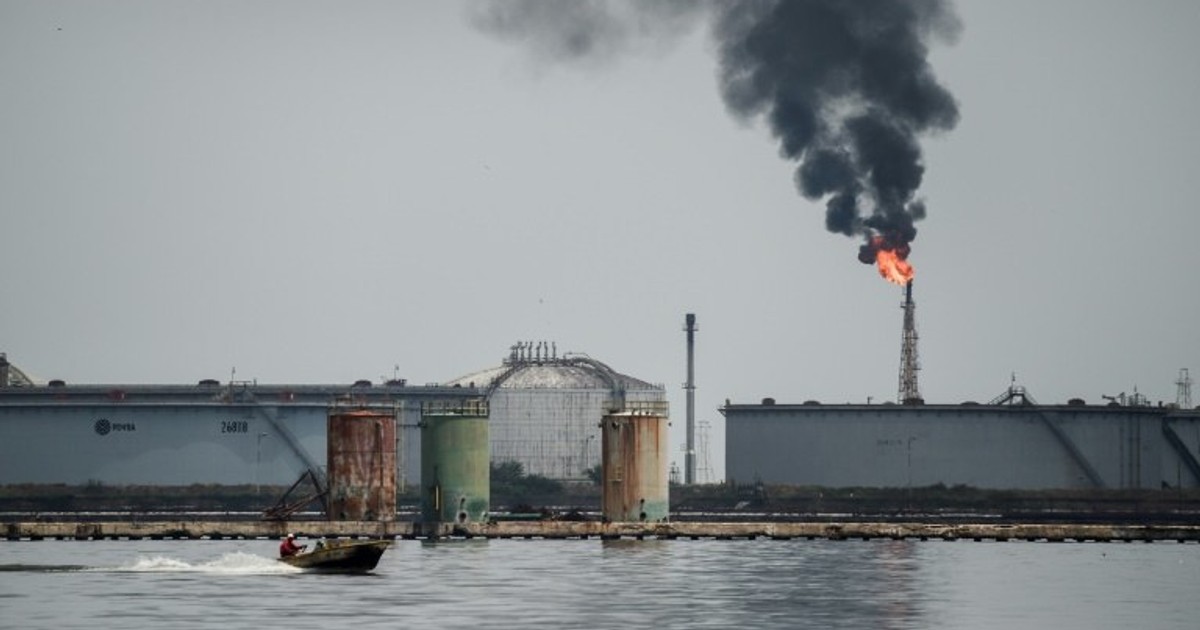
This dramatic gap highlights a broader global contrast between underground oil wealth and actual production.
Venezuela’s reserve base, concentrated mainly in the Orinoco Belt, represents roughly 17–18 percent of global proven reserves, while African producers such as Libya, Nigeria and Algeria together make up a much smaller share.
Yet despite its enormous resource base, Venezuela’s oil production remains subdued, reflecting years of mismanagement, deteriorating infrastructure and international sanctions.
Once pumping more than 3 million barrels per day (bpd) in the late 1990s and early 2000s, output has declined sharply. In 2025, production was estimated at roughly 900,000–1.1 million bpd, a fraction of its potential and a tiny share of global supply.
US–Venezuela oil dispute shapes geopolitics
The gap between reserves and output has become a flashpoint in global politics.

Officials argue the moves are designed to curb illicit trade and deprive adversaries of heavy crude supplies, even as legal and geopolitical tensions rise.
Trump has also signaled an intent to leverage Venezuelan oil assets for US and allied benefit, with discussions involving major American oil companies about revitalising production infrastructure and potentially increasing output to global markets.
Chevron, for example, has been identified as a possible leader in rebuilding Venezuelan production capacity, contingent on approvals and regulatory conditions.
Despite its towering resource advantage, Venezuela’s oil industry illustrates a critical energy paradox: immense reserves do not guarantee equivalent production or global market influence without investment, stability and unfettered access to markets, factors that have long restrained its full potential relative to both African producers and global peers.