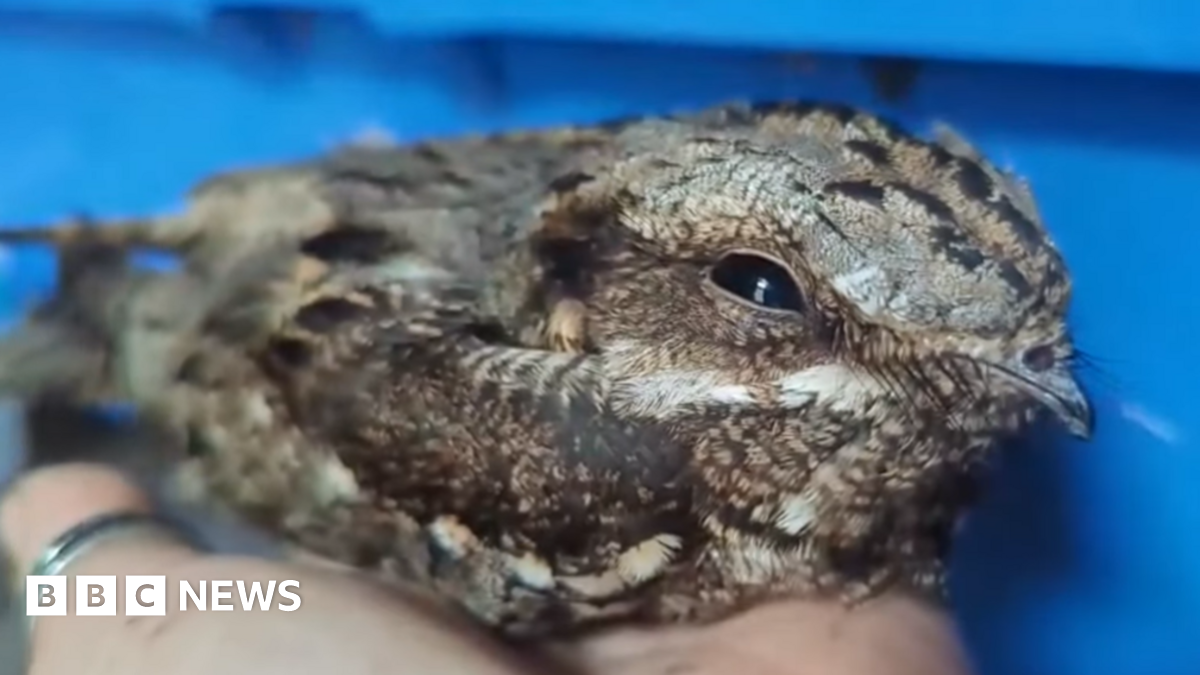
Nightjars were once a more common sight and sound on the island of Ireland, according to Birdwatch Ireland’s Conservation Officer, John Lusby.
He points out their distinctive call used to be so well-known that Irish speakers named the bird túirne lín, which means spinning wheel.
This name refers to the churring sound made by the male of the species.
Lusby said nightjar numbers “diminished dramatically” across Ireland in the latter half of the 20th Century,
He puts the decline down to the loss of habitat and pesticide use, because nightjars feed mainly on insects.
In fact, a few years ago, the “general consensus was that we had effectively lost nightjars” according to a 2024 report by Lusby.
But that summer he coordinated a survey which found evidence of a very small number in the south east of Ireland, described by Lusby as the “last remaining stronghold” on the island.
The study concentrated on counties Kilkenny and Wexford, external where researchers recorded “hundreds of hours” of birdsong.
They detected nightjar calls from two of the survey sites, but could only find one pair breeding successfully.
The team has since conducted a wider study which also incorporates Waterford and Tipperary.
This time they managed to get footage of the breeding pair’s nest, monitoring it from a safe distance using a drone with a thermal sensor.
The location of the nest is being kept secret so the birds are not disturbed.
Lusby was surprised to hear a nightjar was found as far north as Belfast.
But he explained it is a type of bird that stays “under the radar” and “may be present” in small numbers in areas that researchers are not yet aware of.
The results of Birdwatch Ireland’s 2025 nightjar survey are expected to be released within weeks.