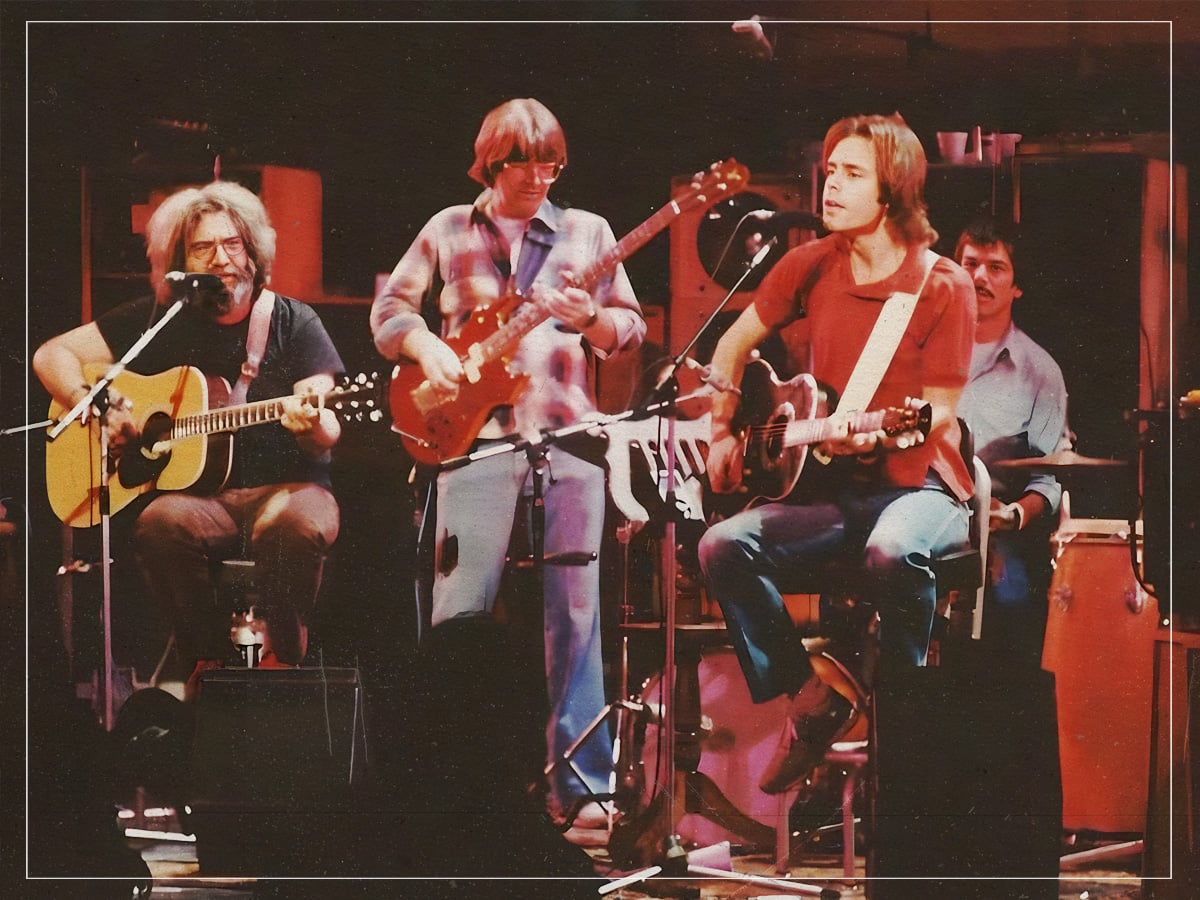
(Credits: Far Out / Alamy)
Sun 11 January 2026 7:50, UK
For the most part, rock and roll is a genre of music that relies on the ego of its players. It takes a lot to swagger into shot and welcome the spotlight, and the desire to be remembered as a key aspect of most performers. As the Grateful Dead‘s iconic singer and guitarist, Bob Weir was one of those musicians who had never been flashy or attention-seeking.
Despite what his denim shorts might tell you, he was never interested in the spotlight and was always far more concerned with the very essence of the art. Working in the shadows of one of the most subversive bands of all time, Weir was allowed to let his music do most of the talking. Growing into his role as one of the leaders of the continually evolving overlords of jam rock, Weir’s transition from scrawny teen to rock behemoth has been relatively subdued in the public eye.
Weir never found himself plastered across tabloid front pages or even got into too much trouble. His was not a desire to be famous. He wanted to be contented. Instead, he has just quietly gone about his business, creating one of the most densely rich back catalogues of live music of all time, and he does it all with a smile on his face and a wistful look in his eye. Something that means he exuded an integrity that has often left our favourite rock stars by the time they enjoy their fifth decade in the limelight.
One thing the Dead became most widely known for was the depth of their live arsenal. Able to fire shots with multiple sonic canons at the drop of a hat, the group became known as a deadly outfit on stage. With such a vast inventory to get through, it’s incredible to think that Weir would be able to select a favourite Grateful Dead song and, bar a few flippant comments, he never really entertained a conversation around the topic.
Avoiding labelling tracks with the title of ‘favourite’ is a national pastime for most high-esteemed rockers. And Weir is no different. He did, however, once pick one Grateful Dead song he wanted to be played at his funeral, and we think it could well be classed as his favourite track of the band’s rich tapestry.
 The incredible Bob Weir. (Credits: Far Out / Thekingdekalb)
As part of ‘The Big Interview’ with equally legendary journalist and broadcaster Dan Rather, Weir, the guitarist of the counter-culture Kings, not only shared the song he would play at his funeral but also about meeting Jerry Garcia for the first time and his biggest musical influences on both him and the band.
On Garcia’s particular brand of expectation for Weir, the guitarist once revealed: “He knew about what I was good for and just was happy with that. He knew how to get stuff out of me. He very, very rarely had me play anything specific. He kept me to my own devices, and I tried to delight him as best I could.” However, one question provoked perhaps the most passionate response: the idea of Weir’s legacy and mortality.
When asked what he would like to be remembered for when he “crosses the river” and goes on to the other side, Weir, ever the creator and musician, simply replies: “Individually, for people who want to remember me, to remember on the moment for a song that relates to that moment for them, because that’s all I’m here for.”
However, detailing further after being asked what song Weir might like to be played at his funeral or memorial service, Weir replied: “I have seen where the wolf has slept by the silver stream. I can tell by the mark he left you were in his dream.”
Weir continues reciting the John Perry Barlow-penned opening lyrics of ‘Cassidy’, adding: “Ah, child of countless trees. Ah, child of boundless seas. What you are, what you’re meant to be. Speaks his name, though you were born to me. Cassidy.” It’s a song that he would later sing to the lyricist himself in relatively similar circumstances as the late Barlow lay on his deathbed, serenaded by Weir and his most famous song.
The track actually concerns two real-life Cassidys. Firstly, Neal Cassady, a beat poet and heroic writer, is forever connected with the band. The other was the daughter of Rex Jackson, a former Grateful Dead crew member and Eileen Law, the group’s office manager. Born out of real people, the song is pertinent and potent.
The track is also inspired by Barlow’s father, who passed away and left behind a now infamous ranch to the lyricist. It’s a rich vision of letting life run through one’s hands and enjoying the moment it does.
Of course, for many Deadheads, the fact the song is suggested as a favourite Grateful Dead track is a little tricky to swallow. The tune first appeared on Weir’s solo album Ace before being adopted by the band. However, all of the members of the band were involved in its creation, and it is, therefore, for all intents and purposes, a Grateful Dead song. It’s one of the band’s finest moments and should rightly be considered a contender for Weir’s favourite.
Related Topics