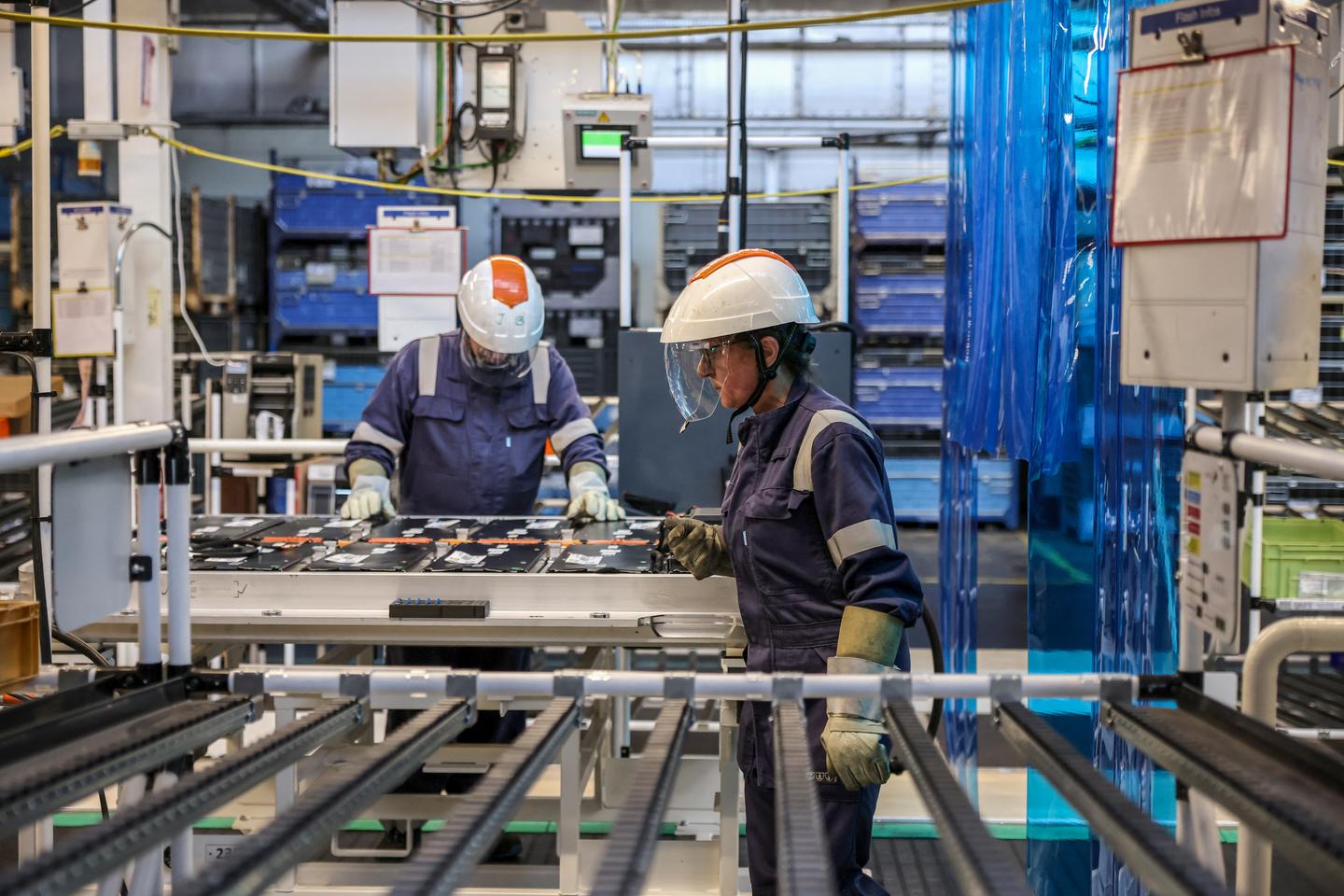
 A production line for the Peugeot e-3008 electric car, at the Stellantis factory in Sochaux, eastern France, on September 12, 2023. ARNAUD FINISTRE/AFP
The free trade agreement between the European Union and four countries in the Mercosur trade bloc (Brazil, Argentina, Paraguay and Uruguay), which was approved by a qualified majority of the 27 EU member states on Friday, January 9, is overall expected to only have a limited impact on the European economy. Even the European Commission’s official calculations, which are necessarily optimistic, predict that the deal would only increase the EU’s gross domestic product by 0.05% by 2040, and that of the Mercosur countries by 0.25%.
More precisely, however, certain sectors will be significantly affected. While most of the political debate in France has focused on the agricultural sector, three industrial sectors are set to reap substantial benefits: the automotive, machine tools and chemical industries. Germany, a leader in these sectors, is among the countries best positioned to see gains.
Together, these three sectors are expected to account for nearly two-thirds of the anticipated increase in European exports to the Mercosur countries by 2040, according to the Commission. The automotive sector, in particular, will be the biggest winner, with its exports to the Mercosur countries expected to triple. “This is very positive,” said Jonathan O’Riordan of the European Automobile Manufacturers’ Association (ACEA), the industry’s main European lobby organization.
You have 73% of this article left to read. The rest is for subscribers only.