The IRL have made new law changes for 2026.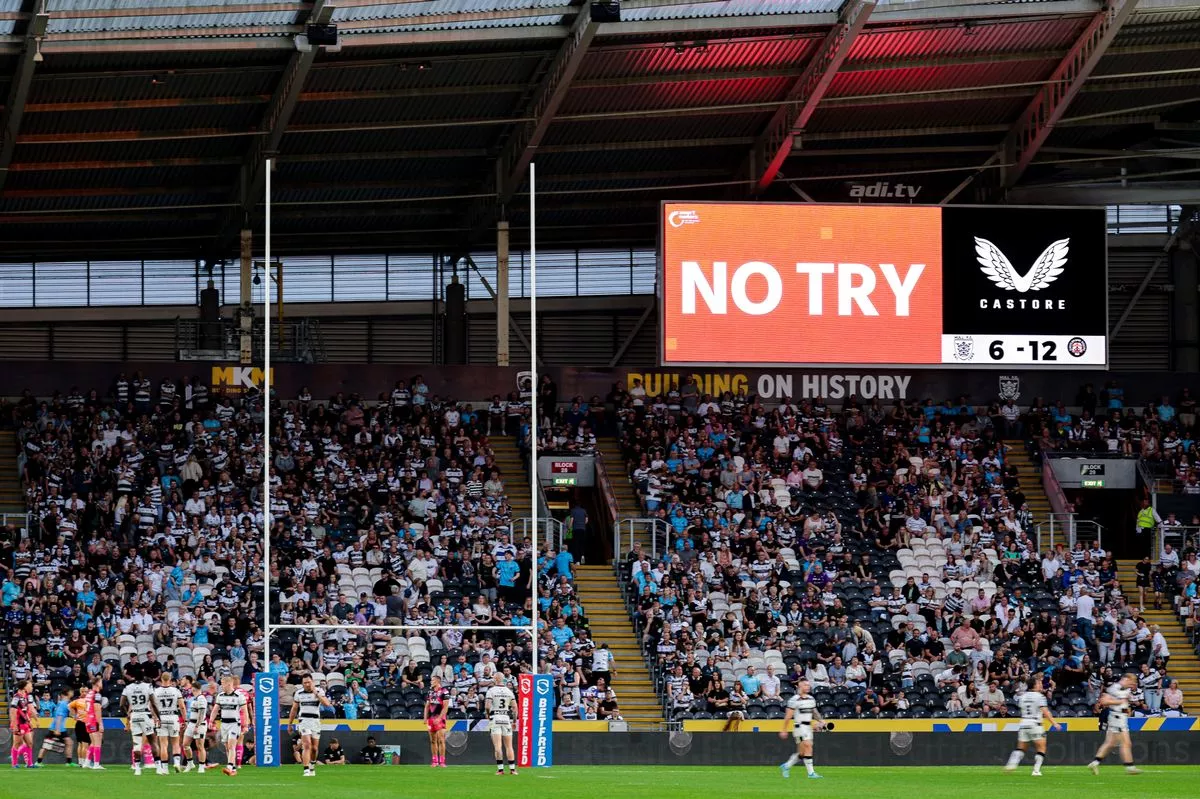
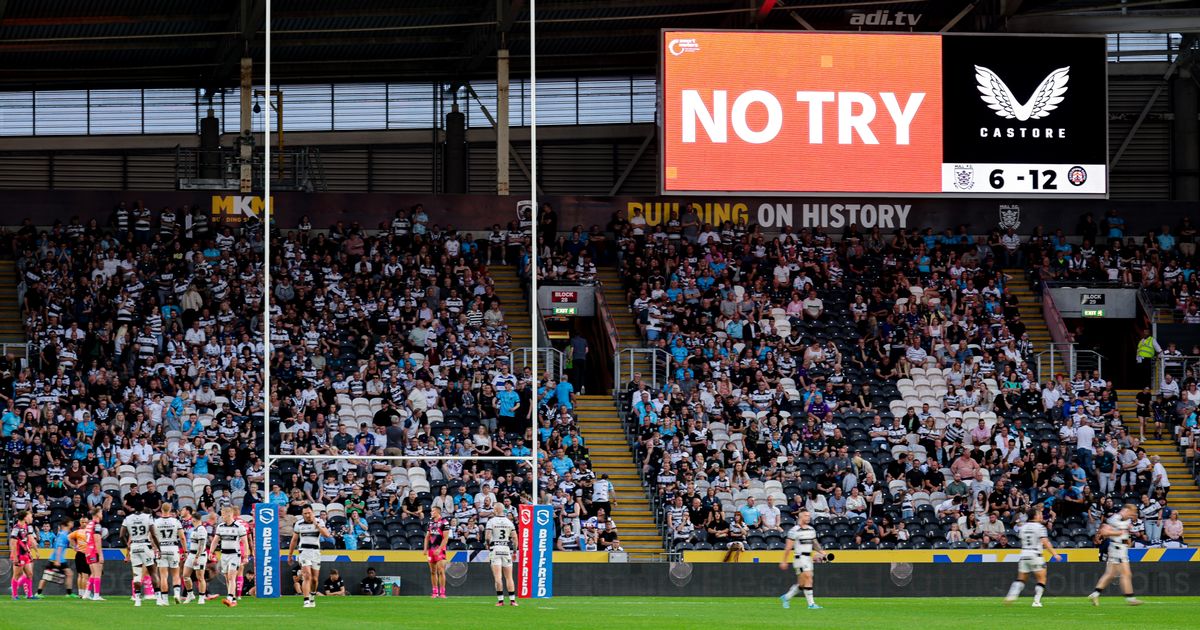
The big screen signals ‘no try’ decision from the video referee.(Image: )
The International Rugby League (IRL) board have approved nine law changes for the 2026 season – changes that will effect Hull FC, Hull KR, and the community game.
The changes will be in effect at all levels of rugby league from Super League, to the Championship, and grassroots game. The changes come following recommendations by the IRL Laws Advisory Group and have made to ‘encourage fluidity of play, provide clarity to players and match officials and improve player safety.’
The Laws Advisory Group features representatives from different governing bodies from around the world, including the RFL’s Phil Bentham and the NRL’s Head of Officiating Graham Annesley. It comprises Michael Maguire (APRL), Ruan Sims (ARLC), Laurent Frayssinous (ERL), and Danny Kazandjian (IRL).
The nine changes are separate from the rule amendments the RFL made for Super League ahead of 2026, including 60-second shot clocks for goal kickers and speeding up the video referee process.
The changes from the IRL relate to the play the ball, the scrum, and more – and have been implemented since January 1. Here they are in full:
Locking the ball into the scrum
It is an offence to deliberately lock the ball in a scrum. This will result in a full penalty being awarded against the offending team.
Packing the scrum
The loose forward of each team is required to pack behind their second-row forwards by placing their head in the space between them and wrapping their arms around the second-row forwards.
Grounding the ball
Dropping on the ball and covering it with the front part of the body above the waist and below the neck, the ball itself being on the ground (clarifies that a try cannot be scored with the back).
Active and passive offside
Players shall not encroach within 10m of an opponent who is waiting for the ball and shall immediately retire from any opponent who first secures the ball. Offside players who are within 10m must not ply an active part in or impact any subsequent play (ie: remain passive) up the next play-the-ball or stoppage, unless they place themselves back onside by retiring behind the point of the kick (allows fluidity of play and reduces unnecessary penalties for technical infringements).
Player safety
When attempting to tackle a kicker, defenders must make a genuine attempt which is not late, high or dangerous contact with the kicking player whilst they are in a vulnerable position.
Playing the ball (1)
The tackled player shall without delay regain their feet where they are tackled, lift the ball clear of the ground, face their opponent’s goal line and place the ball on the ground in front of their foremost foot (clarifies that dropping the ball onto the ground constitutes a knock on).
Playing the ball (2)
The tackled player must make a genuine attempt to play the ball backwards with the foot. The ball must not be kicked or heeled by the player marking them. The ball is in play when it has been played backwards (provides clarity for referees)
Rugby union-style mauls
It is not permissible for a player to lend weight to a teammate in possession to gain momentum. Immediately this happens the referee should call “Held”. Momentum already generated would be taken into account.
Blocking
Where opponents do not make a tackle effective in the quickest possible manner but attempt to push, pull or carry the player in possession, it is permissible for colleagues of the tackled player to lend their weight in order to avoid losing ground. Immediately this happens the Referee should call “Held”. (It is not permissible for an attacking player to impede any defender from making a tackle).
Additional women’s change
In addition, the IRL Board also approved a new Playing Condition for Women’s Senior International Matches – 10 interchanges. This followed a recommendation from Women’s & Girls Advisory Group to the Laws Advisory Group.