Poland is one of the EU countries where resistance to the EU-Mercosur trade agreement has been particularly strong. The far-right has instrumentalised this issue, as has occurred in many other EU member states. Arguments against this trade deal, which aims to boost commerce between the EU and the Mercosur group—encompassing a market of over 700 million people across Europe and Latin America—include several conspiracy theories and instances of “fake news.” Russia and China primarily support this disinformation campaign, the latter of which perceives its trade interests as being threatened, e.g. in the automotive industry.
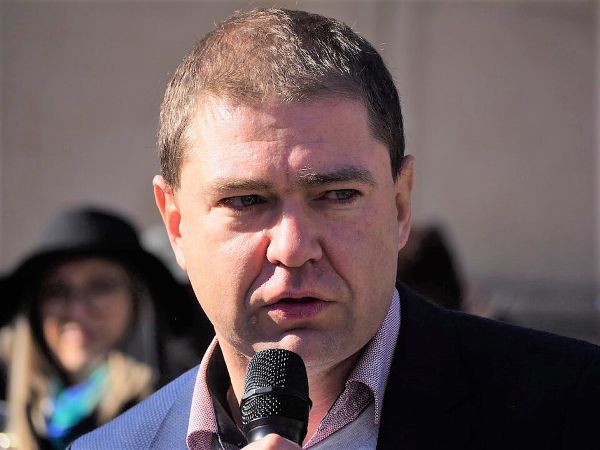
In a post on the X platform on 9 January, Piotr Szumlewicz, Chairperson of the Polish Trade Union Związkowa Alternatywa, depicted the attack on the EU-Mercosur agreement as “complete nonsense.”
“Agricultural products from Mercosur are already subject to detailed sanitary controls,” he wrote in response to those who spread false information about the health risks the agricultural products from South America may represent. “Signing the agreement will further raise quality standards and impose on producers from Mercosur the same standards that exist in the EU. Additionally, Mercosur countries have large organic farms that already rely on the highest standards today.”
In Poland, there is a discussion about a few products from Mercosur that will be subject to minimal quotas of 0.5-1.5% of EU production. This concerns, among others, beef, poultry, or cheeses.
“The agreement eliminates tariffs on 90% of products in both directions,” continues Szumlewicz. “In the EU, there are larger subsidies for agricultural products than the value of these quotas,” he wrote.
The trade union leader explained that, although the quotas are low, the EU is still introducing intervention mechanisms if products from Mercosur disrupt the functioning of EU producers. “There will be, for example, compensation funds for farmers. Additionally, the EU plans to increase subsidies for agriculture, so farmers will be the biggest winners of this agreement,” highlighted Szumlewicz.
Szumlewicz mentioned that the EU already imports agricultural products from Mercosur, and beef imports account for only about 1-1.5% of what the EU produces. This beef is really high quality but also pretty pricey. While the total amount of beef imports won’t change much, consumers can expect lower prices.
On top of that, this agreement will lower prices on a wide range of imported goods that face little competition in the EU, especially in Poland, such as exotic fruits. So, it’s mainly about giving consumers some savings, noted the trade union leader.
This deal is also a big win for EU exporters, including those in Poland, since it opens up a vast market for them.
Lastly, Szumlewicz noted that “Mercosur is an organisation of democratic countries that are a natural ally for the EU. The Union needs new allies and new markets. Therefore, the main enemies of this agreement are Russia and China.” Szumlewicz concluded.
However, it is essential to note that the Mercosur agreement, in its original form, was indeed risky for Polish farmers and those in other European countries. Despite this, the Law and Justice (PiS) party, when in government, accepted it and did not demand any changes. Today, it changed flags and, in alliance with other far-right and extremist parties, it is fueling the protests against the deal.
But the actual agreement between the EU and Latin American countries was revised following tough negotiations among national governments.
The current Polish government and MEPs from KO and PSL achieved essential safeguards. These safeguards, combined with low import quotas – for example, beef imports from Mercosur countries can amount to only 1.5% (!) of the annual production in the entire Union – ensure that Polish agriculture is not threatened.