The number of workers living in Scotland who pay the higher rate of income tax has more than doubled as a result of decisions made by SNP ministers.
When the Scottish Government secured control of new tax powers in 2017/18, some 318,300 Scots were paying the higher rate of income tax, which began on earnings above £43,000 and was then charged at a rate of 40 per cent.
But there are now forecast to be 788,000 taxpayers paying the higher rate, which now starts on earnings above £43,663 and is set at 42 per cent.
It means that the number paying the higher rate has soared by 147 per cent, or 469,700, over the period.
It led to calls for SNP ministers to give hard-working Scots a break in tomorrow’s Budget.
They will consider whether to increase the higher rate threshold, which sees many modest earners dragged into paying a marginal tax rate of 50p on earnings between £43,663 and £50,000 due to the combined impact of income tax and national insurance contributions.
Scottish Conservative finance spokesman Craig Hoy said: ‘These figures highlight how the SNP are using middle-income Scots as a cash cow to fund the ballooning benefits bill.
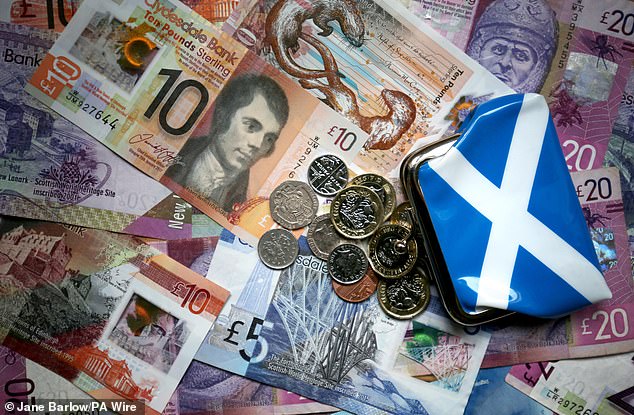
Thousands of Scottish taxpayers have been dragged into higher brackets
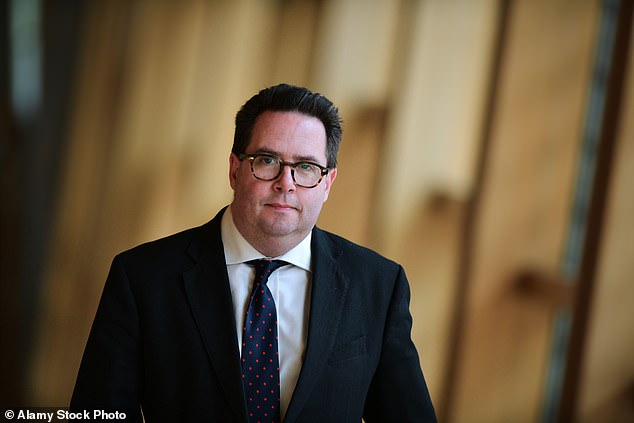
Scottish Conservative finance spokesman Craig Hoy
‘The SNP’s freeze on thresholds is a brutal and deepening stealth tax on hard-working Scots, because it drags more and more people on relatively modest incomes into higher tax brackets.
‘This isn’t those with the broadest shoulders, as the SNP try to pretend. John Swinney’s government are clobbering nurses, teachers and police officers – and it has to stop.
‘Scots households are struggling to cope with rising bills from two high-tax, left-wing governments, and are crying out for help.
Scottish Conservatives are committed to giving workers and businesses a break by reining in Scotland’s unaffordable welfare bill.’
Currently, everyone earning more than £30,300 pays more income tax in Scotland than they would in other parts of the UK.
South of the Border, workers pay a 20 per cent basic rate on earnings above £12,571, rising to a 40 per cent higher rate on earnings above £50,271 and a 45 per cent additional rate above £125,140.
Under the complex system in place in Scotland, a 19 per cent starter rate is applied on earnings above the tax-free allowance up to £15,397, then a 20 per cent basic rate up to £27,491, a 21 per cent intermediate rate up to £43,662, a 42 per cent higher rate to £75,000, a 45 per cent advanced rate up to £125,140 and a 48 per cent top rate above £125,140.
Speaking on the BBC’s The Sunday Show yesterday, Social Justice Secretary Shirley-Anne Somerville, said there will need to be ‘tough choices’ in tomorrow’s Budget but defended the current approach to income tax.
She also repeated claims that a majority of taxpayers are projected to pay less income tax in Scotland this year than they would in other parts of the UK – despite the Scottish Fiscal Commission finding that this was not the case in the last two financial years, when a majority paid more than they would south of the Border.
Told she was using ‘sleight of hand’ because her claim is based on projections and that this has not been the case in recent years, she said: ‘There’s not a sleight of hand, it’s done by the Scottish Fiscal Commission. We are always saying we should listen to experts and listen to those independent of Government.
‘The Scottish Fiscal Commission is independent of Government and that is what their forecasting shows.
‘But we do also ask those with the broadest shoulders to pay a little bit more but that ensures we can make choices like the free prescriptions, free eye tests, free tuitions that are part of what is available in Scotland.
‘They’ve been available in Scotland for so long people forget that these things are not baked in – it’s only because there’s an SNP Government that continues to invest in those things and makes those choices that ensure that those continue to happen.’
Asked if people earning £30,300 – the rate at which people pay more than in the rest of the UK – really have ‘the broadest shoulders’, she again highlighted decisions like free prescriptions but said she recognised that ‘there are many people who are still struggling out there’ and said council tax bills and water bills are lower than the rest of the UK.
A Scottish Government spokesman said: ‘The Scottish Government’s tax decisions enable us to deliver higher investment in the NHS and policies like free tuition not available anywhere else in the UK, while ensuring the majority of taxpayers are expected to pay less income tax than elsewhere in the UK.
‘Tax policy for 2026/27 will be announced at the Scottish Budget on 13 January 2026.’