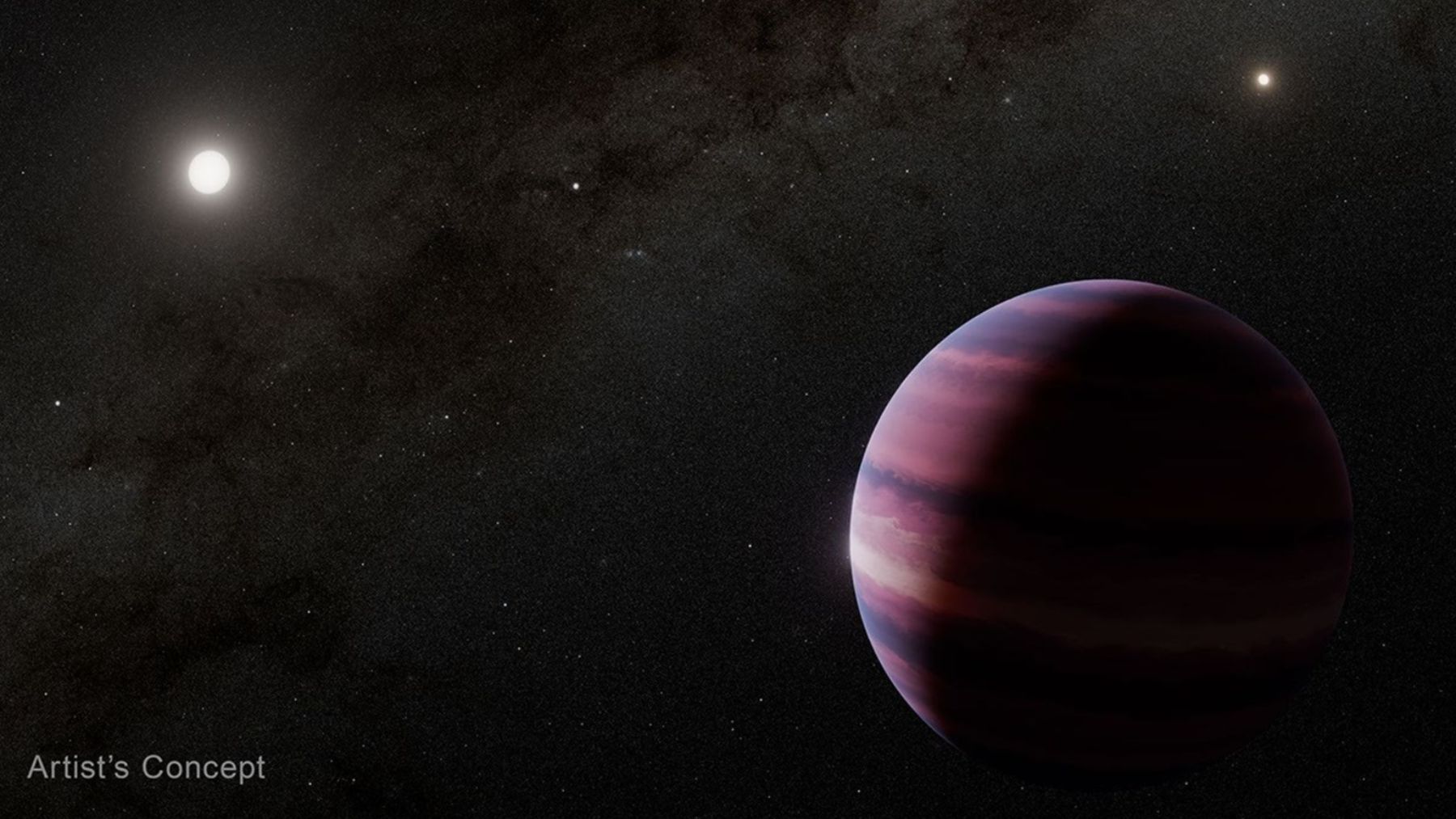
NASA’s newest announcement of 6,000 planets floating out there has confirmed what the agency has known all along. There are many more exoplanets waiting to be discovered. Thirty years ago, the very first exoplanet was spotted, which made us realize that there were more planets in the Milky Way and that they exist beyond those in the solar system that we know. The discovery of these celestial bodies leads to questions about the possibility of life on other planets. For now, NASA is convinced that there are about 8,000 more exoplanets yet to be discovered.
NASA is exploring ways to rewrite history with new planet discoveries
Astronomers initially discovered the first planet that exists beyond our solar system 30 years ago. This exoplanet was found orbiting a star similar to our Sun. This discovery led scientists to deduce that exoplanets (planets outside of our solar system) exist. Now, it has been uncovered that 6,000 others exist, although images can be found of fewer than 100 of these planets, since most of them appear rather faint.
After careful verification, newly spotted planets have been added to the list of exoplanets. Employees at NASA seem to believe that there are over 8,000 exoplanets waiting to be discovered. Until then, it remains clear that the number of newly discovered planets continues to grow.
While the numbers may appear shocking, the most startling aspect is the fact that international collaboration and advancement in space telescopes have enabled us to spot more. With each space mission undertaken, a complicated picture is being painted of the many planets that make up the galaxy.
The diversity identified in the planets spotted
While the future of exoplanet science will entail discovering more rocky bodies that are similar to Earth, the discoveries made thus far point to a wider variety of types that exist. Some of the planets discovered are different from those found in our solar system.
The discoveries included:
- Planets similar in size to Jupiter, which orbit very closely to their parent stars
- Those found orbiting two stars
- Planets that don’t orbit any star
- Some that orbit dead stars
- Some planets were found to be covered with molten lava
- A few had clouds that were made of gemstones
- Some planets were found with a density of styrofoam
Despite each exoplanet discovered being so different from the next, the range of planets discovered gave the exploration team insight into how the body formed and allowed the team to deduce what type of similarities these exoplanets had with Earth. This information is all too vital as it could assist in identifying which planets can possibly support life.
Obstacles regarding exoplanet discoveries are yet to be overcome
While the number of discoveries has been growing, it remains challenging to discover more exoplanets. So far, many of the planets have been detected indirectly, as they often get lost in the glare of their parent stars. While observations can be deceiving and fake exoplanets can be uncovered, the process of confirming an exoplanet requires follow-up observations, too.
NASA is hopeful that with the upcoming Nancy Grace Roman Space Telescope, 1,000 more exoplanets will be discovered through a technique known as gravitational microlensing. However, the whole community will have to work together in order to make these discoveries that will reshape history and make us realize Earth is not the only planet with living beings.
Humanity’s changed perspective of the cosmos
The discovery of 6,000 exoplanets has revealed a galaxy waiting to be uncovered and one filled with enigma and wonder. The hope is that upcoming telescopes and innovations will make discovering exoplanets and perhaps life elsewhere a possibility. NASA is hard at work trying to uncover the answer to the question of whether we are really alone or not. Could scientists possibly discover a potential Earth twin or cousin?