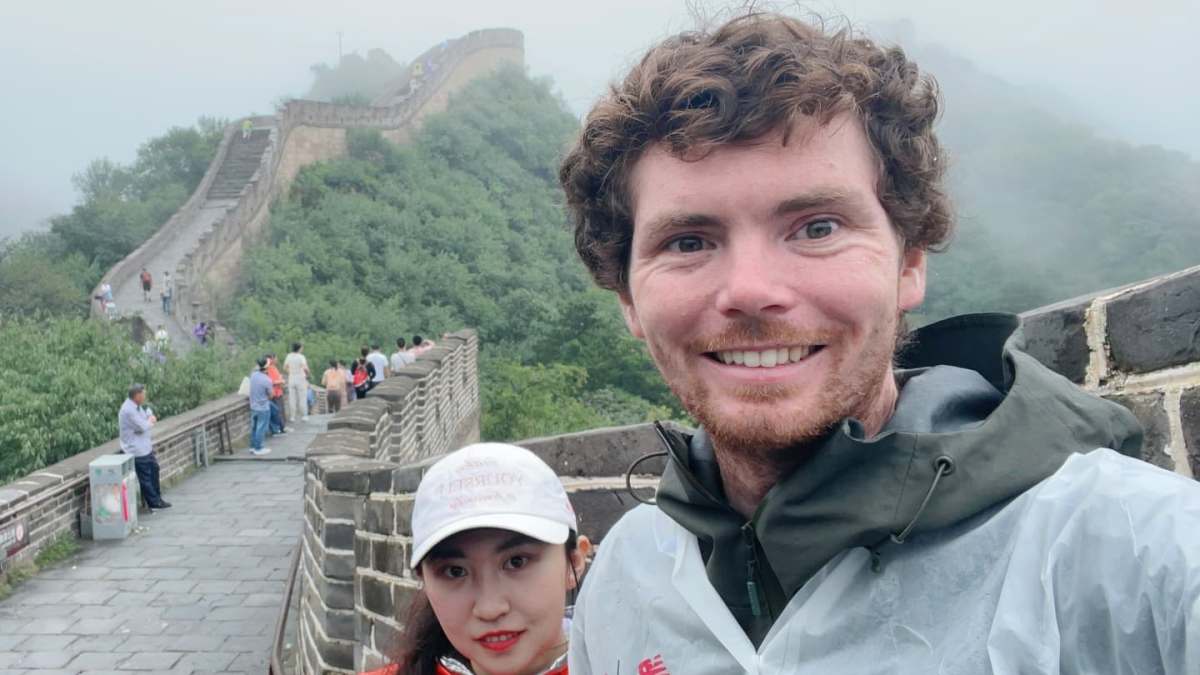
An amateur scientific sleuth has earned a £2 million reward after exposing the use of falsified data by one of America’s leading cancer research institutions.
Sholto David, 34, who lives in Oxford, spends much of his spare time trawling through peer-reviewed science, searching for errors and indications of fraud.
• Record year for bad science with 10,000 studies retracted
Two years ago he uncovered evidence that scientists at the Dana-Farber Cancer Institute, which is based in Boston and affiliated with Harvard University, had used manipulated data when applying for grants from the National Institutes of Health, the world’s largest public funder of biomedical research.
The institute has agreed to pay $15 million (£12 million) to settle a lawsuit filed by David under the US False Claims Act. Under the agreement, David is due $2.63 million, almost £2 million, a portion of which will go to his lawyer, and most of the settlement will be returned to the NIH.
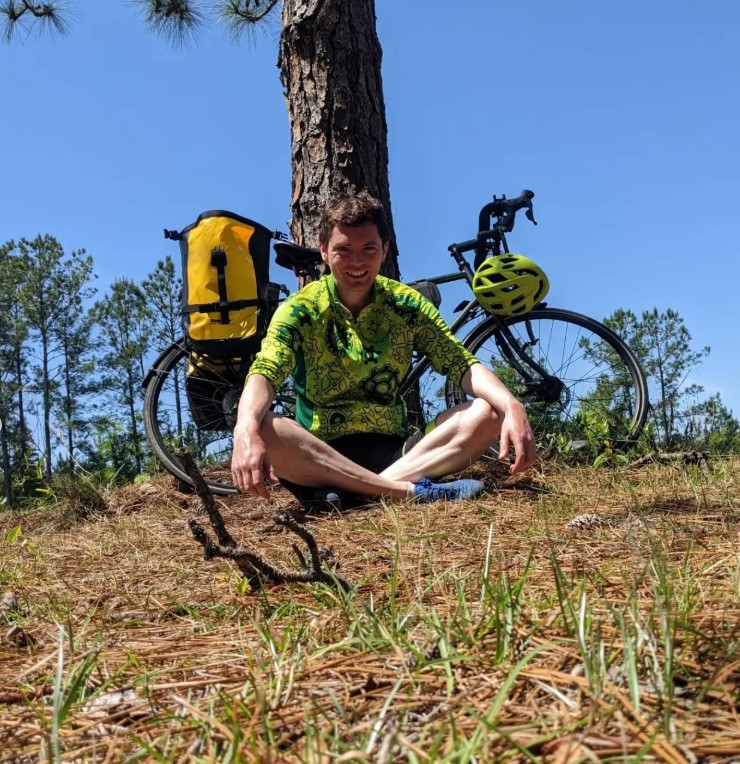
David, who has a doctorate in cell and molecular biology from Newcastle University, has not decided how he would use the money. Buying a house is an option, but he is also considering working full time on exposing errors and malpractice in scientific research, something he has so far done as a hobby. He spent three months last year cycling to China and is also keen to travel more.
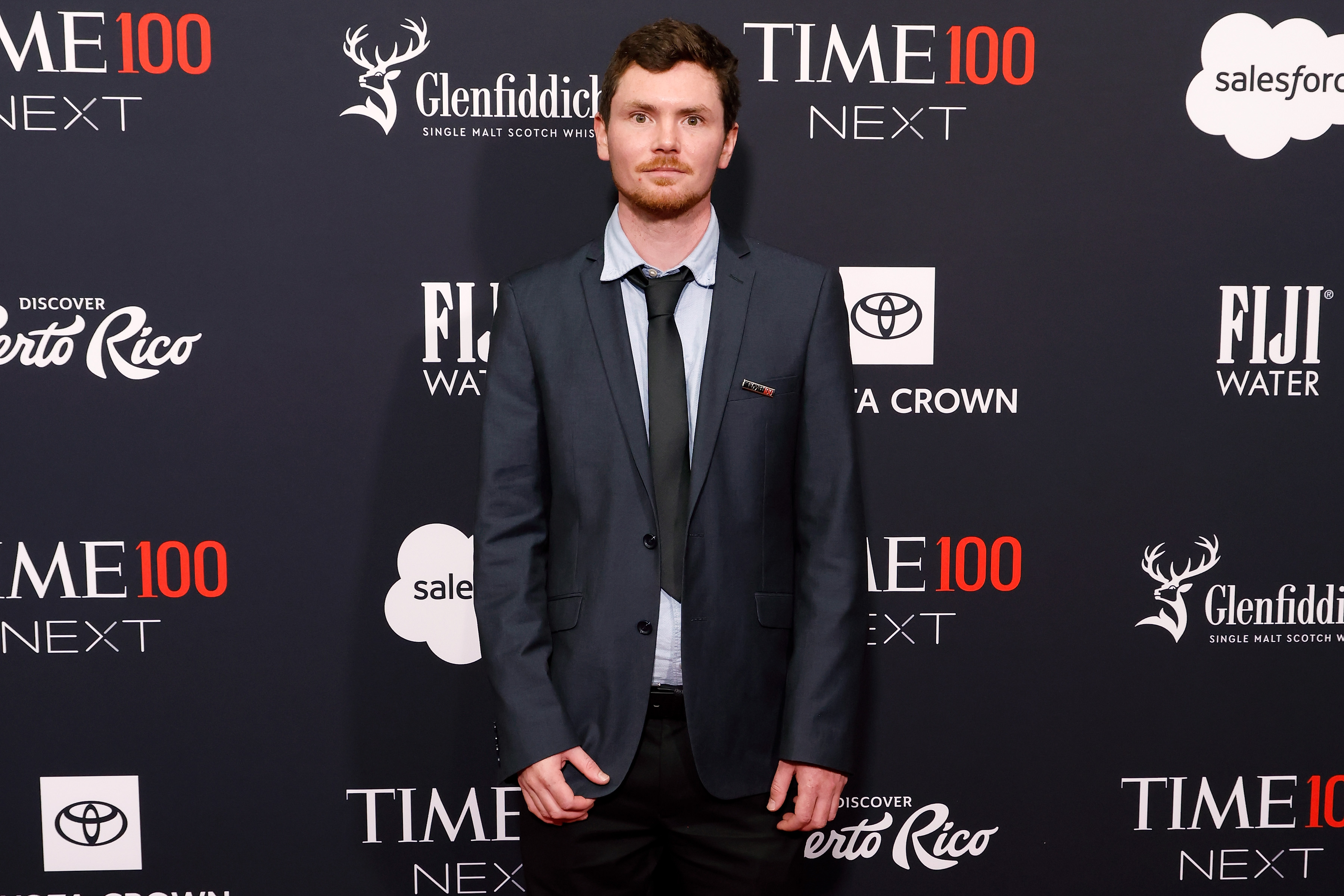
Sholto David has been recognised by Time magazine for his work
TAYLOR HILL/GETTY IMAGES
Since 2021 he has posted thousands of detailed comments online about scientific papers, highlighting dubious images, duplicated data and internal contradictions. The work has made him one of the most prolific independent critics of a lucrative scientific publishing industry.
Asked how much faith the public should place in peer review, he said: “It is not really an effective process and we ask a lot of it. A lot of peer reviewers just aren’t looking for fraud.”
He added: “I’m still a scientist. I don’t think all cancer research is wrong but there are more problems than most people would like to believe.”
• Truth will out: honesty researcher ‘used fake data’
The False Claims Act allows individuals to sue on behalf of the US government when public funds are alleged to have been obtained fraudulently. Whistleblowers can receive up to 30 per cent of any recovery.
David, who works for a biotechnology company, set out his discoveries in a blog post published in 2024, noting what he said were repeated signs of data manipulation in studies by Dana-Farber researchers. Some of the problems involved animal research. In one example, images of mice said to have been taken at different stages of an experiment appeared to be identical.
Other cases involved samples taken from humans via bone marrow aspiration, which involves inserting a needle into a bone to withdraw liquid marrow. “Bone marrow aspirations [are] a famously unpleasant procedure,” David said. In one example, researchers identified images as coming from different patients. However, closer inspection suggested that they were the same image of the same bone marrow sample.
David said that the issue went beyond technical errors to questions of ethical responsibility. “If you decided to volunteer for a bone marrow aspiration … it would be unfortunate to discover that those samples are then mishandled,” he said.
He was particularly concerned about flawed research being used to justify human and animal trials of experimental treatments.
Soon after his blog post appeared, Dana-Farber asked journals to retract six of the 58 studies he had identified and to correct dozens more. The legal complaint listed 95 studies which it said reflected “a pattern of fraud”.
David said that his interest in scientific deception began with him looking at the data on alternative medicine. “You’ve got this kind of nonsense, like acupuncture, which seems like it’s fake, but [advocates are] still publishing papers,” he said. “Eventually I kind of came to realise that there are mistakes in all kinds of papers, not just alternative medicine. There are mistakes in mainstream cancer research, and not only mistakes but also fraud.”
Sholto David has found many errors in images supporting research
He initially focused on statistical errors but found problems involving images easier to communicate and harder for journal editors to ignore.
“Numerical understanding is very poor in biology,” he said. “But if I have a problem with an image, most people can sort of see: these two pictures shouldn’t be the same.”
The United States Attorney’s Office said that Dana-Farber had admitted that its researchers “misrepresented data and images that resulted in misinformation about research being published in 14 scientific journal articles”.
Leah B Foley, the US attorney for Massachusetts, said: “There is no place in scientific research, particularly cancer research, for fraud, waste and abuse … Patients and the medical community rely on the important research conducted by institutions like Dana-Farber. It is critical that all research findings are accurately reported.”