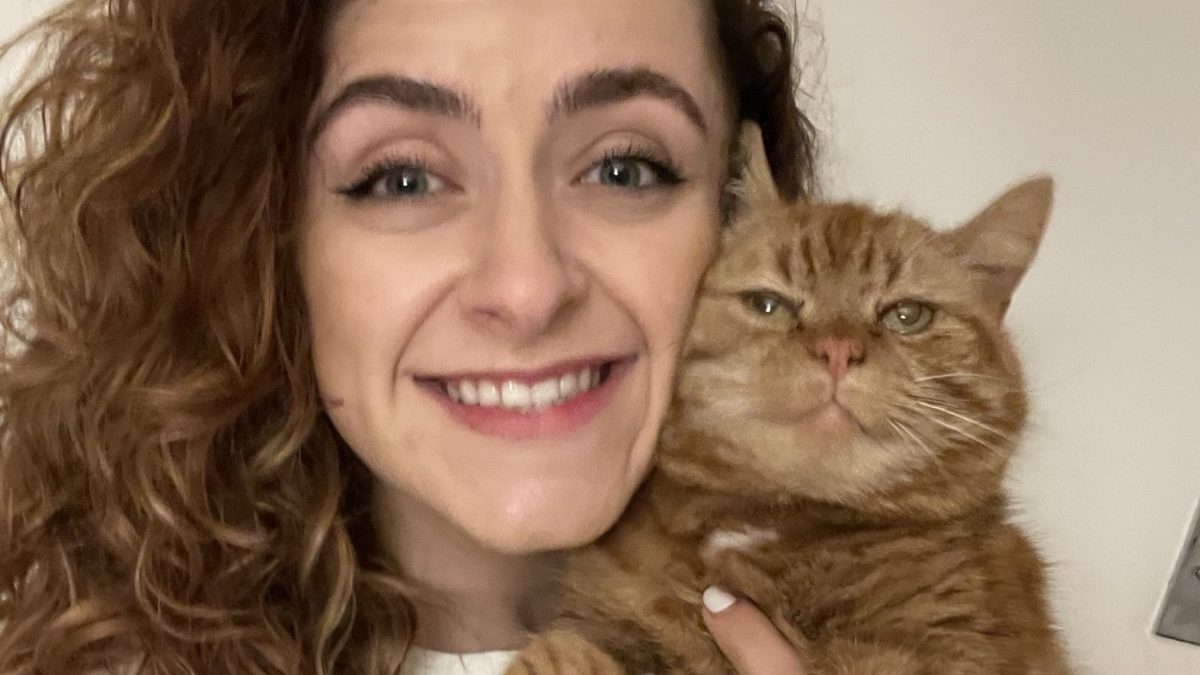
Lynsey Campbell, who lives with her cat Toby in Ayrshire, has spent years trying to build even a modest savings cushion
Lynsey Campbell is 30, but like millions of Britons, she is only just building a savings safety net for the first time in her life.
Nearly one in five UK adults has less than £1,000 in readily accessible savings, according to research from AJ Bell. Ms Campbell, from Ayrshire, is one of them.
Having this little money stashed away for emergencies leaves many households at risk if they’re hit with unexpected bills or a sudden loss of income.
New FeatureIn ShortQuick Stories. Same trusted journalism.
But Ms Campbell, a client director at a digital marketing agency, says she has spent years trying to build even a modest savings cushion.
“I have just under £1,000 in savings. I do wish this was slightly higher, but I’m also conscious of the ‘you can’t take it with you’ mindset, so I don’t want to constantly save and never spend or enjoy life,” she said.
The nest egg she has now represents a significant improvement on where she started in April 2019.
Before this, she says attempts at saving were “sporadic” and that any emergency spending she had to do felt “panicked”.
She says she would try and save, but found it difficult.
“I’d try moving money from my current account into a savings account at the same bank, but would find myself dipping into this as the month went on,” she said.
In the past three years, she has been using modern savings apps to try and build up a buffer in case of unexpected outlays.
Something she has made particular use of is automated tools. These are offered by multiple banking apps, but Campbell has used savings app Plum.
She uses the app’s rainy and sunny day rules. These tools save money based on weather forecasts in your area. You set the amount per event (for example £1 for rain, £2 for sun), and Plum automatically transfers funds when the weather prediction matches.
“They put away money without me having to think about it,” she says.
Younger adults are far more likely to have minimal savings than older people, with 37 per cent of those aged 18 to 34 holding less than £2,000 in an emergency cash pot, AJ Bell’s research showed.
By contract, 21 per cent of over-55s have £20,000 or more set aside, reflecting decades of gradual accumulation that many younger workers have not been able to replicate.
Women like Ms Campbell are particularly exposed, with a quarter having £1,000 or less saved, compared with just 15 per cent of men. On average, women have £1,746 less in emergency savings than men.
The average amount saved across the population is £8,245, but the median is just £4,500, meaning a small number of people with large balances are skewing the picture.
Laura Suter, director of personal finance at AJ Bell, said: “Lots of people have no financial cushion to fall back on should an emergency hit.
“While the guide is to have an emergency cash savings pot to pay for between three and six months of essential costs, that can seem pretty daunting to some if you’re starting from scratch.
“Instead, just focus on small wins and gradually improving your savings. Even starting by saving £50 a month will mean you have £600 by the end of the year.
“You can increase these savings if you get a pay rise, any extra money in or free up some disposable income.”
Ms Campbell has gradually learned to curb impulse spending and make her money stretch further using techniques to try and bag bargains.
She added: “I keep a note in my phone of things I’d like but haven’t yet purchased. Often at times, if I don’t buy right away, I can forget about it.
“At other points, if it’s an item I really would like, I’ll add it to a cart on the website, enter my email but not complete the purchase in the hope that I get an email with a special offer.
“Alternatively, I check the Meta Ads Library to see if the brand is advertising on Facebook or Instagram with any special offers or voucher codes.”
She says it took her a “good while” to get a solid base of savings, as she often dips into it for things like house repairs, car issues and other similar unexpected situations. It took her around a year, maybe slightly longer.
The biggest splurging temptations for her are meals out, so she does a lot of meal preparation and tries to be careful when doing the food shop.
She hasn’t cut out going to restaurants but makes a conscious effort to reduce the amount she goes.
Having a small buffer has changed how she feels about money, even if she knows it’s still modest.
She continued: “It certainly feels more ‘adult’, however I’m slowly adding to this over time as £1,000 is realistically nothing in today’s climate. I aim to hit around £5,000 in savings.”