PUBLISHED : 12 Jan 2026 at 20:10

- Small
- Medium
- Large
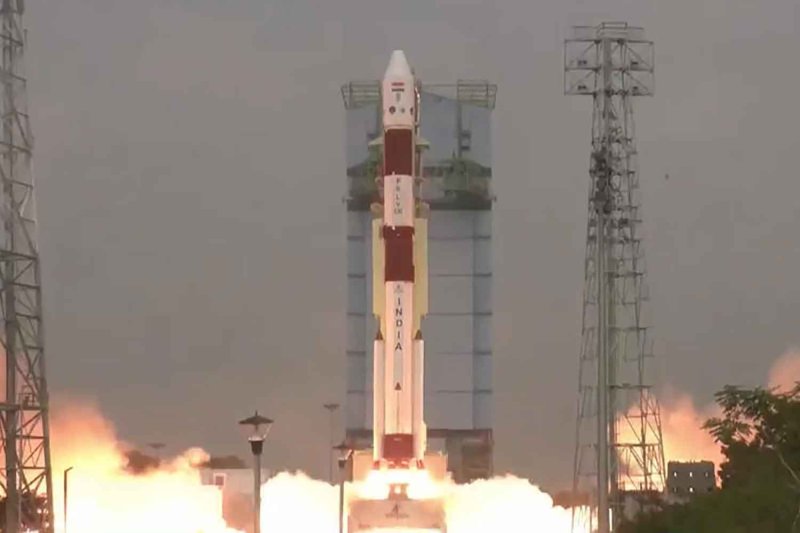
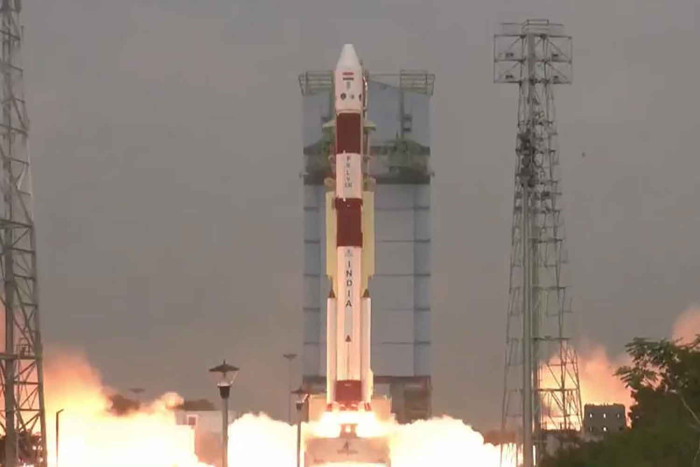
THEOS‑2A satellite launches on Monday but would fail to reach orbit as anomalies disrupted the rocket’s rotation, diverting its flight path. GISTDA
The Indian Space Research Organisation (ISRO) has confirmed an anomaly during the launch sequence of a rocket carrying Thailand’s high-resolution Earth observation satellite THEOS-2A, resulted in the spacecraft not reaching its intended orbit.
The first Thai-built Earth observation satellite — THEOS-2A — was scheduled to lift off at 11.48am Thailand time on Monday from the Satish Dhawan Space Centre in Sriharikota, Andhra Pradesh.
However, the Geo-Informatics and Space Technology Development Agency (Gistda) later confirmed that THEOS-2A failed to reach its planned orbit.
Gistda, citing a statement from ISRO president V Narayanan, said the Polar Satellite Launch Vehicle (PSLV) had four stages — two using solid fuel and two using liquid fuel.
The launch proceeded smoothly until the end of the third stage, when a fault was detected that caused a slight abnormality in the rocket’s roll rate.
The rocket’s flight path subsequently deviated from its planned alignment, Mr Narayanan said.
A live broadcast of the launch was aired on Gistda’s Facebook page but went off air after a few minutes before resuming with Mr Narayanan explaining that an anomaly had been detected during the third stage.
Gistda said such irregularities can occur and that its engineering team is working closely with ISRO to analyse the flight data.
According to the engineering team, the worst-case scenario is that the satellite failed to reach orbit and fell back to Earth.
Another possibility is that it reached orbit but not the designated position required for full operation.
The 100-kilogramme THEOS-2A was developed by a team of 20 Thai space engineers, covering both design and manufacturing.
It is the first Thai satellite to be built using industrial-grade materials and forms part of the government’s space economy policy aimed at encouraging domestic companies to develop and invest in space technology and materials.
Gistda said THEOS-2A was intended to serve as an “eye in space”, providing more precise data to support policymaking in disaster response, natural resource management, smart farming, urban planning and environmental protection.
It was also to lay the technological foundation for the future THEOS-3 satellite.