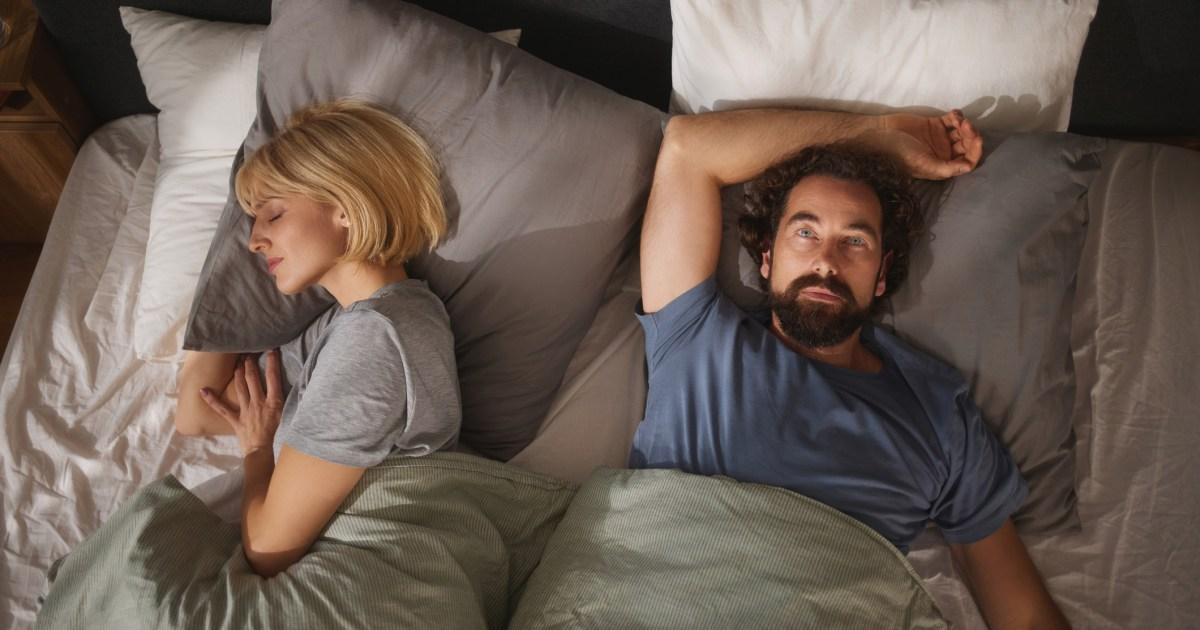

This study highlights the devastating long-term impact of poor sleep (Picture: Getty Images)
Waking up groggy is an immediate downside of being late to bed and early to rise, but new research has confirmed that the consequences go far beyond the next day.
According to a study by Oregon Health & Science University (OSHU), insufficient sleep could actually ‘cut years off your life’ — adding a dark double meaning to the phrase ‘you can sleep when you’re dead’.
Using a US-wide health habits survey from the Centers for Disease Control and Prevention, researchers compared respondents’ answers against life expectancy in their area.
Aside from smoking, getting less than seven hours of sleep per night was the factor most associated with dying younger, affecting longevity more than diet, exercise, socioeconomic status, or loneliness.
‘I didn’t expect it to be so strongly correlated to life expectancy,’ commented senior author and OSHU associate professor Andrew McHill, PhD.
‘We’ve always thought sleep is important, but this research really drives that point home: people really should strive to get seven to nine hours of sleep if at all possible.’
Put that phone down and get some shut-eye (Picture: Getty Images)
McHill called the findings ‘remarkable’, adding that although he’s a sleep psychologist with a good understanding of the health impact of poor rest, ‘it was still striking to see it materialise so strongly in all of these models.’
The study – published in the journal SLEEP Advances – is the first to show year-by-year connections between sleep and life expectancy across each US state.
This means outlier regions where results deviated from the norm during certain periods can be targeted for future investigation, potentially helping pin down exactly why the two factors are so closely linked.
Do you get at least 7 hours of sleep most nights?
-
Yes, I make sure to get enough sleepCheck
-
No, I usually get less than 7 hoursCheck
-
It depends on my scheduleCheck
Sign up to Metro’s The Slice newsletter for your guide to what’s on in London, with trusted reviews, offers and giveaways.
Ahead of opening up further scientific breakthroughs though, McHill says this project highlights the importance of prioritising sleep ‘at least as much as we do to what we eat or how we exercise.’
‘Sometimes, we think of sleep as something we can set aside and maybe put off until later or on the weekend,’ he concluded. ‘Getting a good night’s sleep will improve how you feel but also how long you live.’
‘Sleepgasms’ are real — my climax wakes me up in the mornings
If you need any more convincing to get a good night’s sleep, this ought to do it.
Otherwise known as a nocturnal orgasm, a ‘sleepgasm’ is an orgasm that happens during your sleep, without any physical stimulation.
‘They’re a healthy part of sexual function, often linked to erotic dreams or subconscious arousal,’ Dr Hana Patel, UK GP and women’s health expert tells Metro.
But, you need to be in a pretty deep sleep for it to happen, as Dr Hana explains it usually happens during REM sleep.
REM stands for Rapid Eye Movement – the more deep your sleep, the more your eyes will move around. Once you’re in REM sleep your eyes move quickly in all directions.
In this deep sleep, your brain becomes much more active. Yes, the more asleep you are, the more alert your brain is. This is where your vivid dreams will happen – at your deepest phase of sleep.
For more information, check out our full article on everything you need to know about the elusive sleepgasm.
How many hours of sleep you need each night
The NHS recommends adult sleep for 7-9 hours’ sleep a night, but the exact ideal amount can differ depending on a number of things, including a person’s age.
For example, guidelines suggest babies under 12 months get around 12-16 hours, school-age children get 9-12 hours, and over-65s get 7-8 hours.
‘Individual sleep need is like height – we are all different and it is to a large degree genetically determined,’ sleep researcher Dr Neil Stanley previously told Metro. ‘Anywhere between about four and eleven hours can be considered normal but getting just one hour less sleep a night than you require can have measurable effects on your physical and mental health.’
Given the potential health implications, it’s a good idea to at least try to stick to that magic seven-hour minimum.
However, if that’s not an option, Dr Stanley advises keeping an eye on what works best for you; if you feel tired every day, it’s a definitive sign you aren’t getting enough shut-eye.
What happens if you get less than 6 hours sleep a night?
- Weakened immune system. Dr Sue Peacock is a consultant health psychologist and sleep expert. She explains: ‘While you sleep, your immune system produces protective, infection-fighting substances such as cytokines. It uses these substances to combat foreign invaders such as bacteria and viruses. These cytokines also help you sleep, giving your immune system more energy to defend your body against illness.’
- Increased anxiety. ‘Unfortunately, one can exacerbate the other,’ says Dr Sue. ‘Anxiety can have a negative effect on your body’s ability to fall asleep, as your brain is in “fight or flight” mode, thinking of all the potential outcomes for whatever is causing the anxiety. ‘Furthermore, anticipatory anxiety and specific anxiety about sleep can lead to sleep disturbance and insomnia, which then creates a feedback loop that can make both conditions worsen.’
- Menstrual irregularities. Dr Katharina Lederle, a sleep and body clock specialist, tells Metro: ‘The level of thyroid-stimulating hormone (TSH) increases during sleep deprivation, and in healthy young women in their follicular phase, is associated with a significant increase in TSH level. ‘High levels of TSH causes menstrual irregularities, anovulation (when an egg isn’t released), amenorrhea (when you don’t get periods) and recurrent miscarriages.’
- Loss of productivity. Dr Katharina explains: ‘One US study found that employees who averaged five hours of sleep a night lost 2.22 days of work a year, compared to the 1.48 of those that got eight hours. ‘A lack of sleep negatively impacts all the things we need to do our jobs well: cognitive performance, decision-making, memory and attention span.’
Do you have a story to share?
Get in touch by emailing MetroLifestyleTeam@Metro.co.uk.
Arrow
MORE: Why you shouldn’t feel guilty about watching TV after a long day, according to science
Arrow
MORE: I tried an NHS-style ‘soup and shake’ diet – but is it still relevant in 2026?
Arrow
MORE: I lost my granddaughter aged 5 – then my son took his own life
Comments
Add Metro as a Preferred Source on Google
Add as preferred source
The Slice
Your free newsletter guide to the best London has on offer, from drinks deals to restaurant reviews.