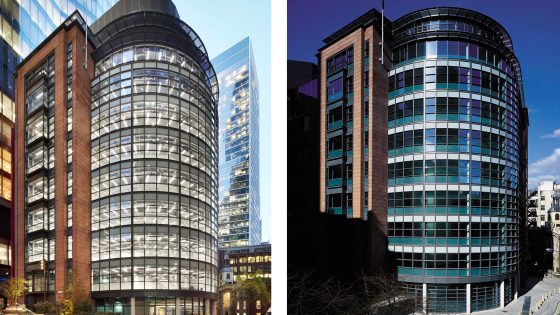
The building, adjacent to the St Helen’s Conservation Area, has been refurbished and extended almost three decades after it was first completed by the practice under its previous incarnation as Hurley, Robertson & Associates.
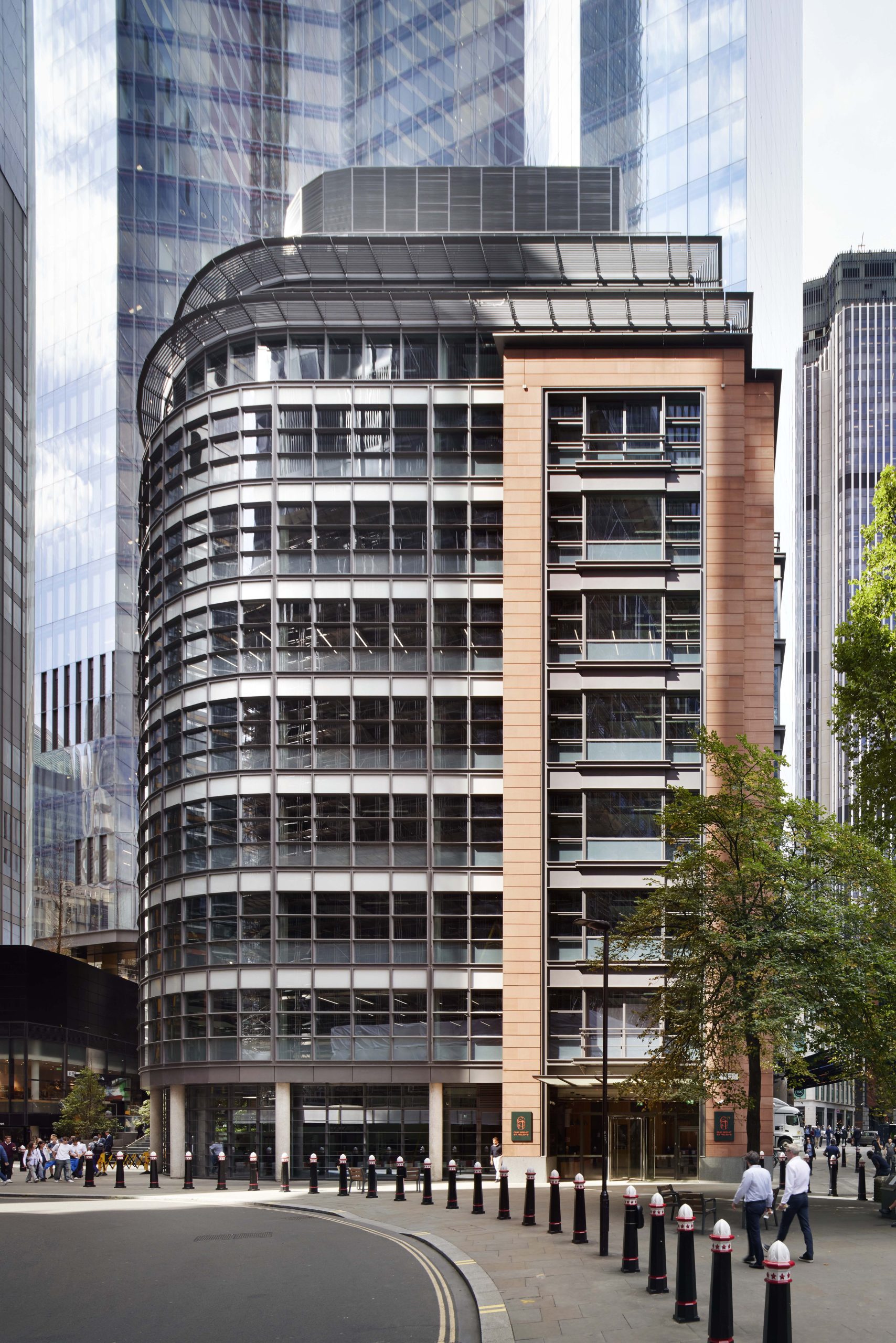
JRA was appointed to the project by Rafer Investments in 2021 under the leadership of CBRE Development Management. The brief was to re-imagine and update the building – which was designed by JRA’s predecessor practice Hurley, Robertson & Associates in 1998 for client Greycoat – in order to meet contemporary leasing standards as well as align with the owner’s environmental, social and governance aspirations.
Situated just off Bishopsgate, next to the Commercial Union Tower, the surrounding district has changed dramatically since it was first completed. Now known as The Eastern Cluster, the past 20 years have seen the construction of some of London’s tallest office towers in the area, including The Leadenhall Building, 22 Bishopsgate, and 8 Bishopsgate and the forthcoming 1 Undershaft.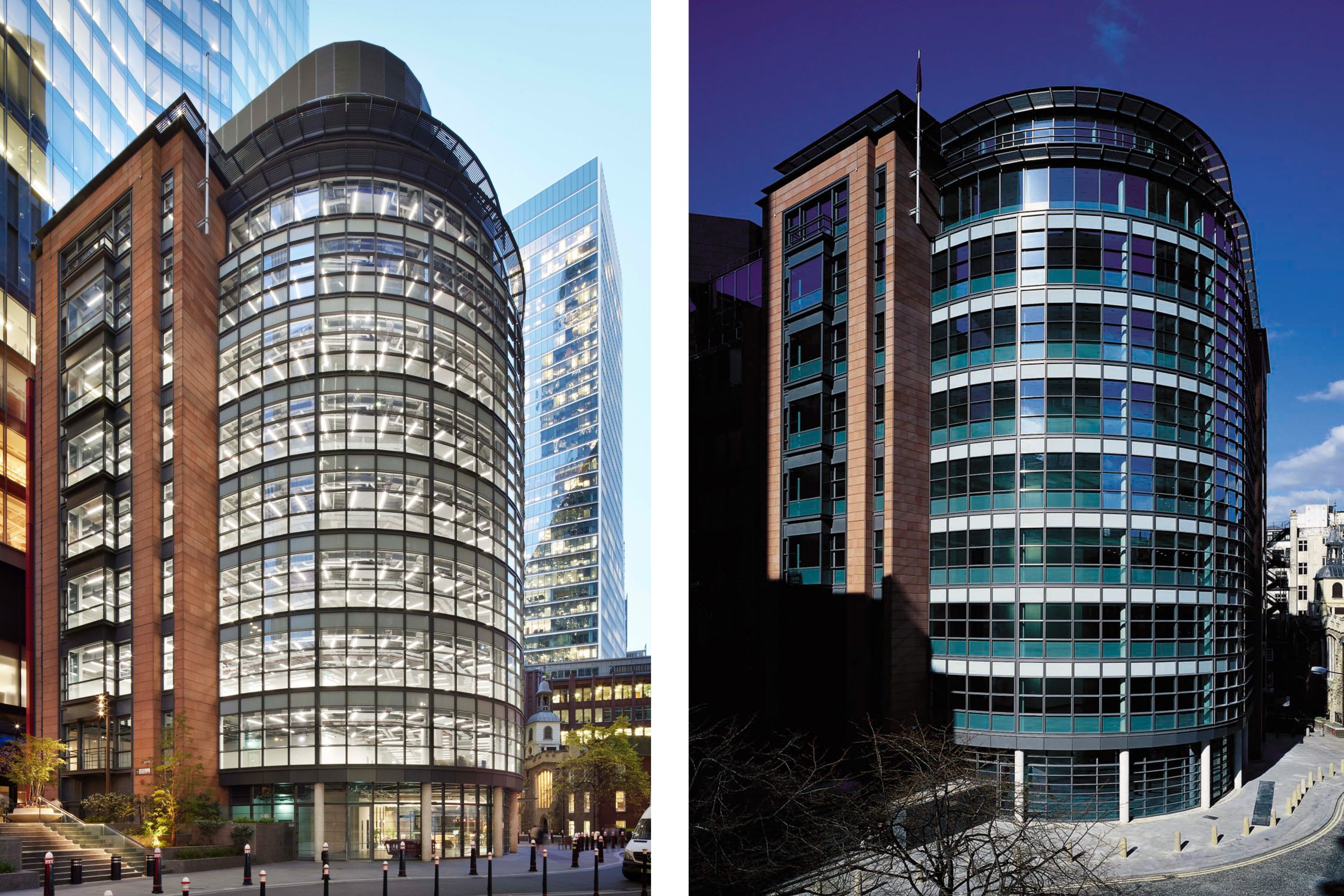
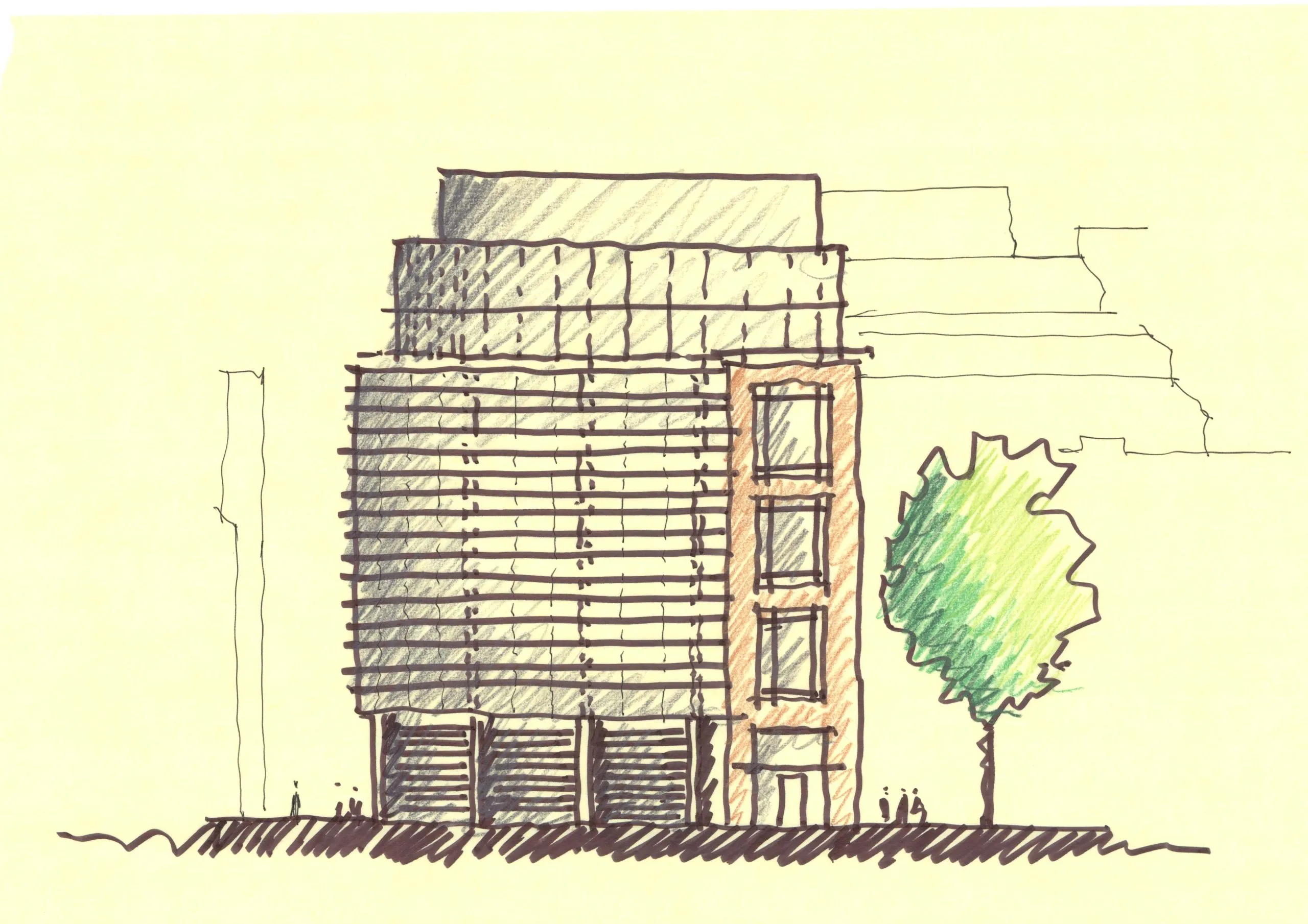
One Great St Helen’s original design reflected the contextual civic modernist ethos of Hurley, Robertson & Associates at that time – with a curved glass frontage sitting between two red sandstone ‘bookends’. It was awarded the BCO Award for Best Commercial Office Building (South East) in 2000.
The façade design has been retained on the renovated building, its modulated curtain wall and fins between cladding panels still helping to mitigate solar gain.
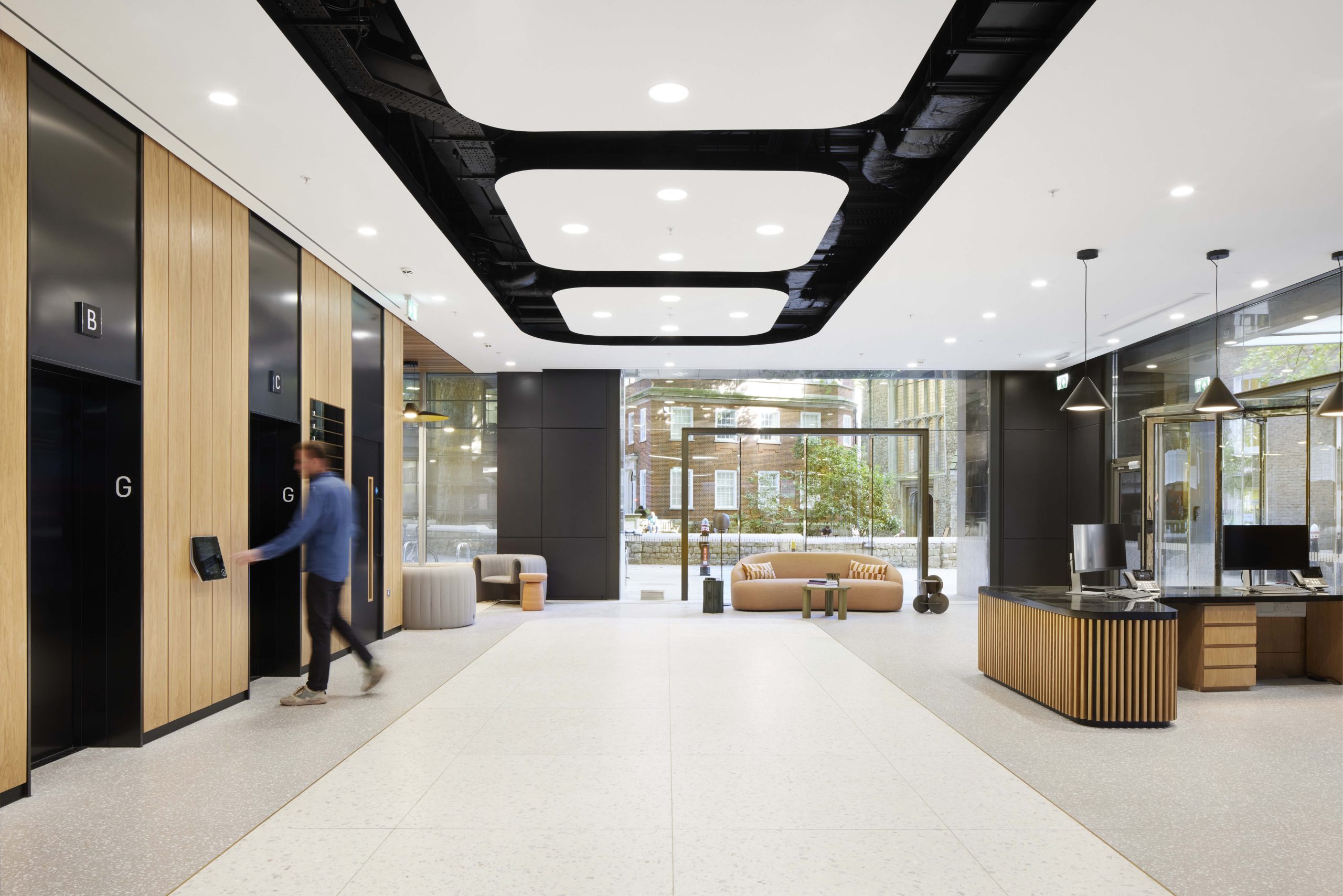
The interiors have been updated to meet modern leasing requirements for employee health and wellbeing, with low-carbon construction methods and circular economy principles. The upgrade has focused on renovating office floor levels 1 to 9, remodelling the entrance hall, creating a ground-floor amenity space and converting the basement car park as an ‘end-of-journey’ space providing cycle parking, showers and changing facilities.
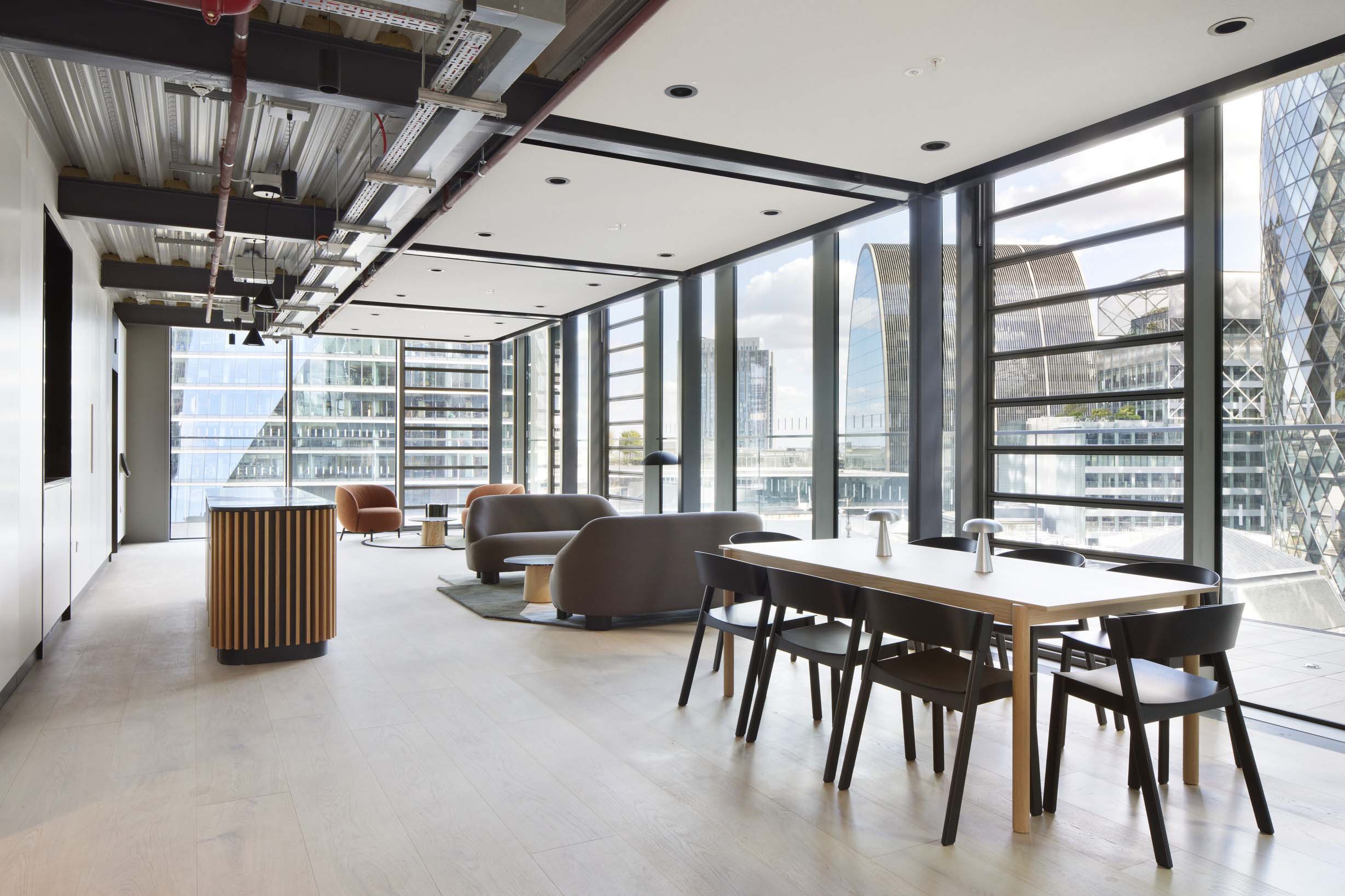
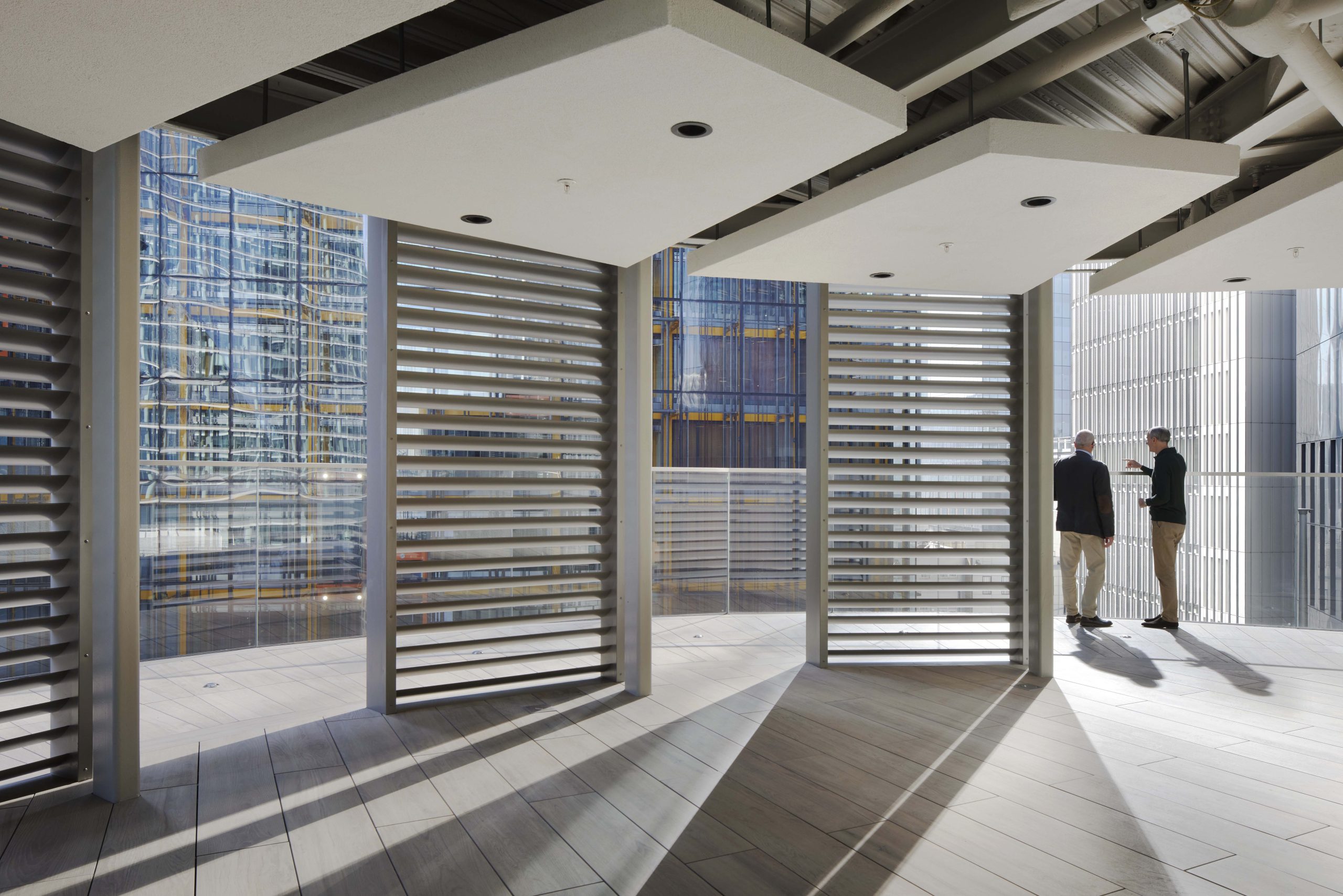
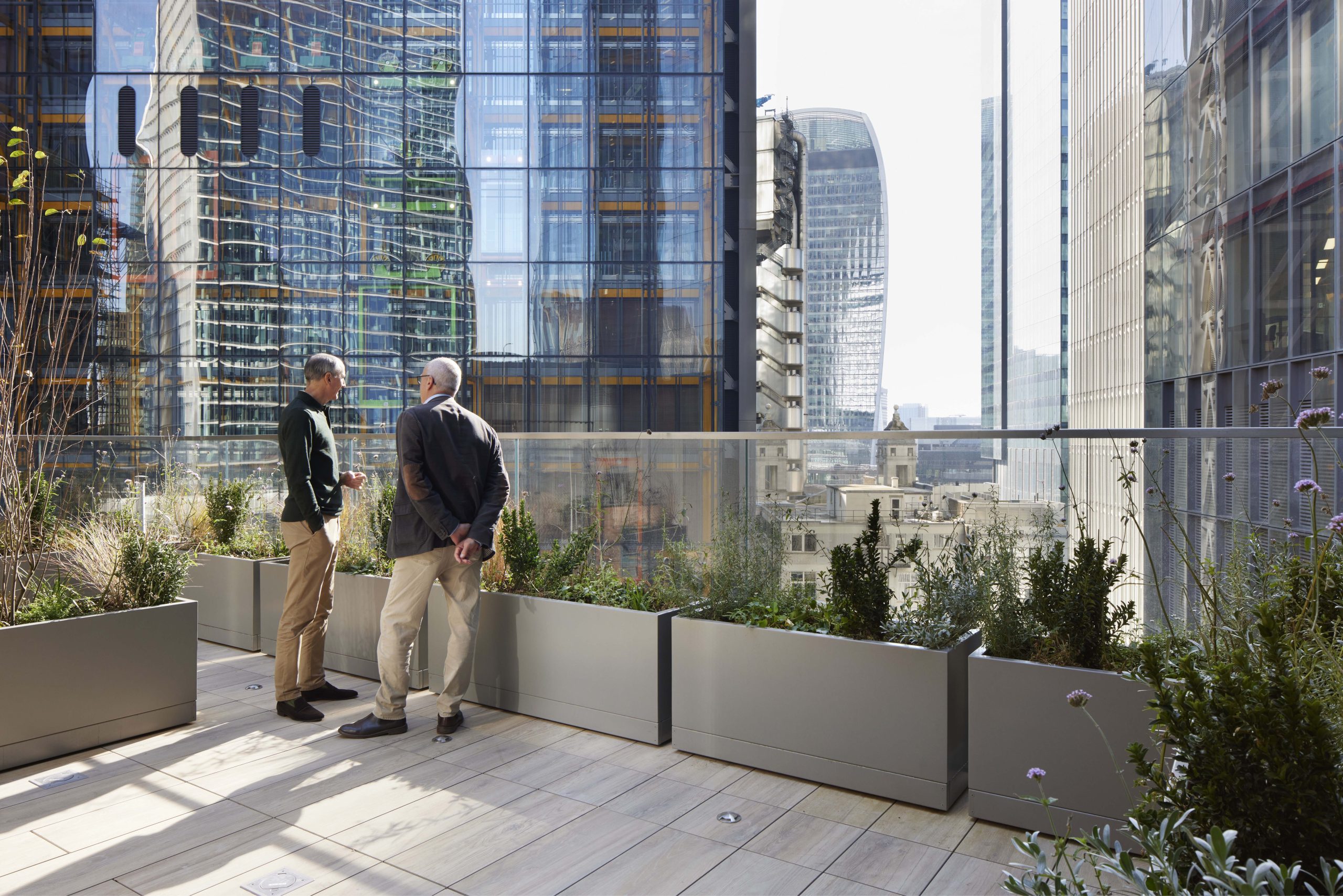
A new winter garden and landscaped roof terrace has been created on Level 10, with a mix of indoor and outdoor amenity space and views to surrounding office towers. The winter garden is heated in winter and naturally ventilated in summer. Its façade incorporates glass louvres and doors to access the roof terrace.
The refurbishment of the entrance hall and the ground floor offices incorporates new lift designs, produced with specialist consultancy Kone, installed with deep blue interiors designed to complement wood panelling and tiling found elsewhere in the building.
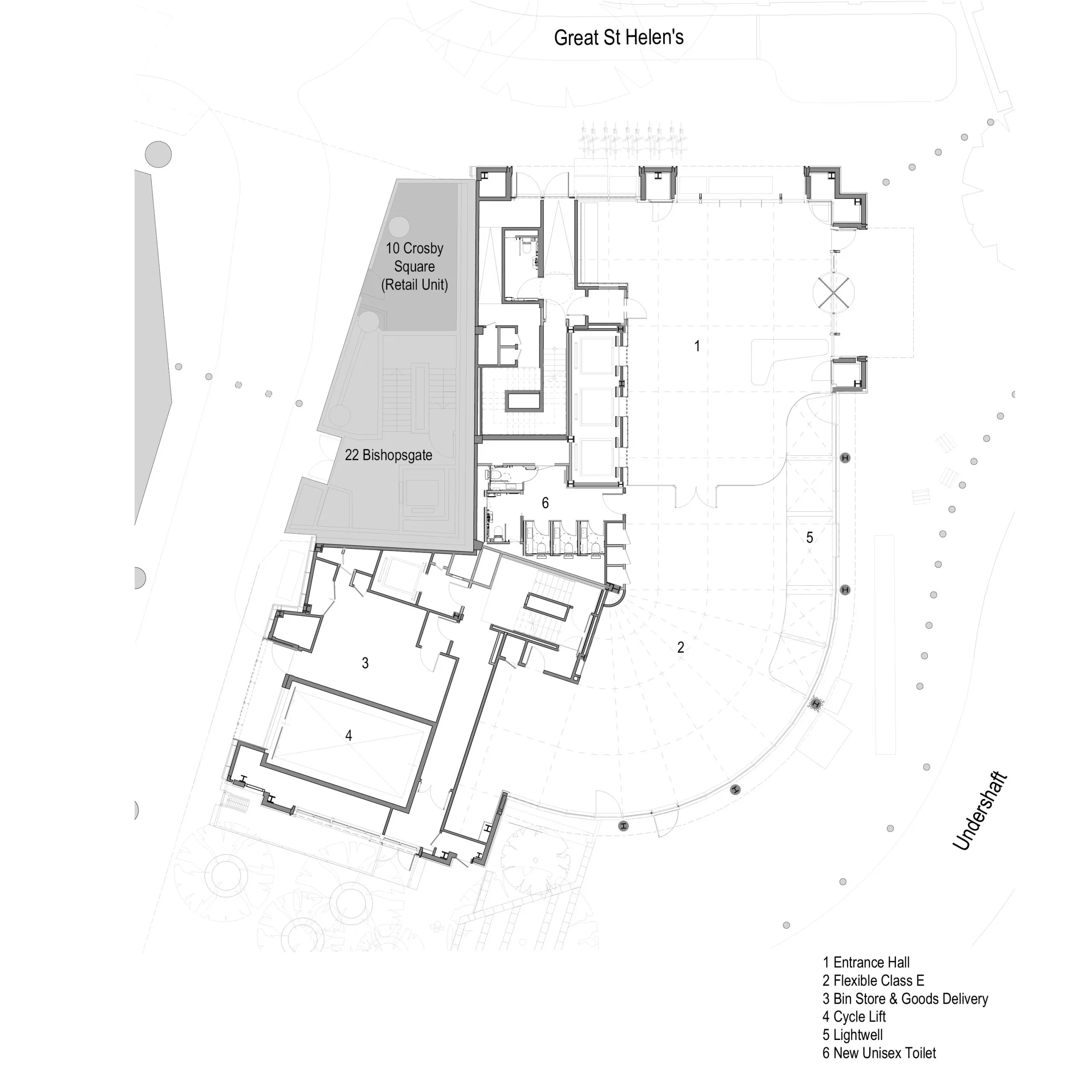
A key element of JRA’s upgrade is a new lightwell, which has been introduced along the perimeter of the curved façade at lower ground floor level, transforming an underutilised backroom and maintenance space into a bright workspace. The transformation of the basement level sees the provision now of 10 showers with changing rooms, lockers and toilets, a disabled access shower and an adjoining locker room with 100 long-stay cycle spaces comprising 68 wall-mounted cycle racks, 27 folding cycle lockers and five disabled cycle spaces.
The embodied carbon savings produced by JRA’s retrofit first strategy has also been supported by a building management approach that delivers a predicted 57 per cent reduction in regulated carbon emissions over the Part L2B 2013 baseline.
Architect’s view
It is tremendously exciting to see One Great St Helen’s being given a new lease of life after almost 30 years. Its reinvention provides a building which is a small jewel in the heart of the Eastern Cluster. It has been cleverly repurposed with excellent new amenities and provides a unique identity for a wide range of city occupiers.
John Robertson, founder, JRA, and original design team leader
Client’s view
CBRE has been a trusted advisor on One Great St Helen’s since our client’s purchase in 2020, providing expertise from planning through to delivery. A strategic repositioning of the building has allowed for increased lettable floorspace, improved energy efficiency and the introduction of flexible amenities, all within a constrained, urban site. One Great St Helen’s is a fantastic example of a high-quality, future-proofed commercial asset that is directly aligned with the wants – and needs – of a modern occupier.
Zoe Avery, director, CBRE Development Management
Project data
Location City of London
Start on site April 2023
Completion August 2025
Gross internal floor area 7,142m²
Gross (internal + external) floor area 7,571.5m²
Form of contract or procurement route Design & Build
Construction cost Undisclosed
Architect (design and monitoring) John Robertson Architects
Executive architect Moxon Architects
Client (commissioning) Rafer Investments
Structural engineer (design) Waterman Structures
Structural engineer (delivery) SD Engineers
M&E consultant chapmanbdsp
QS exigere
Sustainability consultant chapmanbdsp
Acoustic consultant Hann Tucker Associates
Planning consultant CBRE Planning
Ecology consultant Greengage
Transport consultant Arup
Façade access consultant D2E
Security consultant Videf
Fire engineering consultant BB7
Development manager CBRE
Project manager B&CO
Principal designer John Robertson Architects
Approved building inspector Salus
Main contractor OD Group
Environmental performance data
Percentage of floor area with daylight factor >2% Not supplied
Percentage of floor area with daylight factor >5% Not supplied
On-site energy generation None
Annual mains water consumption 5.7 m3/occupant (estimated)
Airtightness at 50Pa Not supplied
Heating and hot water load Not supplied
Operational energy Not supplied
Total energy load Not supplied
U-values by area 0.35 W/m²K (new solid external walls); 1.4 W/m²K (new curtain walls); 0.18 W/m²K (new and existing slabs)
Predicted design life 60 years
Embodied carbon 279 kgCO2eq/m2
Whole-life carbon 258 kgCO2eq/m2