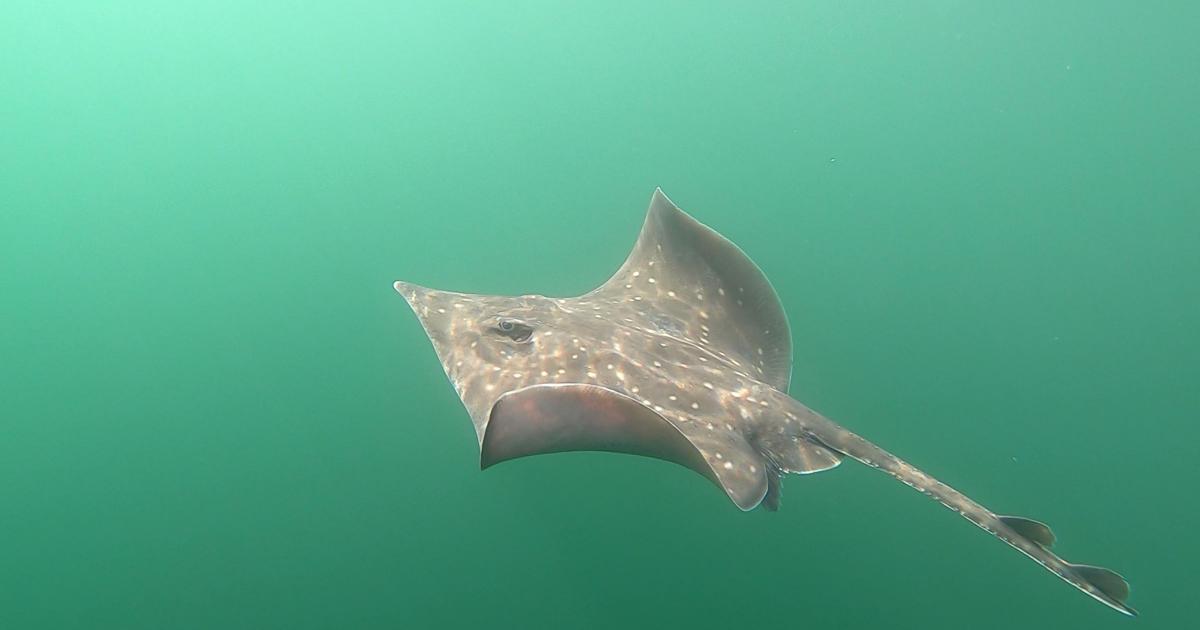
Fishers reported a significant increase in flapper skate bycatch over the past four years, with over half of those interviewed seeing them daily. Flapper skate bycatch was most frequently reported along the west coast of Scotland, particularly around the Isles of Rum and Skye and in the western waters of Shetland.
A previous study conducted by Marine Directorate Science, Evidence, Data and Digital and published in April 2024, found that the number of flapper skates in the Loch Sunart to the Sound of Jura Marine Protected Area (MPA) are increasing faster than outside the MPA, as a result of higher survival rates for young flapper skates.
Both studies show that the measures to protect and restore flapper skate inside and outside MPAs are working. These changes started in 2009 when it became illegal to land flapper and common blue skates commercially anywhere in Scotland, with fishers required to return these species to the water unharmed as soon as possible. More recently, designation and management of the Loch Sunart to the Sound of Jura and Red Rocks and Longay Marine Protected Areas (MPAs) has increased protection of flapper skate and their eggs.
READ MORE:
Conservationists launch ‘Flap App’ to track elusive Scottish fish
Project to reintroduce wildcats to Scotland hailed as big success
First designated nature sites in Scotland named in bid to safeguard land
The critically endangered flapper skate is Europe’s largest skate. It is a long-lived species which matures at around 15 years of age, producing eggs that incubate for over a year, making flapper skate and their egg cases particularly vulnerable to fishing mortality.
Jane Dodd, NatureScot’s elasmobranch specialist, said: “This is exciting and promising news, with the current evidence showing a trend for flapper skate recovery. It’s also been really rewarding to hear the experiences of the fishers, who have a unique position in their daily lives of seeing how flapper skate are faring where they fish. Their views have been invaluable, adding to the growing body of information on flapper skate.
“The research is a bright point, but flapper skate are just beginning their recovery – they may now be common again in some areas but they are far from restored to their historical range. We are committed to continuing to work with fishers to develop best practice to reduce flapper skate bycatch and maximise survival following release. Collaboration is essential to deliver the release of particularly large flapper skate while maintaining the safety of fishers, especially as continued skate recovery could lead to even more encounters over a wider area.”
Professor Michel Kaiser of the Lyell Centre, Heriot-Watt University added: “This is certainly a good news story. We were delighted with the engagement we received from the fishing industry, with the evidence consistently pointing towards a recovery trajectory for flapper skate. Looking ahead, we hope to convene an industry focused workshop to get the benefit of fishermen’s practical insights and ideas about how we can better handle such large fish that are often twice the weight of an average person.”