Dramas full of suspense, character-driven storytelling and a strong sense of ‘place’, often set in idyllic Northern towns, have become something of a calling card for Manchester-based indie Quay Street Productions.
As After the Flood returns to ITV this weekend for a second series, the detective drama is the perfect example of how the indie brings that approach to life, turning stories full of “warmth and heart” into returning TV shows watched by millions.
The six-part drama promises to be a “gorgeous balance of thriller, character and community”, following newly promoted detective Jo Marshall (played by Sophie Rundle) as she investigates yet another mysterious murder in the fictional, and far from sleepy, town of Waterside.
And that balance reflects a wider development strategy at Quay Street, with a diverse slate that spans everything from Harlan Coben adaptations such as Run Away to biographical drama Nolly, and there may now be an opportunity for the indie to “spread its wings” even further. (But more on that later.)
READ MORE: Netflix’s Run Away was filmed in these 20 real places – did you spot them all?
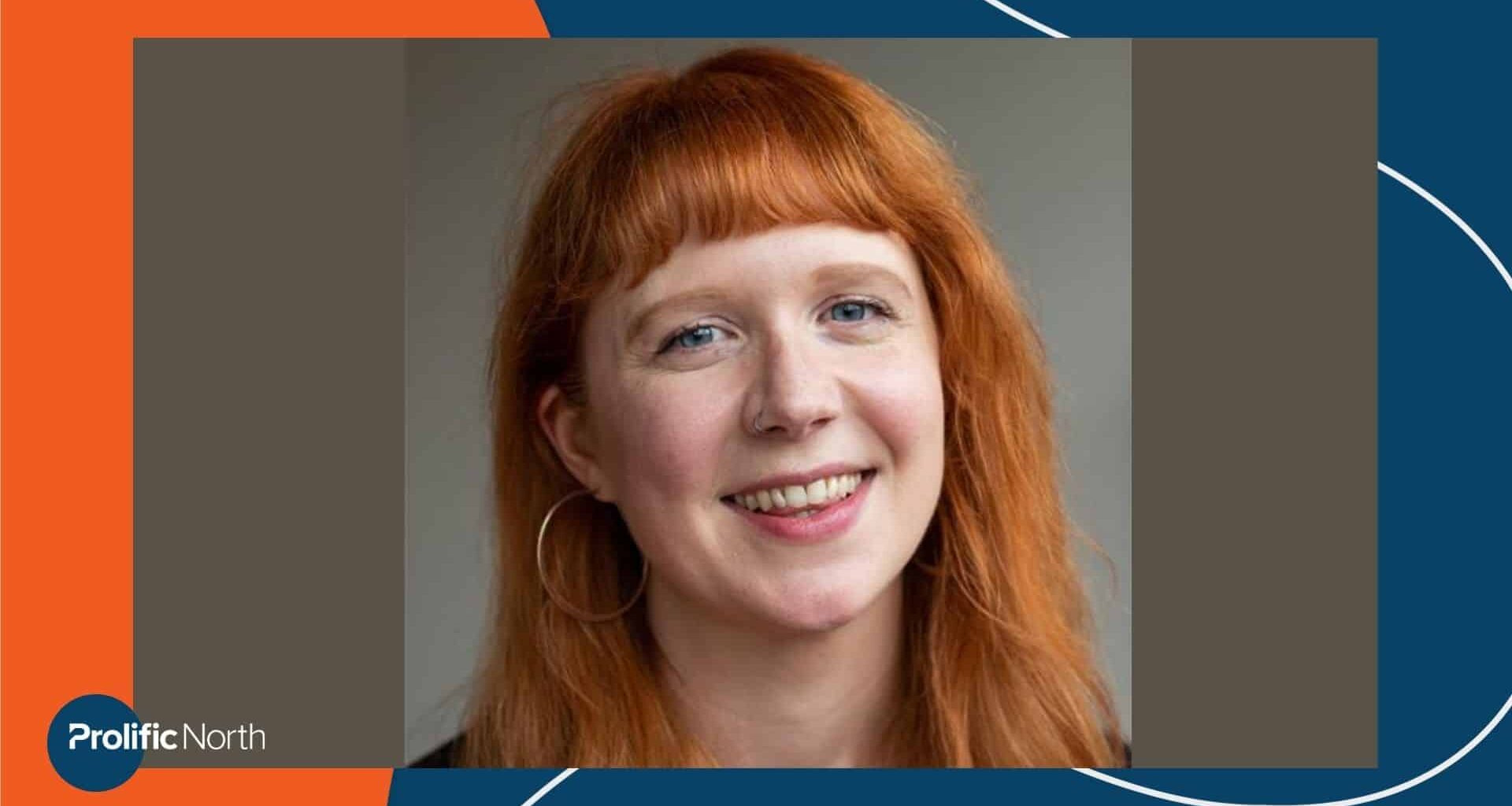
For Fiona McAllister, After the Flood also marks a significant personal milestone. Having recently stepped into the role of head of development at Quay Street Productions, she has just wrapped her first producing gig on After the Flood’s second series.
Reflecting on her journey into television, McAllister recalls being a 21-year-old with no contacts in the industry and a love of shows like Queer as Folk, never imagining she might one day be working under Nicola Shindler, then founder of RED Productions and the producer behind one of her favourite shows.
“I remember going to see her do a talk at Screen Yorkshire. I was just working out what I was going to do with my life. I had no contacts in TV, I didn’t think TV was something I could do. Listening to her speech made me think: ‘maybe I can,’” Fiona McAllister tells Prolific North.
A decade on, McAllister had built experience behind the scenes on scripts for major soaps including Emmerdale and Coronation Street, as well as Doctor Who during Jodie Whittaker’s first two series.
Joining Quay Street Productions in 2021 was a “full circle moment” for McAllister, who has been with the Manchester-based indie since its inception. Founded by Nicola Shindler as part of ITV Studios, the company takes its name from the iconic street where Granada Television was once based.
With credits including The Stolen Girl, McAllister’s new role involves driving what she describes as “ambitious, bold ideas”, helping to steer the indie’s slate in “exciting new directions”.
“It’s been such an amazing opportunity and privilege. It means the world to me personally, because Nicola is just a hero of mine.
“I loved her output at RED [Productions] so much and I think we’ve got really similar tastes, so it feels like a very full circle moment to get the job in the first place and then to get head of development is a proper pinch me moment.”
Behind the scenes of After the Flood S2
That takes us to one of her more recent “proud” moments, becoming a producer for the first time on series two of After the Flood, which returns on Sunday, 18 January.
Sophie Rundle returns as Jo Marshall, now tackling another complex case in Waterside. The first series ended on a cliffhanger, with Marshall facing a moral dilemma about how to tackle a web of police corruption and changing relationships, all while navigating being a new mum.
In series two, this moral dilemma sets the tone against the rising tensions in Waterside, with the looming threats of moorland fires and flooding.
“Jo discovered a lot about Pat [her husband, played by Matt Stokoe] at the end of the last series and we ended on a question about what she’ll do,” McAllister explains.
“If she’d have come clean at the end of series one, the consequences on her and Pat would have been enormous, but she’s an incredibly moral person. How could she not do that? This series explores the third way, how can she do the right thing on her own terms?”
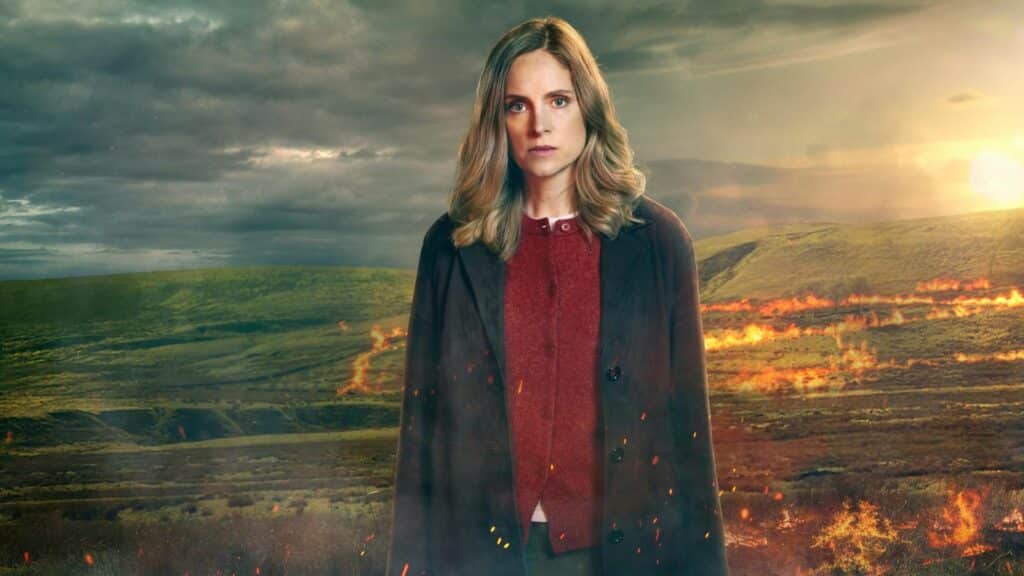
Sophie Rundle as Jo Marshall in After the Flood. Credit: ITV
If there’s one word to describe what viewers can expect from series two, McAllister suggests it’s “subterfuge”.
“Jo and Pat work together in a different way. There is an element of the audience seeing a lot more than we did in series one, but the characters may be lying to each other in a different way to try and trap them. It’s subterfuge and a lot of cat and mouse…”
That emphasis on character has always been central to After the Flood. Written by BAFTA-nominated writer and actor Mick Ford, the second series digs much deeper into some of the characters introduced in series one from Jo’s husband, Pat Holman, to Sergeant Phil Mackie (played by Nicholas Gleaves).
“He [Mick Ford] is so brilliant with characters, and to combine that with our tastes, with twists and story, surprises, subterfuge and blind alleys, it is a really lovely combination but it does take a lot of process. You want to keep things surprising for the audience… so it’s quite a long process of setting everything up in episode one and getting the six scripts together.”
Alongside Ford, co-writers Joe Forrest and Maxine Alderton contributed to a “collaborative” writing process that took around eight months from first draft to final scripts, with even some of the cast feeding into the creative process.
“It’s a huge collaboration and we’re just so lucky that this show is a bit magic, because everybody on either side of the camera is dreamy.”
Praising the “incredible cast”, returning cast members include Lorraine Ashbourne, Nicholas Gleaves, Philip Glenister and Matt Stokoe, while series two also welcomes Jill Halfpenny, Alun Armstrong and Ian Puleston-Davies, while Huw Kennair-Jones serves as executive producer for ITV.
It may be a bit too early to confirm a third series before the second series has even aired yet, but McAllister believes the world of After the Flood and Waterside has plenty of potential.
“The way Mick’s written it, it’s such a gorgeous balance of thriller, character and community, so it does feel quite unique. A lot of thrillers, and these are thrillers I love by the way, can be very intense and very urgent, whereas I think this [After the Flood] has something that makes it really unique, which is that warmth and that heart.
“I do think that there’s enough mileage in Waterside for it to come back, but whether it does or not, it’s entirely up to ITV.”
“We might be given an opportunity to spread our wings a bit more…”
After the Flood is currently in the spotlight but when asked about the wider development landscape, McAllister acknowledges it has been a “slow couple of years” for the industry.
“We’ve been doing really well at Quay Street, but the industry is not as strong as it has been. Funding is more difficult than it has ever been. Channels are understandably a bit more risk-averse than they have been in the past.
“What excites me about now is, and I’m a positive person so it might just be psychosomatic, I do feel that things are changing. People are asking for more interesting, exciting briefs from us.
“We’ve always had a really brilliant, diverse slate with lots of different genres in there that still have really bold storytelling, character-led drama and emotionally grounded stories but it feels like now we might be given an opportunity to spread our wings a bit more and hopefully get a few more green lights in a bit more of a varied way.”
Asked how Quay Street plans to do this, and how her own experiences might shape the stories the indie chooses to bring to TV in future, McAllister pointed to Nicola Shindler’s output at RED Productions and its commitment to uncovering “really authentic voices to celebrate working class experiences”.
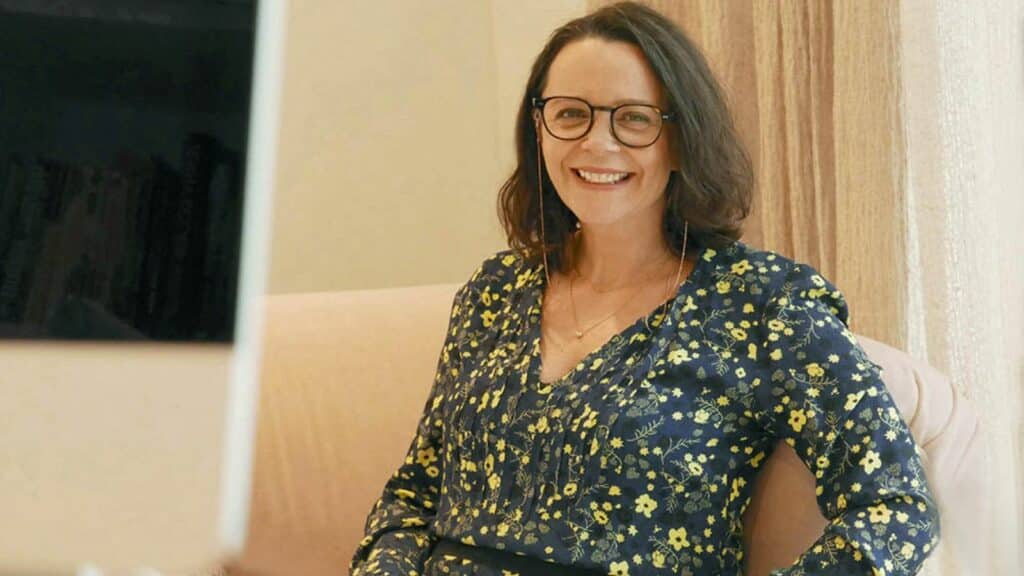
Nicola Shindler
“It would treat the working class experience in the same way you see people treat royalty. [Shindler] did that with things like Clocking Off, the way it really got under the skin of people’s real lives and found that authenticity in place, something that felt very distinct in Manchester.”
“We’re unashamedly entertaining. We want people to love watching our shows. We love a hook, we love a twist, we love things that are surprising. But at the same time, we always want everything to feel really emotionally grounded.”
Producing and being part of an indie based outside of London remains an advantage, McAllister adds, shaping everything from casting and crew to storytelling itself.
“Our crew are almost exclusively Northern based. We have such a brilliant relationship with a lot of Northern talent. We do occasionally allow southerners to come up and work with us now and again,” she teases.
“The major part really is the location, though. We film as much as we possibly can up in the North, just because that’s where we are. After the Flood is a really good example of how that can really benefit a show.” From ‘beautiful white stone buildings’ in Glossop to shooting around the moors just outside of Rochdale in Greater Manchester, she adds: “We’re spoiled for choice in this area!”
So, what’s the secret sauce behind Quay Street Productions’ success so far? “It’s Nicola Shindler, that’s it. She’s amazing. She would absolutely detest me for saying this… I’m fairly certain she’s a genius,” she laughs.
“She reads everything and is across everything. I also feel like she’s very in touch with what people want to watch, because it’s what we want to watch. We make things that we love.”
Looking ahead, the indie has recently wrapped up filming on two shows including the highly anticipated Tip Toe for Channel 4, filmed entirely across Manchester, and six-part crime drama The Blame.
READ MORE: Channel 4 teases new Russell T Davies drama Tip Toe
Tip Toe, an original five-parter drama from Russell T Davies for Channel 4, stars Alan Cumming and David Morrissey and is set to be a “tense, suburban thriller”, with Nicola Shindler as executive producer.
“Talk about an incredible combination of talent! Russell T Davies, then Alan Cummings, David Morrissey, these are the really established actors, but the younger cast are really special. I’m not across this show, other than occasionally watching over people’s shoulders, and of course, I’ve read the script and it’s stunning.
“It’s classic Russell, because he’s doing something so important, but absolutely entertaining, gripping, funny, dark, interesting and unique and obsessed. Ever since Queer as Folk came out, he’s consistently been pushing the boundaries, and along with Nicola, taken some real big risks. I feel very strongly that people are going to love it.”
Although there are no teasers here (sorry), The Blame, written by Megan Gallagher (All Her Fault, Wolf), stars the likes of Michelle Keegan (Fool Me Once, Brassic) and is set to be a “very different” show that “really speaks to the diversity of our slate and our output.”
That appetite for risk, and for stories that haven’t been told before, is exactly what drew McAllister to television in the first place. Now, she’s helping decide which of those stories make it to our TV screens.
“I do love the fact that we’ll tell those stories that are very entertaining and some surprising. That never means that they’re not ambitious. It’s a really fun place to work with people who always want to find new things that haven’t been done before. That’s kind of what we’ll be doing a little more of!”
After the Flood returns on Sunday, 18 January, airing weekly on Sundays and Mondays on ITV. All episodes will be available on ITVX.