When diplomats join the American delegation to the United Nations for the first time, they receive extensive instructions on how to negotiate with foreign counterparts. Among the most important is this: Don’t ever leave the U.S. chair empty.
That admonition is rooted in history. In 1950, following a Soviet Union boycott of the U.N. Security Council, the United States called a Council meeting to halt the advance of Soviet-backed North Korean troops into South Korea. Because no Soviet delegate was present to exercise a veto, the Security Council simply ignored the Soviet absence and authorized a U.N. mission to repel the attack. In short, the United States got what it wanted because it showed up — and its opponent didn’t.
For all the talk about his dealmaking prowess, one might assume President Donald Trump would heed this lesson. Instead, he announced Jan. 7 that the United States will withdraw from 66 international organizations, effectively half from the U.N. system and half from other multilateral bodies. Coupled with earlier exits from the World Health Organization, UNESCO, the Human Rights Council, and the U.N. climate process, last week’s announcement amounts to the most significant abdication of U.S. leadership and influence in generations.
Having worked on U.N. policy at the White House and at the U.S. Mission to the United Nations, we know that the consequences are likely to unfold quickly.
First, other voices, far less aligned with the traditional U.S. view of the world, will fill the space. None are happier to do so than China. Beijing has spent years attempting to reshape the mandates, staffing, and norms of international institutions to reflect its own political model. Previously, it could do so only around the edges, because the United States remained the gravitational center of these bodies. Not any longer.
Consider the U.N. Framework Convention on Climate Change, the treaty architecture through which key long-term rules on emissions and carbon markets are negotiated. Exiting it gives China and others a free opportunity to shape parts of the global energy transition without U.S. input. The same dynamic applies to the International Solar Alliance, a fast-growing coalition with over 100 signatories that steers solar deployment and financing across the Global South, precisely the regions where Chinese firms are already dominating.
Remove the United States from these discussions, and China is not merely present, it is ascendant. And although the Trump Administration clearly has no interest in addressing climate change, a pullback from these entities disadvantages U.S. businesses that are creating good-paying, clean energy jobs for Americans.
Second, disengagement cripples the very tools Washington relies on to advance its interests. These institutions are marketplaces for influence: venues where States trade support, negotiate compromises, and shape the diplomatic environment. When the United States. walks away, it forfeits its ability to define terms, block harmful initiatives, and build coalitions that produce outcomes it prefers.
The International Law Commission (ILC), an independent body of legal experts, is one example where disengagement will clearly harm U.S. interests. Since the 1940s, its work has laid the legal groundwork for many of the most important treaties governing security, diplomacy, and commerce, including the Vienna Convention on Diplomatic Relations and the Vienna Convention on the Law of Treaties. The ILC quietly influences the drafting of the international rules that bear upon U.S. security interests, military action, and the activities of U.S. businesses and citizens abroad. Withdrawing would remove any American perspective from the earliest – and sometimes most consequential – stages of international rulemaking, effectively ceding that space to others who will continue to show up and shape these norms.
The administration is also withdrawing its support for U.N. offices that promote longstanding U.S. foreign policy positions historically supported by both political parties: the Freedom Online Coalition, which ensures that human rights are protected on the internet; the Global Counterterrorism Forum, which works to diminish terrorist recruitment; and U.N. offices that protect children affected by armed conflict and combat the use of sexual violence as a tactic of war.
Third, the United States’s competition with China occurs not just on a bilateral basis but in lesser-known international settings every day. A core advantage of American statecraft has always been its network: allies who exchange political and technical information, align votes, co-enforce norms, and lend legitimacy to American initiatives. Beijing understands this power. It’s why Chinese diplomats spend an extraordinary amount of time courting countries in Africa, Southeast Asia, and the Caribbean. Many of the 66 bodies the United States is exiting are precisely where those often highly technical relationships and exchanges are maintained.
For all the hand-wringing about the U.N. and other international organizations, the truth is that, for the United States, friends inside these systems far outnumber adversaries. Even when frustrated by U.S. policy, countries around the world generally prefer the American vision to China’s and Russia’s. But they cannot defend American interests inside institutions where the United States is no longer present. When Washington vacates the room, even close allies must adapt to new political realities.
To be clear, there is redundancy and inefficiency within the multilateral system. We write as former officials who have spent years negotiating inside some of these bodies – we know their dysfunctions intimately. Many U.N. organizations are in desperate need of reform. Yet even as the United States seeks this reform, it needs to remain involved.
The reality of U.S. superpower status is this: superpowers can’t afford to take an entirely a la carte approach to international systems. Prioritization is critical, of course, but disengagement is something else entirely. The United States needs to stay active in many settings because it is difficult to know when action in one body that appears inconsequential will have a meaningful impact on a core national security interest elsewhere. Whatever the modest cost-savings that are generated by this U.S. withdrawal, the loss of long-term influence will be far greater.
The United States has always had the ability to shape these institutions, even when doing so required patience, persistence, or open conflict with other major powers. In moments of frustration, previous U.S. administrations fought within the system, rather than walking away, because they understood that the only thing worse than an imperfect institution is one in which your competitors write the rules unopposed.
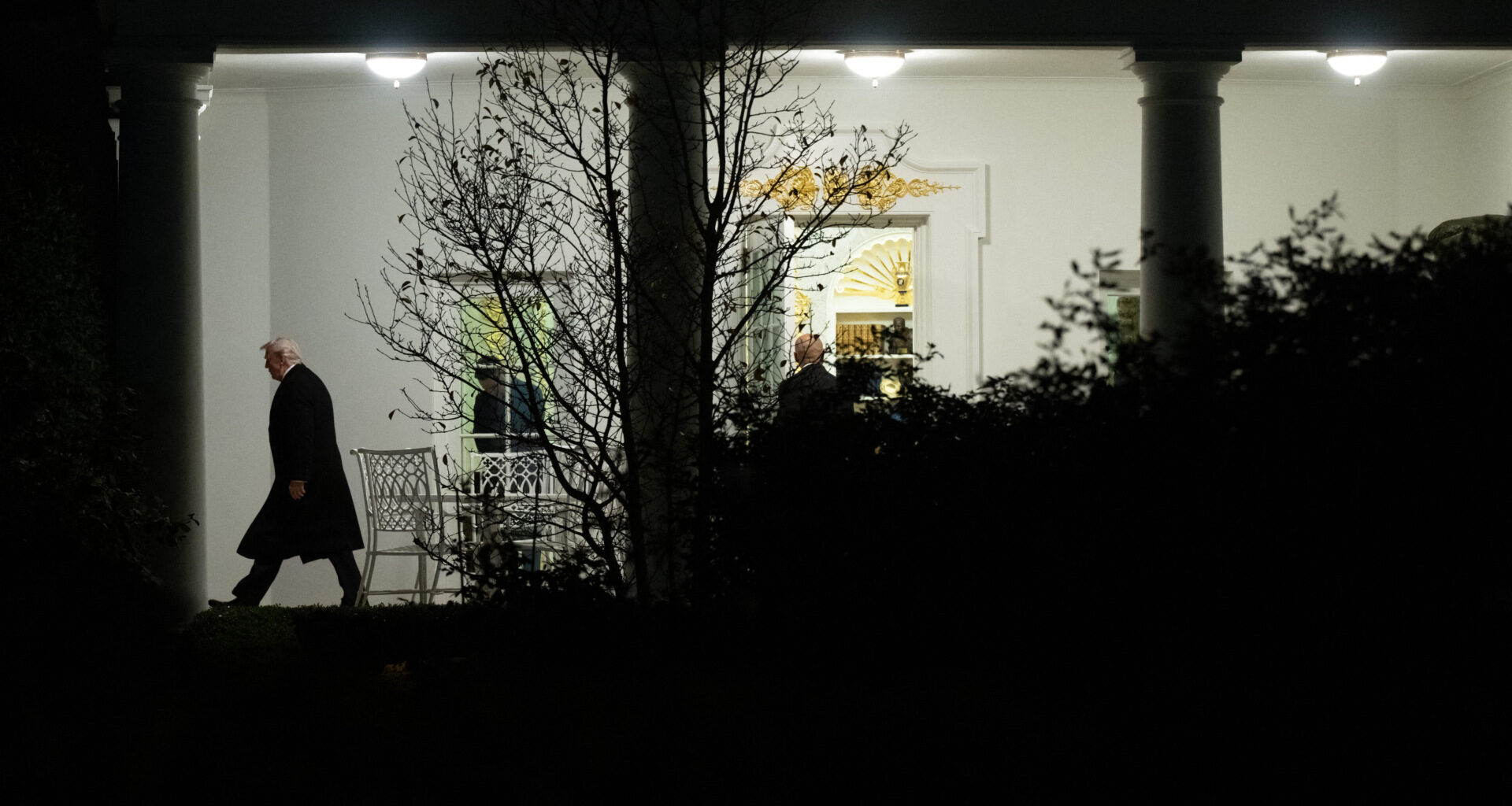
FEATURED IMAGE: US President Donald Trump exits the Oval Office of the White House in Washington, DC, November 7, 2025, as he walks to Marine One prior to departure from the South Lawn as he travels to Florida for the weekend. (Photo by SAUL LOEB/AFP via Getty Images)