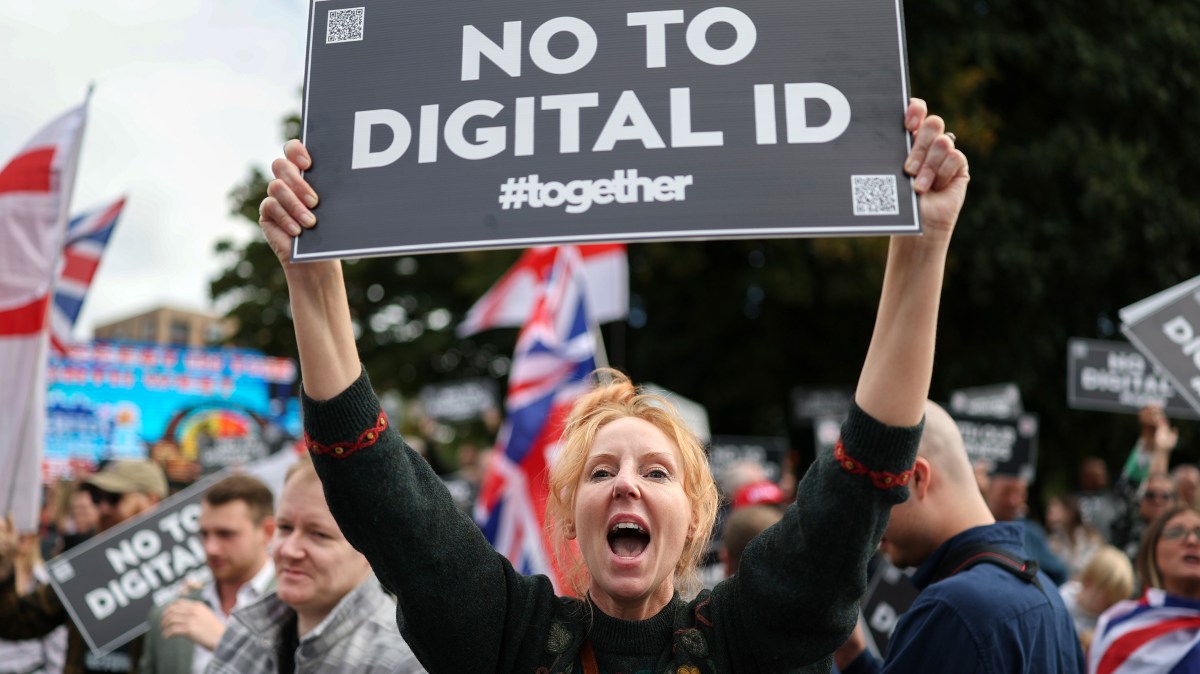
Sir Keir Starmer has abandoned plans for mandatory digital ID for workers amid concerns that it will undermine public trust in the scheme.
The prime minister had previously announced that the IDs would be compulsory to verify someone’s right to work in the UK.
Instead, they will be optional when they are introduced in 2029, with workers given the choice of whether to use other documents to verify their identity digitally instead.

Sir Keir Starmer in September
TOLGA AKMEN/EPA
A government source said that the compulsory element “was stopping conversation about what digital IDs could be used for generally”.
The source said: “Stepping back from mandatory-use cases will deflate one of the main points of contention. We do not want to risk there being cases of some 65-year-old in a rural area being barred from working because he hasn’t installed the ID.”
In September Starmer said that he would “make a new, free-of-charge digital ID mandatory for the right to work before the end of this parliament”. He said that “we need to know who is in our country” and that the IDs would prevent migrants who “come here, slip into the shadow economy and remain here illegally”.
Anyone starting a new job would have been required to “show” the digital ID, which would then be automatically checked against a central database of those entitled to work in the UK.
While right-to-work checks will still be mandatory other forms of documentation, such as an electronic visa or a passport, will be valid. A consultation to start within weeks will explore which verification checks could be used.
The government said: “We are committed to mandatory digital right-to-work checks. We have always been clear that details on the digital ID scheme will be set out following a full public consultation which will launch shortly.
“Digital ID will make everyday life easier for people, ensuring public services are more personal, joined-up, and effective, while also remaining inclusive.”