Economic conflicts between major powers are the greatest risk facing the world over the next two years, according to experts polled ahead of next week’s Davos summit.
Among 1,300 business leaders, academics and civil society figures surveyed by the World Economic Forum (WEF), “geoeconomic confrontation” was identified as the most pressing threat.
These clashes were cited by 18% of respondents. With war still raging in Ukraine, “state-based armed conflict” was the second most-common risk identified at 14%. Extreme weather events was third, chosen by 8% of respondents.
The warning came after a year marked by Donald Trump’s aggressive tariff policy, and follows US military action in Venezuela, which the president acknowledged was aimed at securing the country’s oil resources.
Economic sanctions have become an increasingly common tool in recent years – including the freezing of billions of dollars of Russian assets after the country’s invasion of Ukraine.
There are also growing concerns about clashes over access to important economic resources. Finance ministers from the G7 met in Washington on Monday to discuss how to diversify the supply of the rare earth metals crucial to tech products, many of which China has control over.
US treasury secretary Scott Bessent, who convened the meeting, warned that supply chains for these critical minerals had become “highly concentrated and vulnerable to disruption and manipulation”.
Over a longer horizon – 10 years – the most severe risks identified in the WEF survey all relate to the climate emergency. “Extreme weather events” topped the list, followed by “biodiversity loss and ecosystem collapse” and “critical change to Earth systems”.
“Unlike in the two-year outlook, where these have declined in rankings, the existential nature of environmental risks means they remain as the top priorities over the next decade,” the report says.
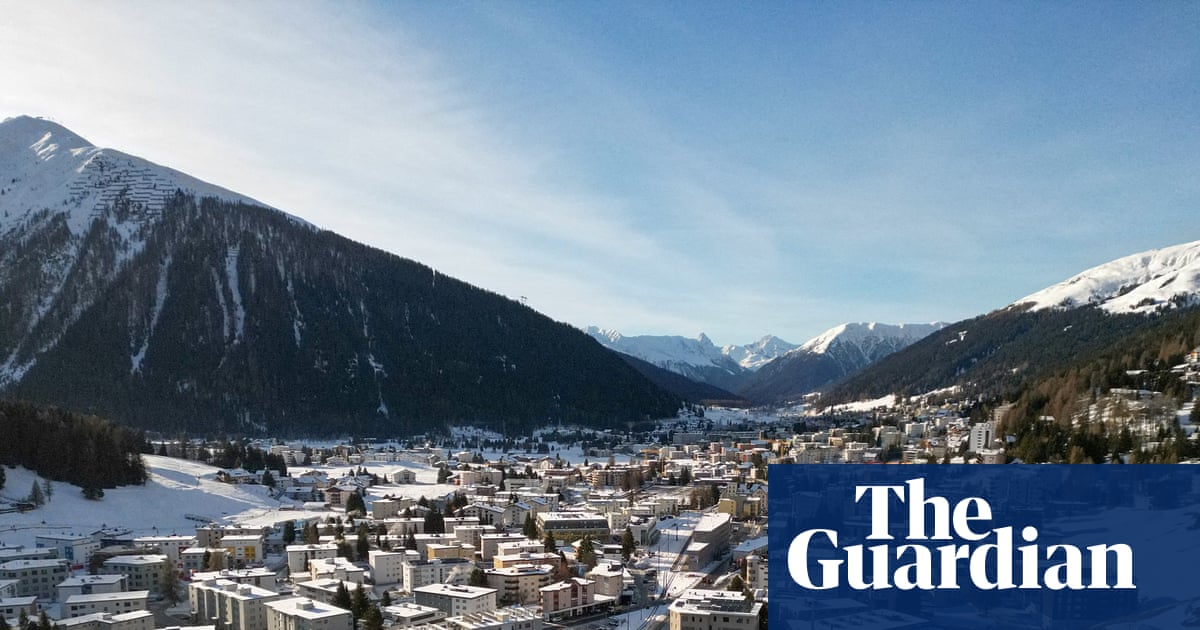
Next week’s annual Davos meeting will see thousands of senior figures from politics, business and civil society, including more than 60 heads of state or government, gather to discuss the state of the global economy at the event in the Swiss Alps.
This year’s theme is “a spirit of dialogue” – but its star guest will be US president Donald Trump, who has spent the first year of his second term waging a trade war and ripping up the country’s global obligations, including the Paris climate agreement.
Other senior politicians in attendance will include German chancellor Friedrich Merz, Chinese vice-premier He Lifeng, Ukrainian president Volodymyr Zelenskyy, and Argentine president Javier Milei.
In its annual global risks report, published on Wednesday, the WEF warned that “rules and institutions that have long underpinned stability are under siege in a new era in which trade, finance and technology are wielded as weapons of influence”.
Most recently, the world’s central bankers issued a statement expressing solidarity with Federal Reserve chair Jerome Powell, whose independence has come under attack from Trump, who has repeatedly called for faster interest rate cuts.
UK chancellor Rachel Reeves and business secretary Peter Kyle will also attend.