
Ariana Church discovered the ancient space rock during a family trip, with a geologist believing it came from a planet that no longer exists
08:48, 14 Jan 2026Updated 10:46, 14 Jan 2026
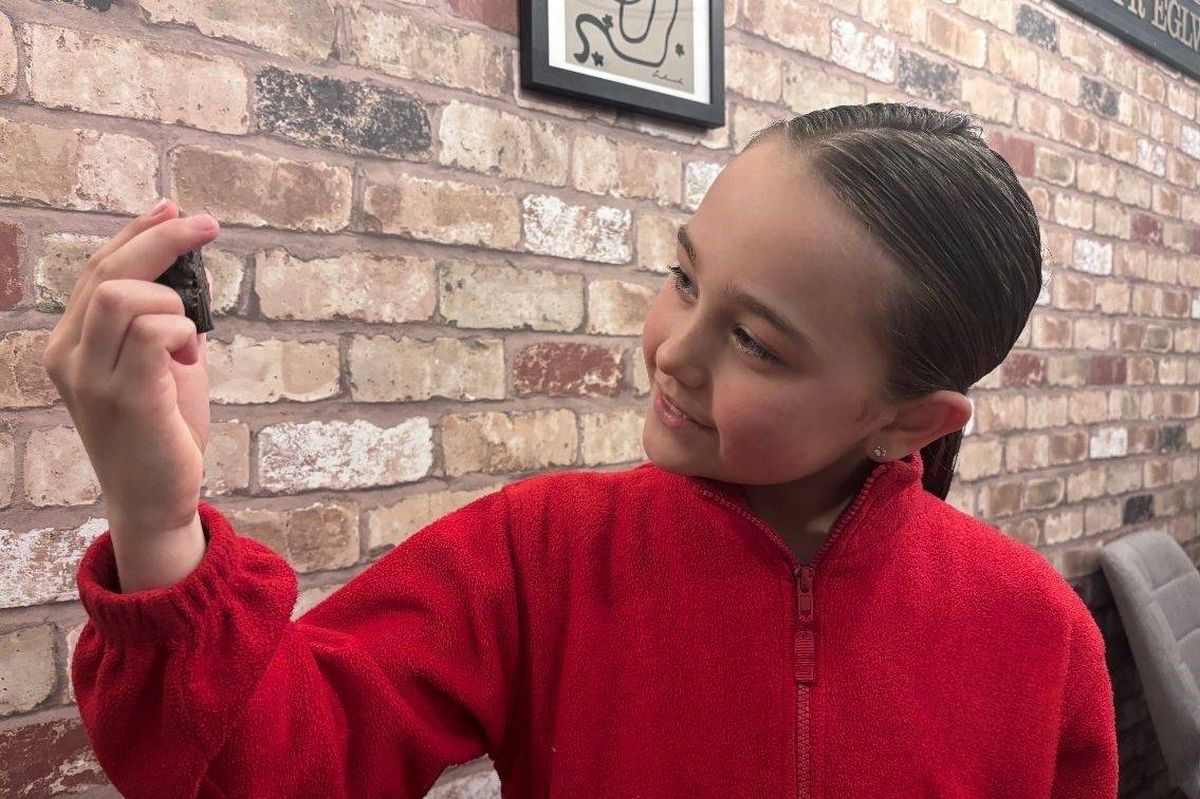
Ariana Church made an amazing discovery(Image: Hayley Church)
A typical seaside outing involves building sandcastles, paddling in the waves and collecting attractive shells. However, for nine year old Ariana Church, a visit to Penarth Pier during summer 2025, became something altogether more remarkable.
The youngster, then aged eight, accompanied her father Matt and younger sister Leyla on the trip. “We were just trying to keep them occupied during the six-week holiday,” her mother Hayley remembered.
Whilst Leyla and Matt enjoyed their family excursion, Ariana explored the shoreline, carefully examining the sand and pebbles.
“She’s always looking down,” Hayley explained. “It was a regular thing she wanted to do.” Join the North Wales Live WhatsApp community group where you can get the latest stories delivered straight to your phone
During that outing, Ariana discovered two peculiar stones: a fragment of volcanic rock and another dark specimen with an unusual texture. A geologist subsequently confirmed the volcanic rock probably originated from Spain’s most recent volcanic eruption, reports Wales Online. Fascinating – but it was the other stone that would prove truly remarkable.
Back home, Ariana’s parents encouraged her curiosity. “I humoured her to begin with,” Hayley admitted. “I just told her to keep it safe, pop it in your treasure box, and don’t paint it.” And so the rocks stayed quietly in her treasure box – until a family friend came to visit.
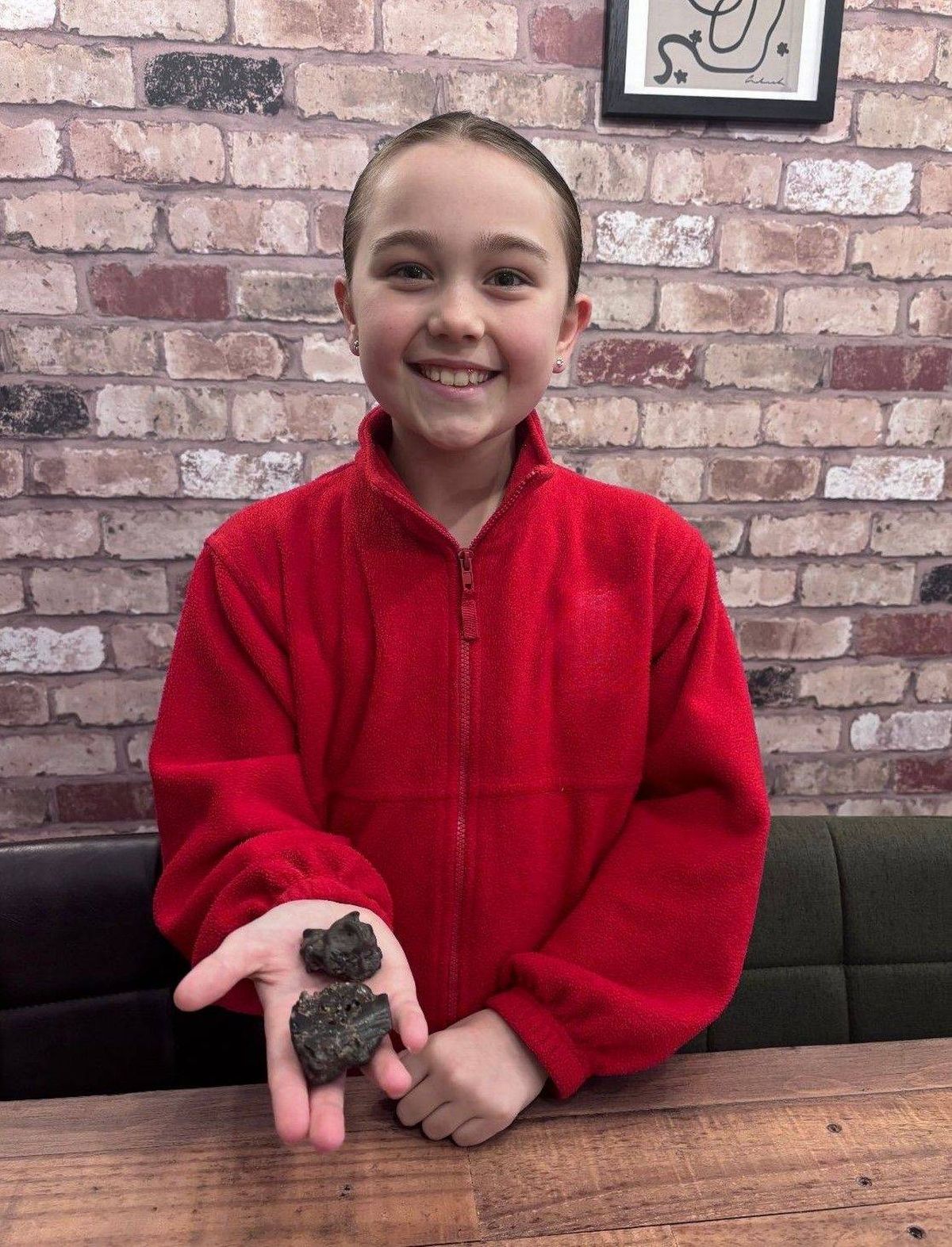
Ariana Church, 9, finds meteorite in Penarth(Image: Hayley Church)
This friend happened to be a geologist and he immediately recognised the unusual rock’s potential.
“I don’t think I understood the scale of her discovery until I heard the geologist say that in seventy years he had never found one,” Hayley said. “He’s handled hundreds of meteorites, but he said he had always dreamed of finding one.”
The small stone, about the size of her palm, was heavy, freezing cold, and had a strange smell. With Ariana’s permission, the rock was taken for testing. Ariana was thrilled, sharing the news with her school friends, who were equally intrigued with the discovery. “They kept telling her she was going to be a millionaire,” Hayley said with a laugh.
However, when the results returned – the revelation was astonishing. It is believed that the rock is a meteorite, extremely rare, and estimated to be around 4.5bn years old – older than the Earth itself. And my daughter had found it in Penarth,” Hayley said.
According to the geologist, the meteorite looks to have been part of a planet that no longer exists.
“We were told that it was likely hit by something and exploded, and the fragments fell to Earth, like sparks from a firework. There might even be more on the beach, so we have been told to keep looking.”
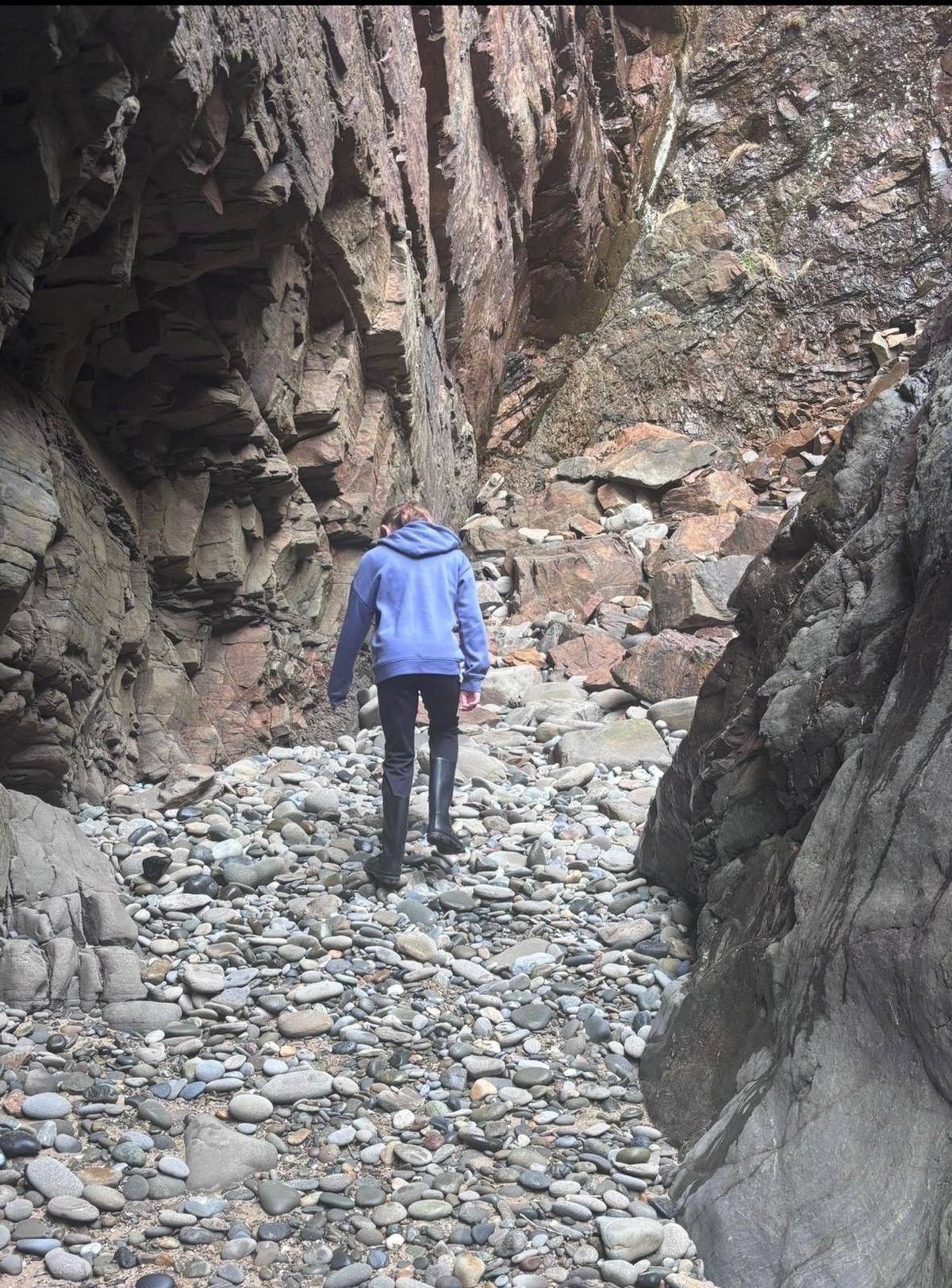
Ariana Church, 9, from Penarth made the discovery(Image: Hayley Church)
To understand the nature of the meteorite, the rock was cut in half. Inside were thousands of tiny crystals, formed only in space, which allowed scientists to date the rock.
The outer surface bore tiny indentations – like thumbprints – left as the meteorite passed through Earth’s atmosphere. It is believed to be pre-dinosaurs, pre-oceans, a tangible piece of the very beginnings of the solar system.
The meteorite now sits under lock and key at Ariana’s home, waiting for show and tell at school. Ariana, however, has remained grounded.
She still wants to be a police officer when she grows up, but her fascination with rocks, fossils, space, and history has deepened.
Inspired by her grandmother Marion, she has begun a collection of precious stones and continues to explore science whenever she can.
“She’s so inquisitive and wants to share it with everybody,” Hayley said: “If she could cut the stone into a million pieces, she would, just so everyone could experience it with her. She loves finding things, loves history, and is obsessed with space… It couldn’t have been found by a better person.”
Sign up for the North Wales Live newsletter sent twice daily to your inbox