
David Hockney has accused the British Museum of vanity and recklessness over its pending display of the Bayeux Tapestry and said it put Europe’s most important large artwork in jeopardy.
Hockney said moving the Tapestry to Britain this summer may have “vanity and symbolic educational value” but the physical and environmental risks were “substantial”.
The artist said it was “madness” to consider “gambling” on the survival of the 1,000-year-old embroidery, which tells the story of the 1066 Norman conquest of England in 58 scenes, by transporting it to London.
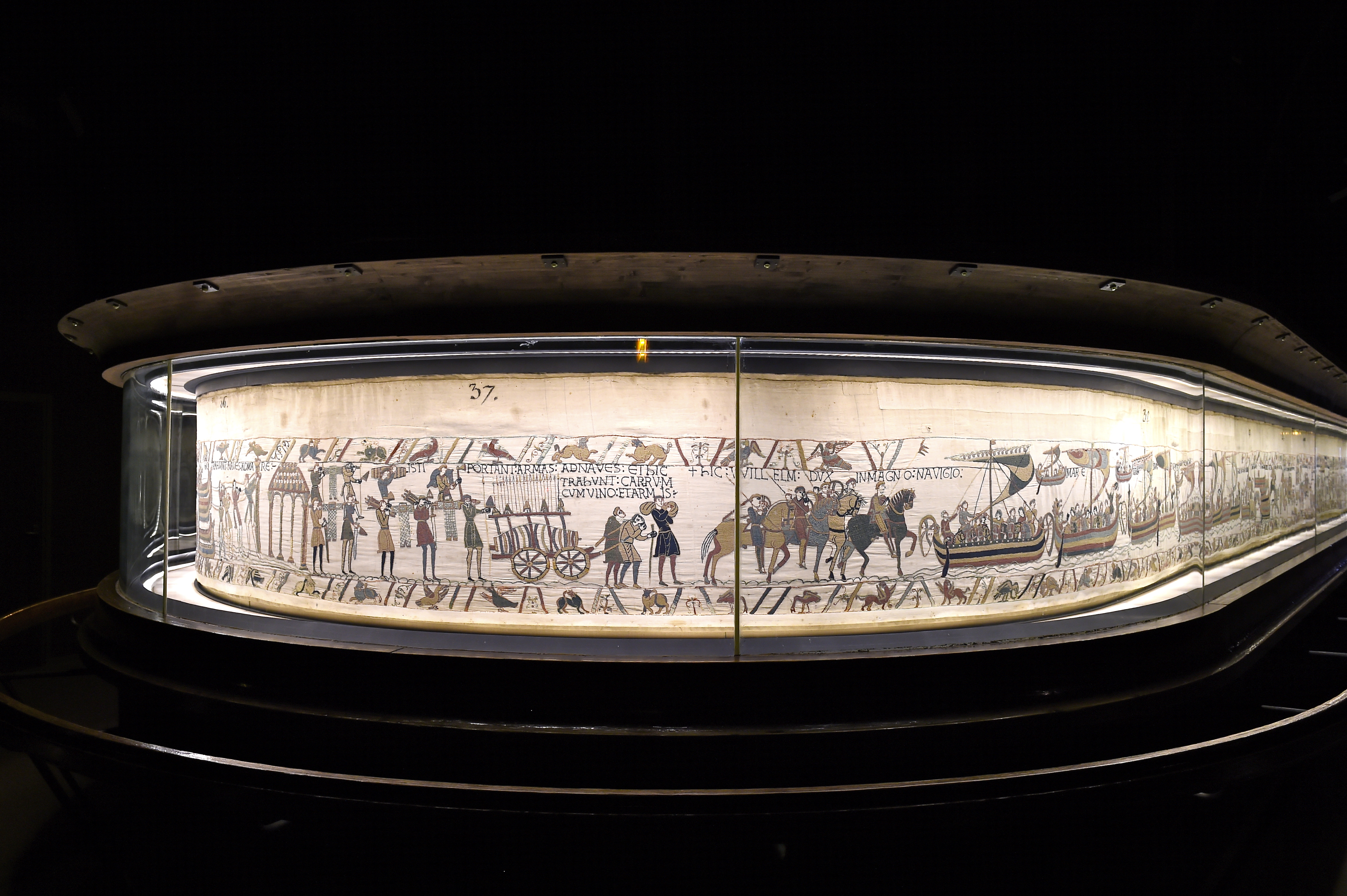
The tapestry depicts the 1066 Norman invasion and Battle of Hastings
BAYEUX MUSEUM/PA
The museum has billed this summer’s planned display of the work as a “once-in-a-generation” exhibition that “eclipses all others”.
A “dry run” of a facsimile of the 70m artefact, which will be “concertinaed” into a bespoke case, is due to establish whether the Tapestry can make the journey to London without vibrations breaching a 2mm-per-second mark that is believed would cause damage.
• Taxpayer will cover damage up to £800m for Bayeux Tapestry loan
Hockney said on Wednesday that there were “significant” risks, given the weakened linen backing and vulnerability to stress of the wool embroidery threads.
“Rolling, unrolling, or hanging it in a new way can cause, tearing, stitch loss and distortion of the fabric. Uneven tension is causing structural strain. Even minor mishandling could cause irreversible damage. It has survived so far like a miracle, being hidden away for 300 years until it was displayed permanently in the 1800s,” he wrote.
Hockney, 88, said each stage of the transport process introduced risks; “even minor mishandling” was capable of causing irreversible damage.
“Even successful transport could shorten the tapestry’s lifespan,” Hockney wrote in The Independent, adding that, having survived for nearly a millennium, it now faced an “unnecessary conservation ordeal with the British Museum”.
He added: “To what end? The vanity of a museum which wants to boast of the number of visitors. Is it really worth it? I think not.”
Hockney advocated making an “identical copy” and pointed out that the Bayeux Museum — which is undergoing renovation — was “just six hours away by car” from London. “Why does a London museum, which prides itself on conserving and preserving great art, want to gamble on the survival of the most important art image of scale in Europe?” Hockney wrote. “It is madness.”

Workers and volunteers prepare to pack the tapestry for transfer to the British Museum
LOU BENOIST/AFP/GETTY IMAGES
Hockney has become the biggest British voice to join French conservation experts who have warned about the risks of transporting the “fragile and degraded” object.
The agreement between Britain and France over the loan outlines how the British Museum will have to “rely on the team trained by the French state and the city of Bayeux” for the transport and installation of the artefact.
• The best art exhibitions to book for 2026
Opening hours for the British Museum are unlikely to be extended for the planned exhibition, given safety concerns about the Tapestry’s exposure to light and even vibration from visitors.
The museum has yet to release ticket prices or the name of the headline sponsor for the exhibition that its chairman, George Osborne, has compared to the 1972 Tutankhamun show, which drew more than 1.5 million visitors, and its 2007 showcasing of China’s terracotta warriors from Xian.
The British government will assume responsibility for any damage to the Tapestry during its transport from Normandy and display in London. It is valued at £800 million.
Hockney said, however, that moving the “priceless” artefact was too big a risk: “I have been a risk-taker in most things I have done but I never see any advantage in being reckless.”