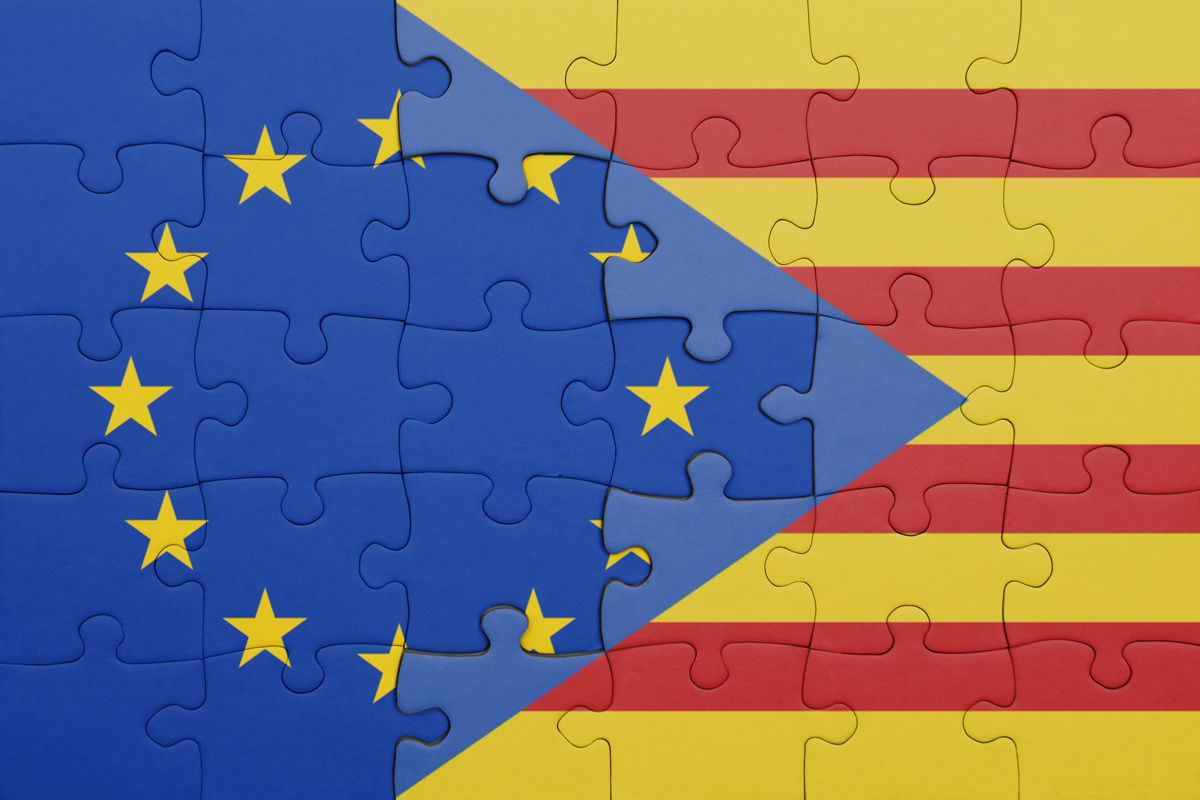
Catalan’s path towards official recognition within EU institutions continues to spark debate across Europe
Credit : esfera, Shutterstock
The question has been hanging over Brussels for years, and now Spain’s foreign minister has put it back firmly on the table. Catalan, he says, will become an official language of the European Union – sooner or later.
Speaking on Catalunya Ràdio, Foreign Affairs Minister José Manuel Albares struck a calm but confident tone. He avoided giving deadlines and made it clear that talks are still ongoing, but his message was simple: recognition for Catalan, Basque and Galician is not a question of if, only when.
That confidence, however, comes against a backdrop of slow progress, quiet resistance from some EU countries and political tensions back home in Spain.
Most Read on Euro Weekly News
Why Spain is pushing the issue now
Albares’ argument is one he has repeated several times in recent months. Catalan is spoken by around 10 million people, he pointed out – more than some languages that already enjoy full official status within EU institutions.
From Spain’s point of view, that makes the current situation increasingly hard to justify. If Maltese or Irish can be used in European debates and documents, Madrid argues, then Catalan deserves the same treatment.
Behind the scenes, Spain has been holding meetings with countries that remain unconvinced. Albares acknowledged that some member states still have “doubts”, but asked for discretion, saying negotiations are delicate and ongoing.
What he did not do was name the countries blocking the move – a sign that Madrid is trying to avoid turning the issue into a public standoff.
Politics at home complicate the picture
While Albares avoided pointing fingers abroad, he was less restrained when it came to domestic politics. Without naming names at first, he criticised Spanish political actors who he says are actively working against the proposal.
Later, his remarks were widely understood to be aimed at the People’s Party (PP), which he accused of pressuring conservative-led governments across Europe to oppose the plan.
“That hurts me,” Albares said, adding that blocking Catalan’s recognition ultimately works against Spaniards themselves.
The issue is closely tied to Spanish parliamentary politics. The push to make Catalan an official EU language forms part of a political agreement between the Socialist Party and the Catalan pro-independence party Junts, which supported the election of Francina Armengol as Speaker of Congress.
For critics, that link weakens the credibility of the proposal. For supporters, it simply reflects the reality of coalition politics in Spain.
Why it’s taking so long
Making a language official at EU level is not a symbolic gesture. It carries financial, legal and administrative consequences, from translation services to parliamentary procedures.
Crucially, the decision requires unanimous approval from all 27 member states. That means a single country can stall the process indefinitely.
Some governments are wary of the costs involved. Others fear that recognising Catalan could encourage similar demands from regional languages within their own borders.
That helps explain why, despite Spain’s lobbying, progress has been slow – and why Albares was careful not to promise quick results.
What happens next
For now, Catalan remains outside the EU’s list of official languages. Albares offered no timeline and no guarantees, only a clear sense of direction.
Spain will continue negotiating. Resistance will likely remain. And the final decision, whenever it comes, will be as political as it is cultural.
Still, the message from Madrid is clear: this is not a passing demand. Whether it takes months or years, Spain intends to keep pressing until Catalan – along with Basque and Galician – finally gains a seat at Europe’s linguistic table.
And in Brussels, where patience is often the currency of progress, that may be exactly how change eventually happens.
Stay tuned with Euro Weekly News for more news from Spain