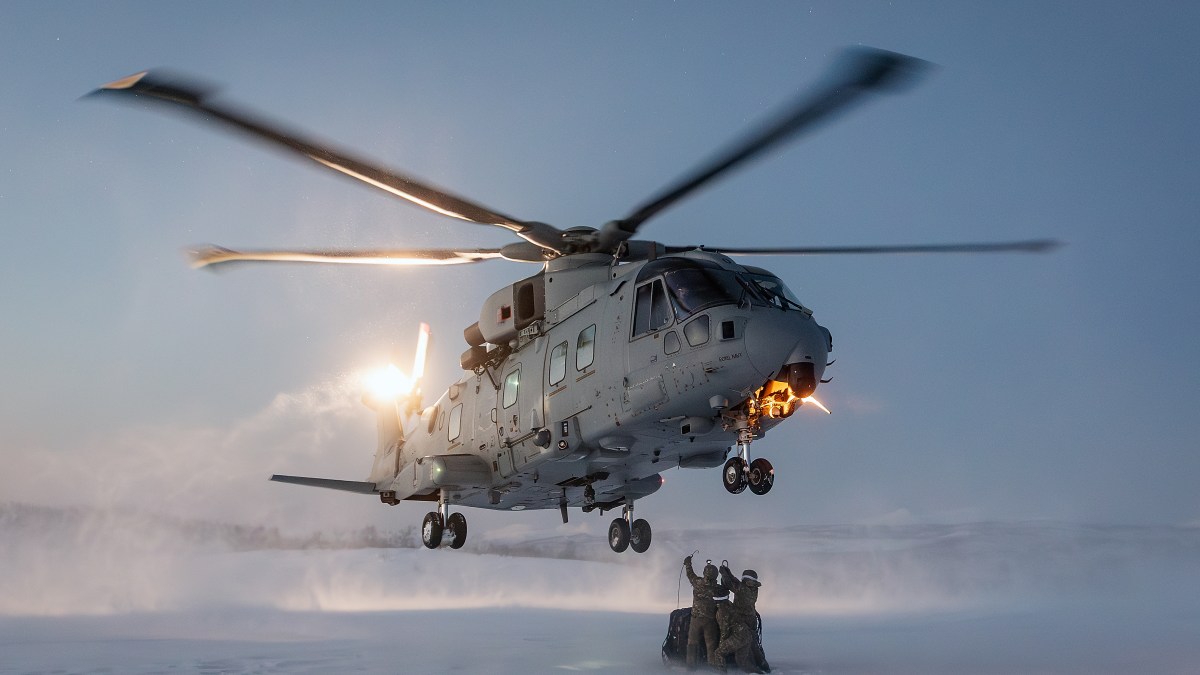
A British military officer is among an international group of European forces being deployed to Greenland after negotiations in Washington failed to deliver a breakthrough on President Trump’s demands to own the territory.
“At the request of the Danish government, there is one UK military officer that is part of this reconnaissance group,” John Healey, the defence secretary, said late on Wednesday after Denmark and at least four other Nato allies said they would send troops.
The hastily convened military deployment, part of a larger exercise called Operation Arctic Endurance, will involve soldiers, naval vessels and aircraft from Denmark, and small numbers of unarmed or lightly armed personnel from Germany, France, Norway and Sweden.
Healey acknowledged Trump’s claims that Russia and China were rivals for supremacy in the Arctic circle. “We share President Trump’s concern about the security of the high north. And you see this as part of Nato and JEF nations stepping up to reinforce security in the high north — stepping up, with stronger exercising, to deter the Russian aggression and the Chinese activity.”
There are already 1,500 British troops, mainly Royal Marines on commando manoeuvres operating out Camp Viking in Norway, who are expected to take part in new exercises in Greenland over the coming days or weeks.
The British commando force includes a consignment of new snowmobiles, worth £10 million, “for reconnaissance and raiding operations”.
The Royal Marine force will be based at Skjold for the next ten years. “They continue to be at the tip of the Arctic spear,” said a Royal Navy statement. The British deployment includes the Yeovilton-based commando helicopter force.
Norway confirmed that it was sending two officers and Germany, which described the deployment as a “reconnaissance” mission, will send 13 personnel. President Macron also confirmed on Thursday that France would take part.
“The first French military elements are already en route. Others will follow,” Macron said on X. Canada and the Netherlands are among the other Nato allies that may make contributions.
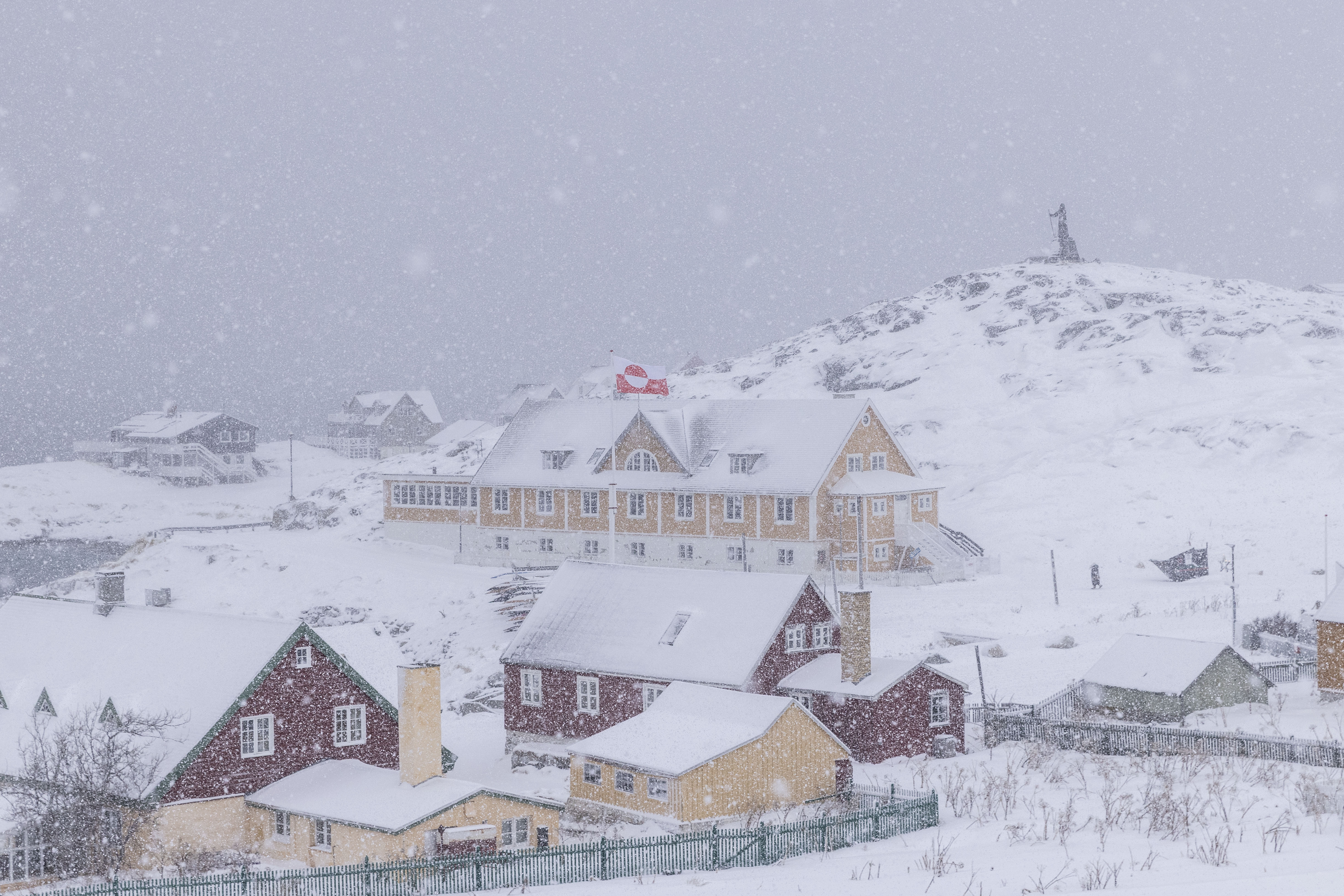
Nuuk, the capital of Greenland. The latest mission has been described as a “reassurance initiative”
TIMES PHOTOGRAPHER JACK HILL
The mission, which began on Wednesday and will last until Saturday, was pitched in vague terms as a reassurance initiative to boost security in the Arctic and lay the groundwork for larger naval surveillance operations in the future.
The Danish defence ministry said further exercises this year might include guarding “installations critical to society” as well as fighter jet deployments and naval operations.
Troels Lund Poulsen, the Danish defence minister, declined to give details on the scale of his country’s contribution but said it was a step towards a “more permanent presence” on Greenland. Asked whether the soldiers would defend the island against an American invasion, Poulsen said it was a “highly hypothetical question” and he did not believe it was likely that one Nato ally would attack another.
Denmark will increase its military footprint in Greenland, says defence minister
On Wednesday Trump said Nato ought to be “leading the way” for the US to acquire Greenland because it would make the alliance “far more formidable and effective”.
He also argued that America needed the territory to realise his vision of an elaborate “Golden Dome” missile defence system, which he has pledged to establish by 2029 with the capacity to shoot down “almost 100 per cent” of any cruise or ballistic missiles aimed at the US.
• Sign up for The Times’s weekly US newsletter
Speaking in the Oval Office, Trump said he would be briefed after the press conference but repeated his claim to “need Greenland for national security”.
“We’re gonna see what happens,” Trump said. He argued that US interest in acquiring Greenland was “not anything so new”, citing President Truman, who tried unsuccessfully to buy the territory after the Second World War.
Trump added that he had spoken to the Nato chief Mark Rutte. “And he really wants to see something happen,” Trump said, without further detail.
Since decapitating the Maduro regime in Venezuela on January 3, Trump has doubled down on his pursuit of Greenland, arguing that a US takeover is the only way to keep China and Russia out of the island. He said that he felt a “psychological need” to obtain the territory, likening it to a piece of real estate and insisting that the US would acquire it “either the easy way or the hard way”.
• How do Greenlanders feel about Trump’s threats?
On Wednesday Lars Lokke Rasmussen and Vivian Motzfeldt, respectively the Danish and Greenlandic foreign ministers, visited the White House complex for initial negotiations with Marco Rubio, the US secretary of state, and JD Vance, the vice-president.
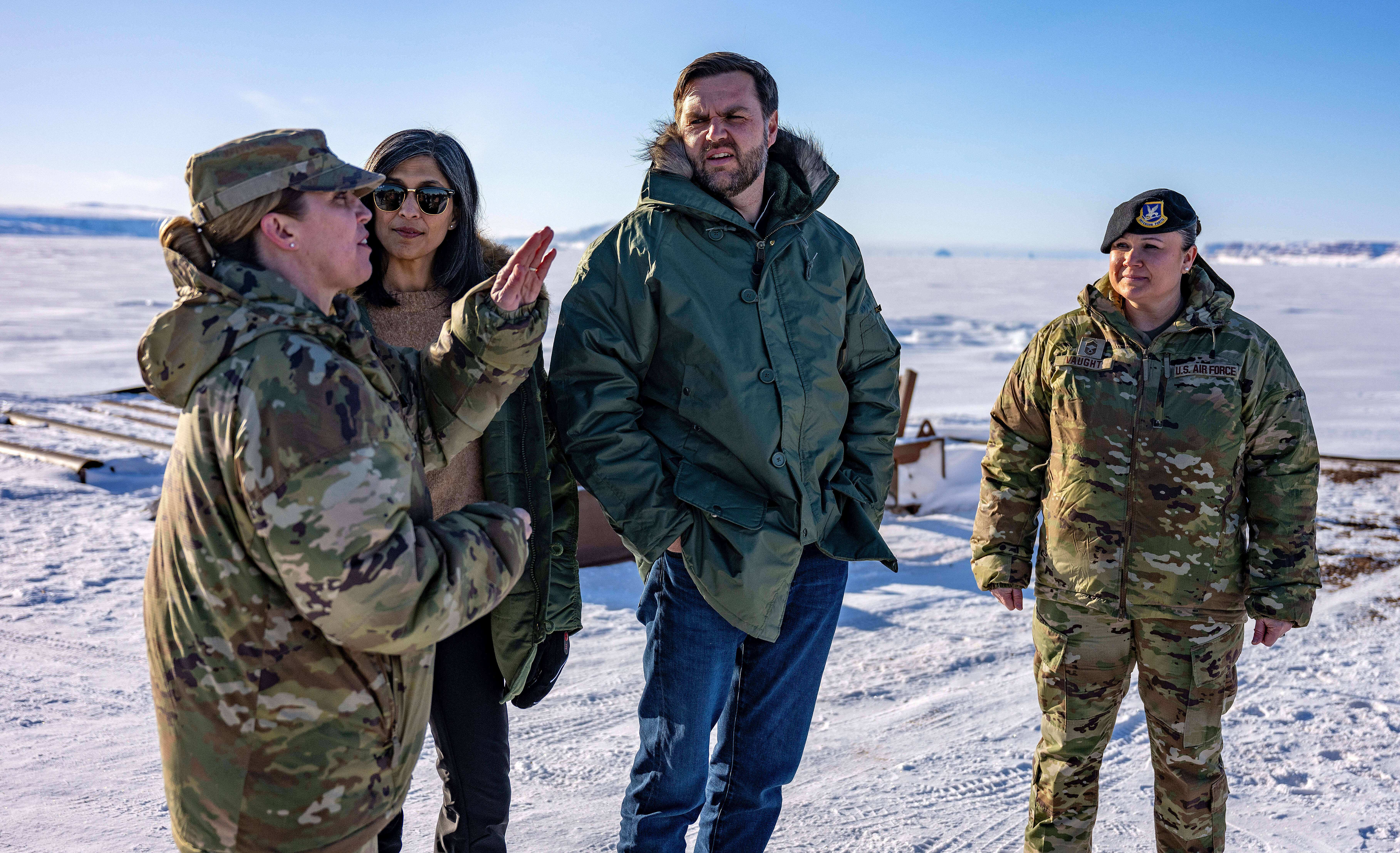
JD Vance and his wife, Usha, second from left, toured the US military’s Pituffik space base in Greenland in March last year
JIM WATSON/AP
Any residual optimism about the possibility of a swift compromise was dashed when, in the middle of the talks, the White House social media account posted a meme showing a pair of dog sleds representing Greenland confronted with a choice between an American flag bathed in sunlight and a lightning storm decorated with the Chinese and Russian flags. The caption read: “Which way, Greenland man?”
Afterwards Rasmussen said the “frank but constructive” talks had not overcome the “fundamental differences” between the two sides. He also said that Greenland would remain part of Denmark “for the foreseeable future”.
“We didn’t manage to change the American position,” Rasmussen said. “It’s clear the president has this wish of conquering over Greenland [sic]. We made it very clear that this isn’t in the interest of the kingdom of Denmark.”
• Trump envoy disinvited from Greenland dog-sled race
Rasmussen said that the issue would be addressed by a “high-level working group” that would meet “within weeks”.
“We agree that it makes sense to sit down on a high level and explore whether there is the possibility to accommodate the concerns of the [US] president while we respect the red lines of the kingdom of Denmark,” he said. “Whether that is doable, I don’t know. I hope it could take down the temperature.”
Rasmussen said it was “absolutely not necessary” for the US to annex Greenland because Denmark would look kindly on any requests to expand the American presence on the island. He denied Trump’s claim that China had sent warships into the area, saying no Chinese naval vessels had been observed there in more than a decade, and said that strict investment screening meant there was “no Chinese presence in Greenland”.
Motzfeldt was more reserved, saying Greenland wished to “strengthen co-operation” with America but “that doesn’t mean we want to be owned by the United States”.
Hours earlier several European leaders had issued their strongest condemnations yet of Trump’s maximum-pressure tactics. President Macron is said to have told his cabinet that any American attempt to capture Greenland would lead to a “cascade” of “unprecedented consequences” and that France would be obliged to take unspecified “actions” against it. The French president also said the seriousness of Trump’s threats should not be underestimated, and Paris announced that it would open a consulate in Nuuk, the Greenlandic capital, next month.
The leaders of the European parliament issued a statement “unequivocally condemning” Trump’s rhetoric, which they described as a “blatant challenge … to the sovereignty and territorial integrity of a Nato ally”. “Such statements are unacceptable and have no place in relations between democratic partners,” they added.
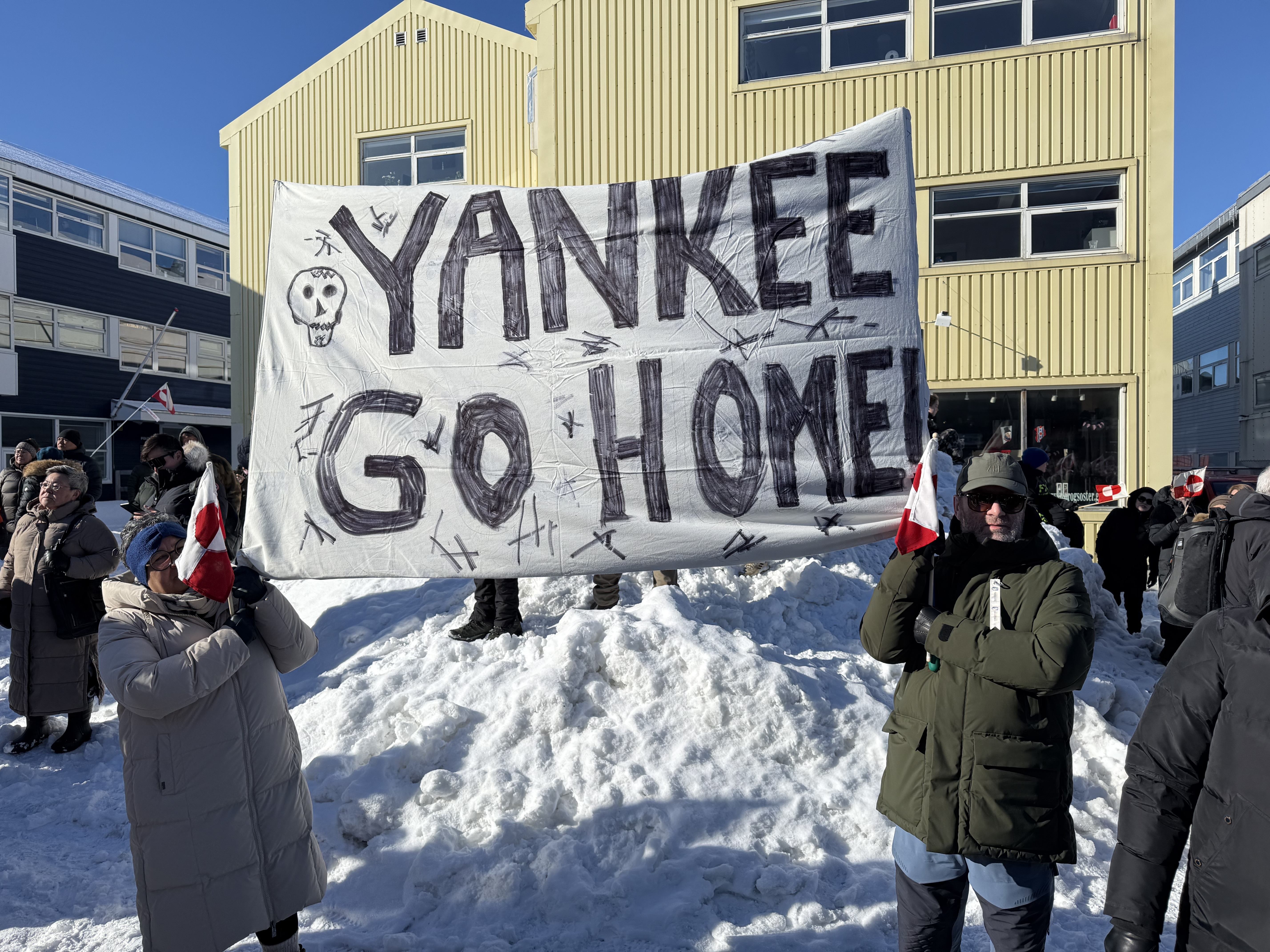
Greenlanders protesting in in March last year against Trump’s remarks on the sovereignty of their country
AHMET GURHAN KARTAL/ANADOLU/GETTY IMAGES
It is expected that further European Nato members will join the Greenland mission over the coming days, albeit possibly with token deployments.
Poulsen, the Danish defence minister, framed it as a sequel to last summer’s Arctic Light exercise, which involved Denmark’s Jaeger Corps special forces alongside 550 troops from allies including France, Germany, Sweden and Norway. He said it was a “clear priority” for Denmark to bolster Nato’s military presence in the High North “at a time when no one can predict what will happen in security policy terms”.
• The Times view: The Arctic must be the subject of calm debate between allies
The Greenlandic government said it “attached great importance” to having Nato strengthen the territory’s security.
Denmark and Greenland’s efforts to cultivate a critical mass of opposition to Trump’s plan within the Republican Party also appear to be bearing fruit.
A number of senior figures in the party, including John Thune, the majority leader in the Senate, have broken cover to warn against a military intervention. This dispute is likely to play out on the floor of Congress.
One Trump loyalist has introduced a bill that would authorise the president to add Greenland to the US. Lisa Murkowski, a Republican senator, responded by joining her Democratic colleague Jeanne Shaheen in drawing up a bipartisan rival bill that would prohibit the use of government funds in any military operation against a Nato ally.