On Jan. 8, The Globe’s healthy living reporter Graham Isador and personal trainer and health educator Paul Landini answered reader questions on how to make 2026 a healthier year and how to set and reach your fitness goals.
Try these three daily exercises to keep your hips happy and healthy
Readers asked about how to exercise safely as they age, how diet and supplements can affect your fitness and how to make going to the gym fun again. Here are some highlights from the Q&A.
Getting fit in 2026
Every year, I try to get in shape but I just burn out after a few weeks. How can I make the habit finally stick?
Landini: This is one of the most common questions I get. Take heart in knowing you’re not alone!
Habits form from consistent action on a regular basis. In other words, the more often you do stuff, the more it sticks. Set the bar low – aim for 15 minutes of intentional physical activity every day. Pick something you like doing and just do it. Think less about the results and more about the process. After a few weeks, increase that duration to 20 to 30 minutes. If you’re getting bored or burned out, try a different activity. The key is to find the joy in whatever it is you choose to do, or else you’ll never stick to it.
Isador: Thanks to social media it’s really easy to compare yourself to people who are paid to work out, diet, and often have additional help from doctors and nutritionists.
If exercise seems like a chore, you’re not likely to do it. It can be helpful to get started in a group setting or try out a group fitness challenge.
Orange Theory fitness studios has an eight-week fitness challenge starting up soon, and so does F45 Studios. Both of these are pretty hardcore (and have their advantages and disadvantages) but I bring them up as examples of what’s out there. You may be able to find an eight-week class happening at your local rec centre.
Dumbbells 101: Exercises for a stronger upper body
Is it better to join a gym, some sort of class, or a regular sport team to stay fit?
Landini: It all depends on what you’re looking for. If you like playing sports, do that. If you thrive off social connections and group energy, classes are a great option. Gyms have lots to offer, but they’re not the only answer.
Isador: All of those are good options. The best way to stay fit is whatever you’re going to do consistently.
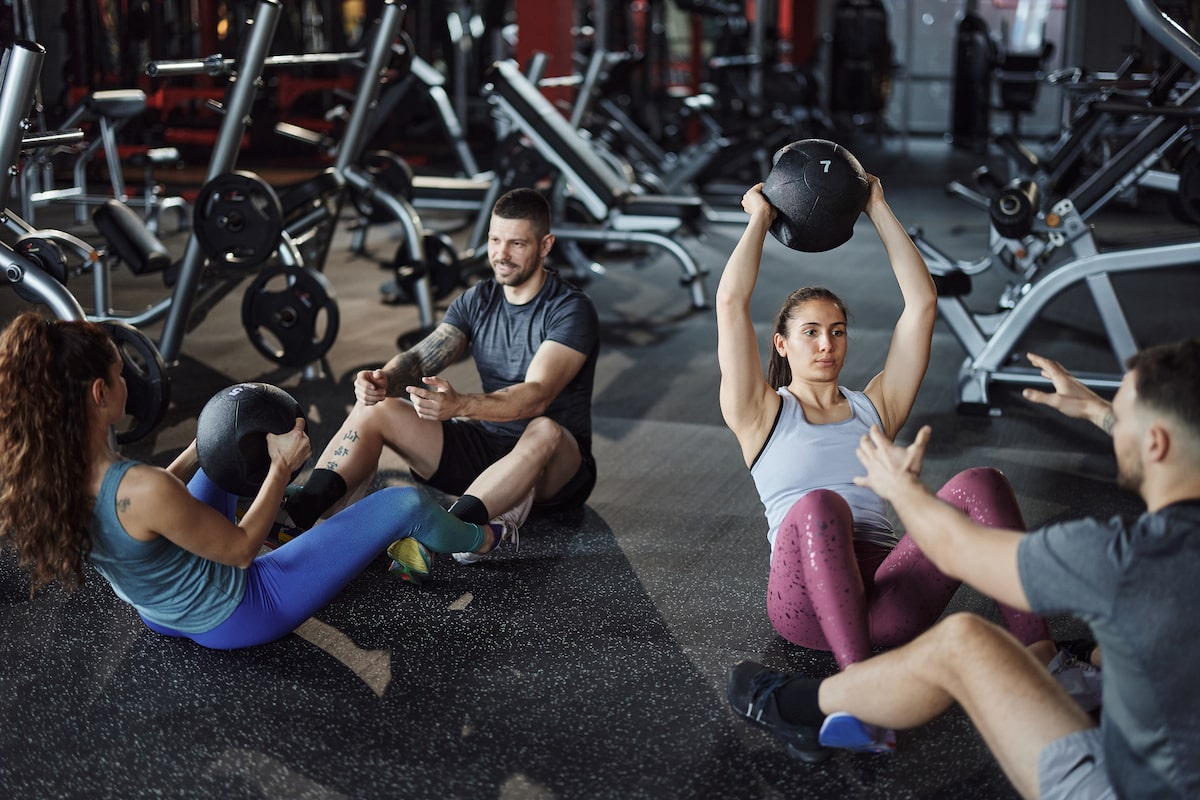
Healthy living reporter Graham Isador says the best way to stay fit is sticking to exercises you do on a regular basis, from going to the gym to joining a class.Bor Kankaras/Getty Images
I’ve never been a gym-goer but I want to start making it a habit in 2026, how can I get started?
Isador: I just wrote an article about this. Biggest takeaways: find a type of exercise you actually enjoy doing and go into the gym with a plan. Maybe that’s finding a fitness class that seems fun to try out. I’m into powerlifting nowadays, but my mom really loves a Zumba class. If you’d like to work out at a box gym, it can be useful to pay for a session or two with a personal trainer. They’ll be able to make an exercise plan based on your skill level and preferences while walking you through correct form. If cost is an issue, there are a ton of programs you can find online and instructional videos for proper form. For beginners, Casey Johnston has a great program called LIFTOFF.
What are the best exercises I can do to build strength and tone my upper body without adding bulk?
Landini: Don’t worry about getting bulky. Building muscle isn’t easy; genetics and diet play as big a role (if not more) than lifting weights. I’ve been lifting weights for nearly 30 years and I am far from being an impressive muscular specimen. Stick with compound exercises that engage your entire body and you’ll be fine.
Hyrox is definitely the new fitness trend going into 2026. I’m training for my first one, but I suck at cardio. Where can I start? What mistakes should I avoid early on in training?
Isador: I wrote a bit about Hyrox here. The exercises are similar to a lot of the other training I love, but I’m also not a natural runner. When the weather is better, I like to jog outside. Every year I have to relearn how to do that, and tend to do one of the beginner programs in the Nike Run Club. They’re guided sessions – a friendly coach talks you through each run as it goes – then gradually ups your speed and distance. That might be a good place to start, but if you’re doing other strength training on top of the cardio, don’t overdo it. There are some community gyms that pals swear by who run Hyrox classes (6s/Stay Gold/Academy of Lions) to prep for race day too.
Carol Ross, a 75-year-old line dance instructor, leads a class at the Parksville Seniors Drop in Centre, in Parksville, B.C.Taylor Roades/The Globe and Mail
Smart workouts
I’ve historically been very active, but patellar tendinitis has become a chronic condition in my 50s. Can you recommend any sort of cardio I could tolerate?
Isador: I would look into ellipticals at your local gym. They’re easier on the joints than a lot of other cardio and get some upper and lower body work in. If that’s too much right now, there are some follow-along workouts on YouTube for seated cardio. They might help you get your heart rate up a bit and are made to be accessible.
I am a very healthy 75–year–old woman with osteoporosis. I ski, skate, swim, lift weights, do yoga and I love to hike up mountains. I would like to add plyometrics to my workout regime. How do I figure out if jumping for 10 minutes twice a week is right for me?
Isador: It’s great that you’re so active. I think if you’re already working out on the regular, adding plyometrics isn’t something you need to do. Personally, I find those type of exercises hard on my knees. I’m also prone to rolling my ankles. Those downsides don’t seem worth the potential benefits if you’re already moving a lot.
Eating right
How much protein do we actually need a day?
Landini: My personal guidelines are this: Minimum intake should be around 1 gram of protein per kilogram of bodyweight, maximum around 1 gram per pound of bodyweight. For someone who weighs 75 kilograms/165 pounds, that means you want to aim for 75-165 grams of protein daily. That’s a broad range, which is kind of the point. If you’re really active and lift weights regularly, aim for the high end.
Isador: There is a lot of debate online about how much protein a person should ingest every day. According to Health Canada, we need about 0.8 g of protein for each kilogram of body weight per day. Stuart Phillips, a professor in kinesiology and an adjunct professor in the School of Medicine at McMaster University, believes people could benefit from closer to 1.2 g per kg of body weight. If you want to find out more, I wrote an article about it.
According to Health Canada, we need about 0.8 g of protein for each kilogram of body weight per day.Kindamorphic/Getty Images
If high protein is the new diet along with heavy weight exercises, how do you go from very slim to new (much heavier) you?
Landini: I try to co-ordinate my workouts with my meals so that I eat a regular meal within an hour of finishing the workout. This means if I’m working out in the a.m., breakfast comes after. If it’s a midday workout, lunch comes after.
Isador: Gaining muscle is hard to do. People worry that if they start resistance training they’re going to immediately put on size, but if that were the truth every sixteen-year-old boy in the gym would walk around looking like Chris Hemsworth. Some resistance training with a slightly caloric surplus and a protein rich diet can help you build lean muscle. You might be eating a bit more than you’re used to. But some specialized training can do a lot for body comp.
2026 is the year I decided I’m going to start working out. Is there anything I should change in my diet? What supplements are good to start out with?
Isador: That depends on what your goals are. If you’re trying to lose fat, the majority of changes are actually going to come from your diet and eating in a caloric deficit. If you’re trying to gain muscle, you’ll need to do some sort of resistance training and eat in a caloric surplus.
Supplements make a very, very, small impact on body composition compared to diet and exercise. Anecdotally I’ve found creatine, fish oil, and vitamin D impactful. I wrote about creatine here.
Landini: Good for you for taking this step. If you’re going to lift weights, you’ll want to prioritize protein. Protein supplements can help, but real food sources are your best bet. Aim for at least 1 gram of protein per KG of bodyweight.
What are some other ways I can stay healthy that don’t involve fitness? The mind is just as important as the body.
Landini: I am a huge advocate of journaling. Spend 10-15 minutes in the evening to review your day – the highs and lows, the wins and the losses – but try not to be judgemental. Empty your brain and embrace being an imperfect person.
Submissions have been edited for length and clarity.