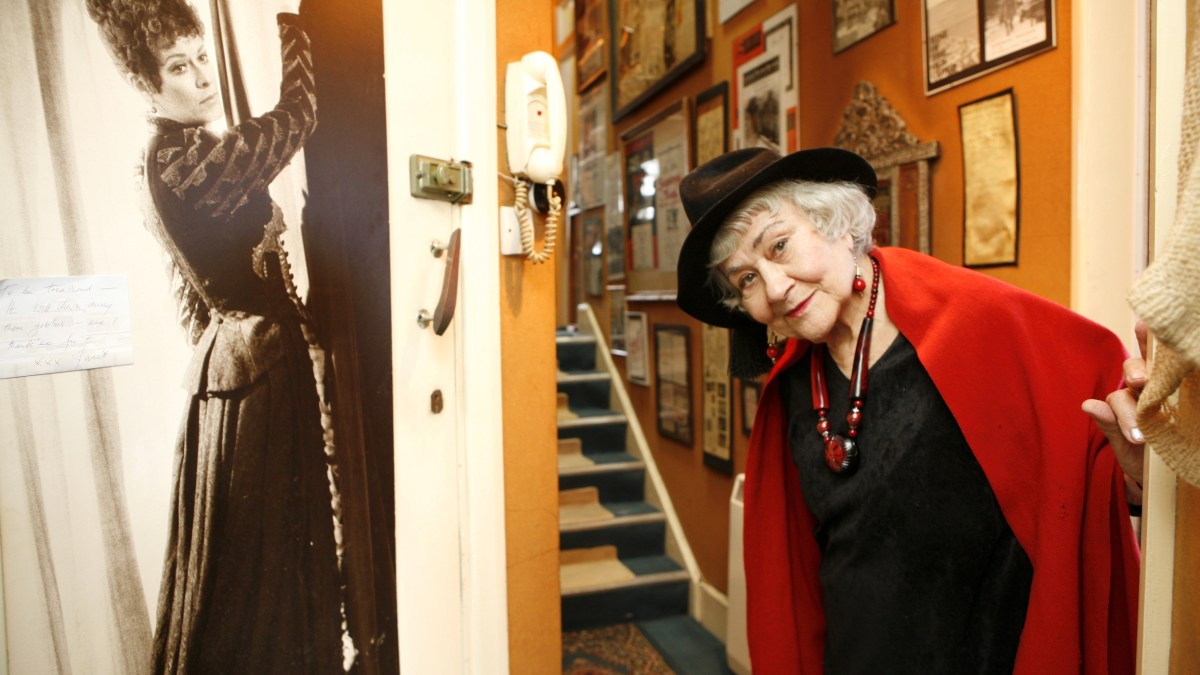
Blanche Marvin held the crown as the most assiduous of London theatre critics, still regularly attending press previews and filing reviews for her website into her nineties. Although she had no journalistic training, her long experience of theatre production and theatregoing gave her a unique perspective. “I know when a director has loused it up, I can tell you,” she said matter-of-factly, explaining that she wrote her pieces for the industry — directors, producers, other critics — because “I’m older than anyone else; I’ve seen the originals, I can provide the context”.
A former actress, playwright and playwright’s agent, Marvin also founded the Empty Space … Peter Brook Awards in 1991, which celebrated the work of fringe theatre (at the time the only awards to do so), although she declared in her throaty New York accent that she always preferred the American term “studio theatre”. The experimental director Peter Brook agreed to lend his name to the endeavour and to let her call the awards after his 1968 book, which argued that theatre can happen in any space, anywhere.
Brook, with whom she became friends, could see that she shared his passion for originality. “It can happen in the worst theatre in the world or at the National or in the West End; you can see good theatre anywhere,” she said. “The only trouble is that people don’t give money to the fringe and you want to develop them to get to the next stage.” Brook (obituary, July 3, 2022) remarked that Marvin was “totally attuned to the real sense of experimentation, the older she gets the more it fascinates her”.
Marvin also enlisted her fellow London critics to serve as judges, and for a long time she paid for the awards out of her own pocket. “I cashed in my old age annuity, I thought what the hell, let the government take care of me,” she once explained. “Listen, if you don’t put your money where your heart is, forget it.” The awards later attracted other supporters including the National Theatre, Actors’ Equity and the V&A’s theatre department; they ran until 2017 and were revived in 2023 as part of the Critics’ Circle Theatre Awards.
She was born Blanche Zohar in New York City in 1925. Her father was an opera singer and something of a ladies’ man, and was uninterested in Blanche and her brothers and sisters. She left home at 14, babysitting to pay her way, and went to college at 16. Her parents never tried to find her, she once claimed, because they knew she was finished with them, and she had never felt a close attachment to any of her siblings.
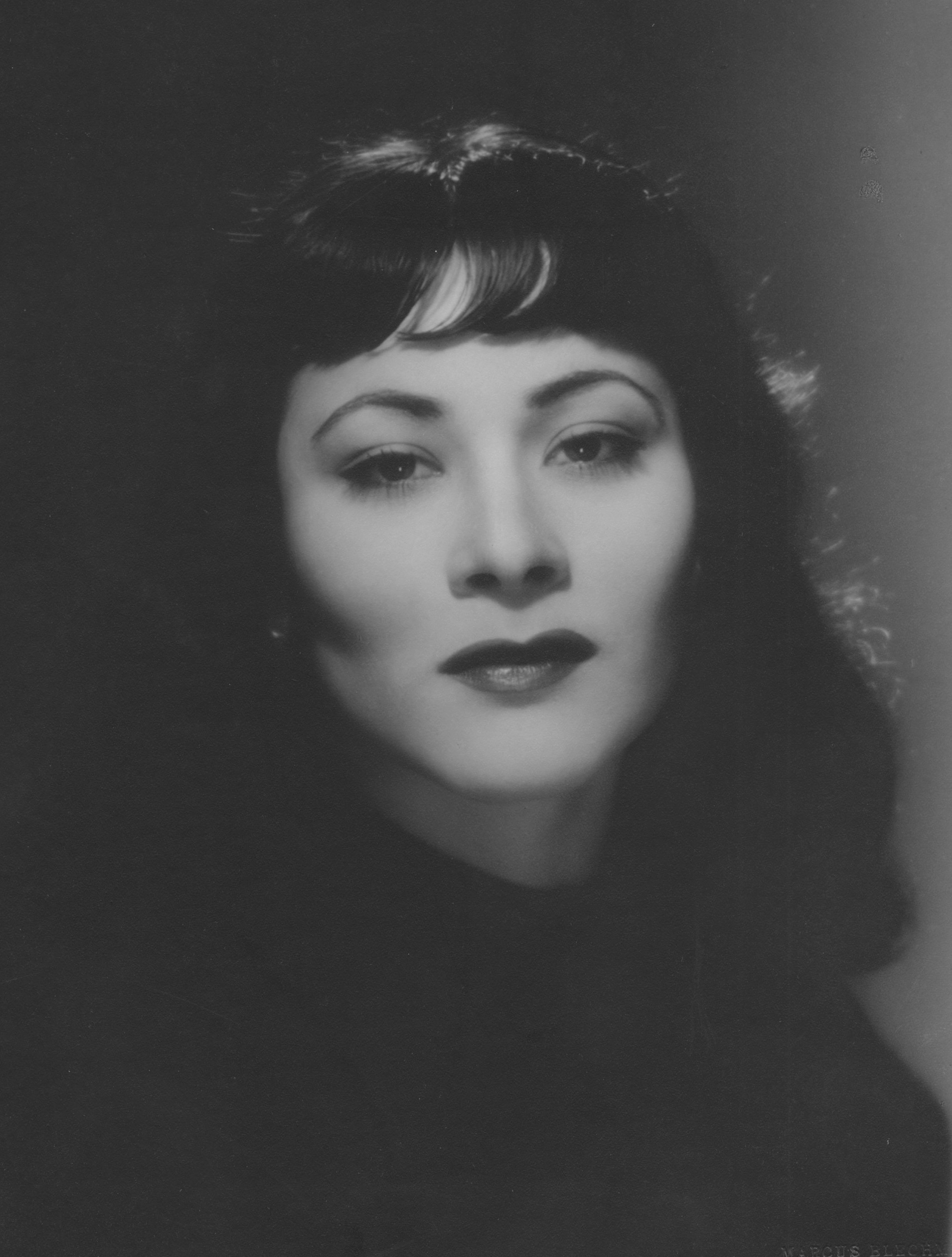
Marvin during her time as an actress in New York
MARCUS BLECHMAN
At 19 she began auditioning for various ingénue roles. Her first stage appearance was in Lute Song (1946), a Chinese musical starring Yul Brynner. She had seven parts and understudied Mary Martin, while a young Nancy Davis (later Nancy Reagan) was also in the show. “She was a stick, she couldn’t move and she couldn’t act so they kept her still,” was Marvin’s caustic recollection.
Marlon Brando once made a pass at her: “I said, ‘Marlon, I wouldn’t know what to do with you, you like boys as well as girls, I can’t deal with that’. I told him to go work on his speech for the play he was in. He just said, ‘I hate acting, but it’s better than working in a store from nine to five, and you meet lovely people’.”
By then she had met and fallen for a theatre producer, Mark Marvin, who was 17 years her senior and about to co-produce (with its black star, Canada Lee) On Whitman Avenue, a socially significant play about a respectable black family who move into a white neighbourhood. Because of Blanche’s youth, Mark wanted her to be free to meet other suitors, but she insisted that she should not have to go searching when she had already found her soulmate.
In 1945, through the stage director Margo Jones, who was living with Mark, she met the budding playwright Tennessee Williams, who was still unknown. Jones was directing (and Mark producing) the first Broadway production of a Williams play, The Glass Menagerie, and she asked Blanche along to rehearsals as a distraction for the anxious writer. They bonded over their shared terror of Broadway and their rootlessness — “We used to talk about how we lived, how we felt. We were safe with one another,” she recalled. Williams borrowed her first name for Blanche DuBois, the leading female character in his next play, A Streetcar Named Desire, while Zohar, which she told him meant “bright like a star”, was thought to have inspired his choice of Stella for the first name of the other main female character.
Streetcar was produced to ecstatic acclaim on Broadway in 1947. Marvin later claimed that she had also had a hand in DuBois’s most famous line: “I’ve always depended on the kindness of strangers.” She told The Independent on Sunday: “He [Tennessee] talked about living in hotel rooms all the time and was unhappy. He said he was always living with strangers. I said, ‘I’ve only known kindness from strangers and so can you’.”
After her introduction to Williams she continued to combine acting, dancing and modelling, taking small parts in films such as Casbah (1948) and Quo Vadis? (1951). While working in Europe, “I got a telegram from Mark saying ‘Meet me in Paris’, where he proposed. I dropped everything.”
She and Mark married in 1950. They had a daughter, Niki, and a son, Herbert. As a baby her son appeared unresponsive to sounds and Blanche defied medical opinion to establish that he was profoundly deaf. She was determined that he should have as fulfilling a life as possible and when he was four years old she had him running the lighting board in her theatre. Herbert is now an expert in deaf mental health, while Niki became an Oscar-nominated film producer, with The Shawshank Redemption (1994) among her credits.

Marvin in 1954. Her husband Mark died four years later
EVENING STANDARD/HULTON ARCHIVE/GETTY IMAGES
For much of the 1950s the Marvins divided their time between London and New York. Mark became terminally ill with cancer and in 1958 took his own life to spare his wife from caring for an ill husband. “He always looked after me and loved me with a depth I shall never have again,” she once said.
In 1959 she became artistic director of the Cricket Theatre, among the first of New York City’s off-Broadway theatres, where she also launched the Merri-Mimes production company for children. She oversaw everything from selecting the authors, through lighting and costumes, to replacing the lavatory paper. It was here that she introduced American audiences to writers such as Edward Albee and Athol Fugard. She also rewrote fairy tales in play form, which were published in a two-volume collection called Plays for Children by the publisher Samuel French, and she taught playwriting at the University of Iowa.
In 1968 she moved to London and joined the Elspeth Cochrane Agency, where she ran the literary department. She went on to found her own agency, the Blanche Marvin Agency, representing many new and exciting writers such as Christopher Bond and John Antrobus. In 1973 she persuaded Joan Littlewood to put on Bond’s Sweeney Todd, and later told Stephen Sondheim that he should turn it into a musical, though Sondheim claimed he had already had the same notion.
The arrival of the internet gave her a fresh opportunity: she launched her career as a theatre critic in the late Eighties, establishing her own website on which she published “Blanche Marvin’s London theatreviews”. She would go to plays nine times a week (every night plus a matinee or two) and rated productions with a star system (four stars meant “stand if necessary”, three meant “sit in front stalls”, two meant “sit in back stalls”, and one star meant “have a drink!”).
Her bugbears as a critic included actors who were unable to project, actors in musicals who were unable to sing adequately (a peculiarly British phenomenon, in her view), the casting of celebrities in acting roles, modern-dress versions of ancient Greek drama, and meretricious stage nudity. “I don’t think anyone has seen as much as she has,” Brook said. “Her criticism as such is the most reliable I know.”
On one occasion, she attended the first night of a fringe play in Richmond, caught an overnight coach to Edinburgh, arrived at seven the following morning and proceeded to watch six plays by the Irish playwright JM Synge at the International Festival, then took an overnight coach back to London. “People half her age are exhausted by a day’s work and a trek out to Richmond,” wrote the British Theatre Guide, which saluted “bionic Blanche — a truly wonderful octogenarian”.
Indeed Marvin — who received an honorary MBE for her services to theatre in 2010 — was a dedicated reviewer of plays at the Edinburgh Festival, once managing to attend 21 performances in a day. Invariably she attended these in quirky and flamboyant attire including her trademark cloche hats, believing that theatregoers should show their respect by dressing up a little. “Her outfits are legendary,” recalled The Independent’s theatre critic Paul Taylor, who would often serve as her escort. “Sometimes she goes to the theatre in an ensemble that’s themed to what she is seeing. I once went to Paris with her for the day to see Happy Days [a Samuel Beckett play in which the leading actress is half buried] and I thought I wouldn’t put it past her to arrive in a mound of earth. She didn’t. She was baroque, but not in a mound of earth.”
On a visit to Marvin’s north London flat in 2018, the Guardian interviewer Hannah Booth noted: “Nothing looks as if it was acquired later than 1950.” Her home was filled with art, film posters and memorabilia including a pencil drawing that turned out to be a portrait of Marvin by Marcel Marceau, completed just after the Second World War before he became famous. When asked which actor she admired, she immediately replied: “Timothy West — he has the magic”.
Blanche Marvin, theatre critic, was born on January 17, 1925. She died on January 13, 2026, aged 100