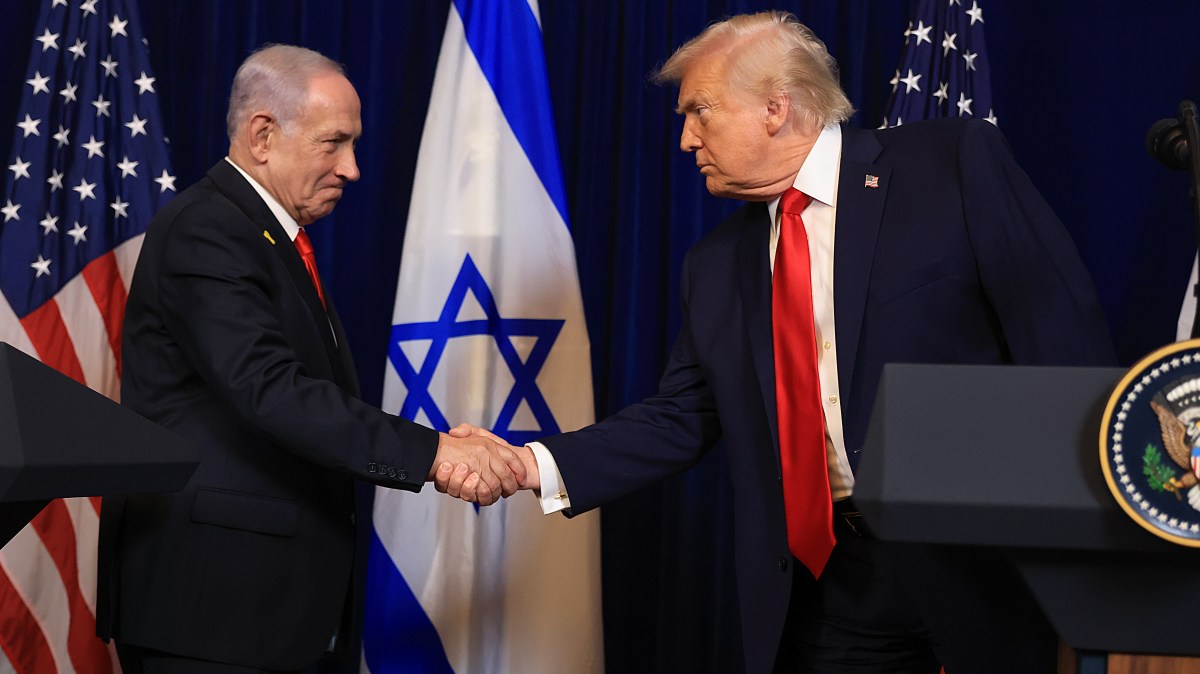
Binyamin Netanyahu, Israel’s prime minister, asked President Trump to postpone strikes on Iran after a deadly regime crackdown on protests, according to reports.
The prospect of a US intervention in Iran seemed to diminish on Thursday, although the White House insisted Trump continued to “keep all of his options on the table”.
“President Trump is a man of action,” Mike Waltz, Trump’s ambassador to the United Nations, told the UN security council in New York. “No one should know that better than the leadership of the Iranian regime.”
Hundreds of protesters had been saved from execution thanks to the president’s intervention, according to Karoline Leavitt, Trump’s press secretary.
She said: “[The president] continues to closely monitor the situation on the ground in Iran and as we saw yesterday he had heard that the killings and executions would stop. And we have seen 800 people, their lives have been spared as a result of that.”
Israel, long an adversary of Iran, persuaded Trump on Wednesday to delay any action in response to the weeks-long protests, according to the New York Times. Netanyahu’s office refused to comment.
Earlier a Saudi official said Saudi Arabia, Qatar and Oman had led efforts to talk the US out of an attack, fearing Iranian retaliation.
The nations “led a long, frantic, diplomatic last-minute effort to convince President Trump to give Iran a chance to show good intention”, the official said.
After a fortnight of the deadliest protests in Iran for a generation and a week into an internet blackout, the ayatollah and his men, it seemed, had weathered the storm.

Protests in Tehran had died down on Thursday for fear of reprisals
ATTA KENARE/AFP/GETTY IMAGES
As the prospect of US intervention waned, funerals took place across the country on Thursday for those killed in the protests, residents said.
The burials were held behind a shroud of silence, unlike the solemn send-offs for police who had fought to suppress the uprising, which were broadcast on state-run television for the world to see.
“After the crackdown, the protests slowed, but fear and grief filled the air. Mass funerals are taking place across Iran. Many of us feel desperate,” one woman, who had taken part in the protests, said in a rare text that slipped out from the country in a messaging app.
Videos on social media purported to show protesters on the streets of Tehran on Wednesday night, but their numbers had dwindled under the threat of death or imprisonment.
• Why is Iran protesting now? A timeline since the 1979 Islamic Revolution
President Trump had hinted at US action against the regime hours earlier, posting on his Truth Social platform “HELP IS ON ITS WAY” on Tuesday, with officials suggesting a strike may take place imminently. The next day, personnel and aircraft were withdrawn from al-Udeid airbase in Qatar, the US regional military headquarters.
However, later on Wednesday Trump said he had been assured that the “killing has stopped” and there were no plans for executions.
On Thursday the president posted a message on social media suggesting an Iranian protester would no longer face the death penalty. An “Iranian protester will no longer be sentenced to death after President Trump’s warnings,” he wrote, adding: “This is good news. Hopefully, it will continue.”
The White House said on Thursday said that 800 executions had been halted in Iran. Leavitt added that “all options remain on the table for the president”.
Iran’s judiciary denied it had scheduled the execution of Erfan Soltani, 26, who was arrested for opposing the regime in the recent demonstrations. Abbas Araghchi, Iran’s foreign minister, also said there was “no plan” to hang people.
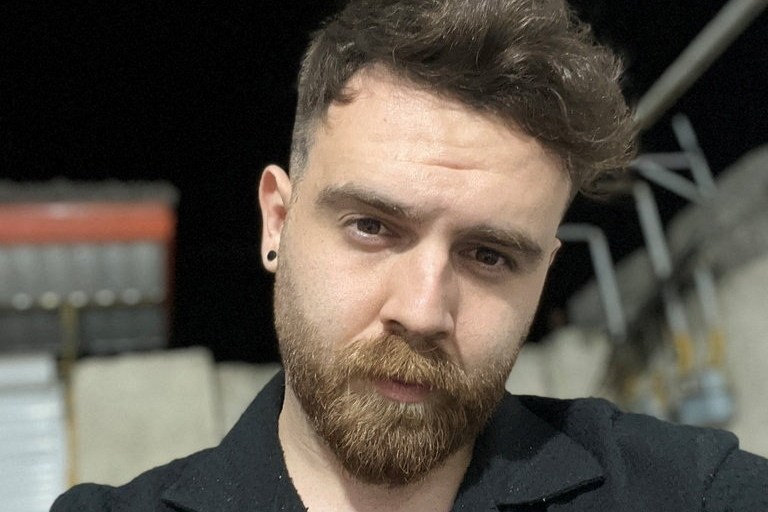
Opposition groups have claimed that executions are taking place behind closed doors.
The Kurdistan National Army, the military wing of the separatist group the Kurdistan Freedom Party, said: “The situation has now escalated exactly as we anticipated. We are receiving confirmed reports that the regime has shifted its strategy to ‘silent massacres’. Unlike previous public displays, executions are now being carried out in prison basements to avoid international scrutiny.”
The text-message demonstrator , who was based in Tehran but has moved this week to a safer city, said the protests had peaked on the nights of January 9 and 10. “Protests started at the end of 2025. At first it was just a few chants from traders echoing through the streets, but soon they spread to major cities and along the main roads,” she said.
“I was the part of the protest and saw students, workers and families; mothers carrying babies; and women briefly removing their headscarves as they spoke out before moving on and chanting slogans.
“Within minutes, police arrived in vehicles, sirens blaring. Tear gas and pellet guns tore through the crowd. I ran through narrow alleys, hearing screams and seeing women shielding their children. People around me were shot, some at close range, and I watched in horror as some did not survive.”
She added: “The nights were unbearable. Tehran’s streets were packed. Security forces fired indiscriminately with machine guns, yet people kept chanting ‘death to the dictator’ and helping the wounded, and carrying the dead.”
Conditions in hospitals worsened quickly. “By January 10, the hospitals were overflowing,” she said. “While I was looking for my two cousins and a friend, I came across scores of bodies in makeshift detention areas.”
More than 2,400 protesters have been killed, according to the Human Rights Activists, a group based in Washington, but the death toll is expected to rise when Tehran eases the communications blackout.
On Thursday Anita Anand, the Canadian foreign minister, confirmed the first death of a foreign national during the protests. She said the citizen had died “at the hands of the Iranian authorities”. She posted on X: “Our consular officials are in contact with the victim’s family in Canada and my deepest condolences are with them at this time.”
More than 18,000 people have been arrested as the regime has crushed opposition demonstrations.
At a meeting of the UN security council convened by the US on Thursday, Waltz, the American ambassador, was accompanied by Masih Alinejad, the Iranian-American writer who has been the target of several Iran-backed assassination plots, according to prosecutors in New York.
Saying she wanted to “address the representative of the Iranian regime directly”, Alinejad told Iran’s ambassador: “You have tried to kill me three times. I have seen my would-be assassins with my own eyes in front of my garden in my home in Brooklyn.”
The plot was foiled and she saw them confess in court, to being hired by Iran’s Revolutionary Guard, she said. “Unfortunately I live with survivor’s guilt because many Iranians don’t have the same protection.” She called for action “against a regime that does not understand diplomacy”.
Waltz said: “President Trump has been clear, he will not, nor should the international community tolerate innocents being slaughtered on the streets.”
Vasily Nebenzya, the Russian representative, dismissed the addresses to the council by Alinejad and another Iranian-American human rights activist as “nothing more than a circus, a cheap show that is unbefitting of members of the council”.
He accused the US of “extremely dangerous and irresponsible rhetoric”. He said: “Your actions risk plunging the region into even bloodier chaos.”
Gholamhossein Darzi, Iran’s deputy ambassador, said: “The US regime is attempting to portray itself as a friend of the Iranian people while simultaneously laying the groundwork for political destabilisation and military intervention under a so-called humanitarian narrative.”
Two US carrier groups, the USS Abraham Lincoln and the USS George HW Bush, have been dispatched towards the region, according to reports, and are set to arrive in the Arabian Sea and the Mediterranean respectively late next week.
Iran’s airspace has reopened to traffic after a temporary closure, although several airlines continue to avoid the country’s skies, according to flight-tracking websites. The security warning level at al-Udeid base has also been lowered.

The USS Abraham Lincoln is on its way to the Arabian Sea
WILL TYNDALL/AFP
However, some US senators and commentators have sown doubt on the easing of tensions. Lindsey Graham, the Republican senator, on Thursday wrote on X: “Nothing could be further from the truth. Quite the opposite. Stay tuned.”